
Valencia not only smells of orange blossom; In March, it smells of gunpowder, burnt wood and pumpkin fritters. The Fallas, declared Intangible Cultural Heritage of Humanity by UNESCO in 2016, are not simply a party; they are an artistic, social and satirical ecosystem that paralyzes and, at the same time, gives life to the third largest city in Spain.
The Origin: From Necessity to Satire
The most accepted theory about the origin of the Fallas takes us to the carpenters’ guild. In the past, during the winter months, carpenters used lamps supported by a wooden foot called parot to illuminate their workshops.
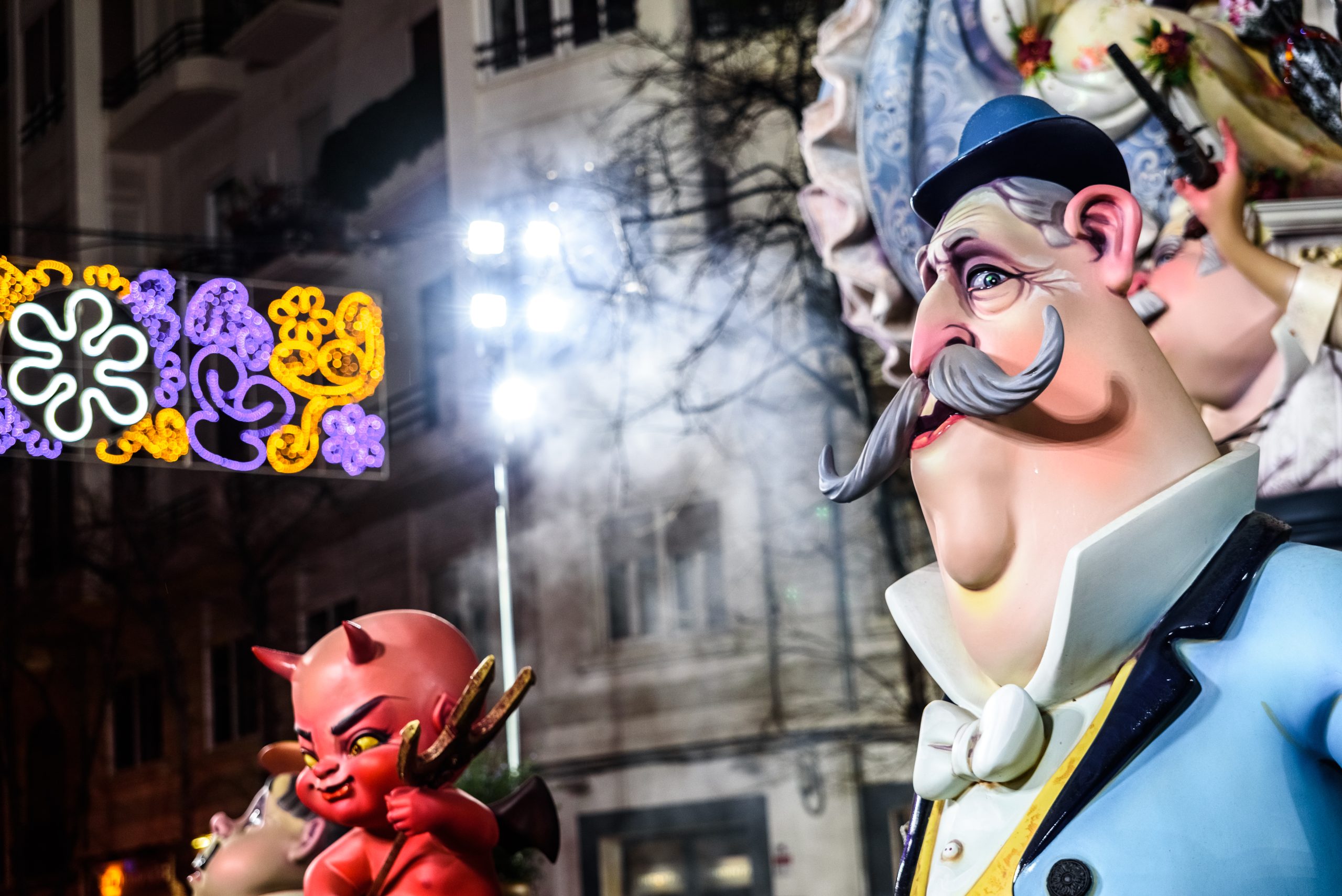
When spring arrived and the days lengthened, the lamp was no longer necessary. On the eve of St. Joseph (his patron saint), carpenters took these old junk out into the street and burned them in purifying bonfires. Over time, clothing began to be added to these wooden structures to make them look like human figures, giving rise to the first Ninots (dolls). What began as a workshop cleaning evolved into a social critique full of humor and sarcasm.
Construction: Ephemeral art of high engineering
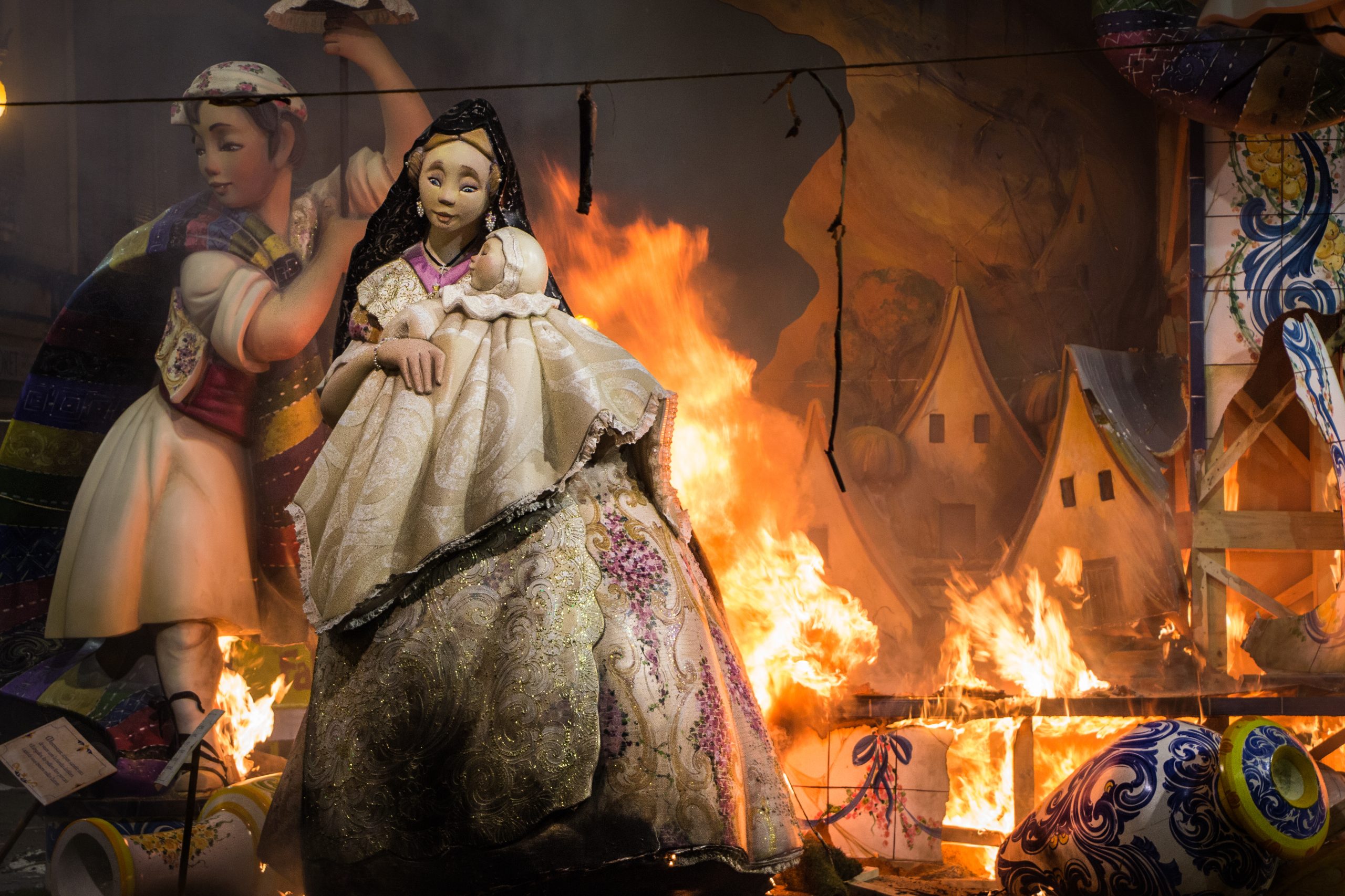
A Fallas monument is a work of art that can exceed 20 meters in height. But how does something so colossal destined to disappear rise?
- The Fallas Artist: He is the architect of illusion. He must not only be a sculptor and painter, but also an engineer to ensure that the structure withstands the wind and weight.
- Materials: Traditionally, wood, cardboard and fabrics were used. Today, expanded polystyrene (white cork) is mostly used for its lightness and ease of modeling, although there is a growing movement towards more sustainable materials to reduce smoke toxicity.
- La Plantà: It is the culminating moment (March 15). The parts arrive in trucks and are assembled. “Special Section” faults (the most expensive and largest) require large tonnage cranes.
Who pays for the party?
This is the million-dollar question. The Fallas are a festival self-managed by the people.
- The Fallas Commissions: Valencia is divided into neighbourhoods, each with its “Falla”. The neighbors register as “falleros” and pay a monthly fee throughout the year.
- Sponsorships and Lotteries: The commissions sell lottery, set up food stalls and look for local sponsors to finance the monument, which can cost from €5,000 to more than €200,000 in the case of the big categories.
- Grants: The Valencia City Council contributes a part of the budget, but most of the weight falls on the pocket of the ordinary citizen.
Essentials: What to see and enjoy?
If you visit Valencia during the Fallas week, these are the milestones you can’t miss:
La Mascletà (March 1 to 19, 2:00 p.m.)
In the Plaza del Ayuntamiento, thousands of people gather to listen to (rather than see) a pyrotechnic show. It’s not about lights, but about rhythm and sound power. It is a controlled earthquake that makes the ground and the chests of the attendees vibrate.
The Offering of Flowers (March 17 and 18)
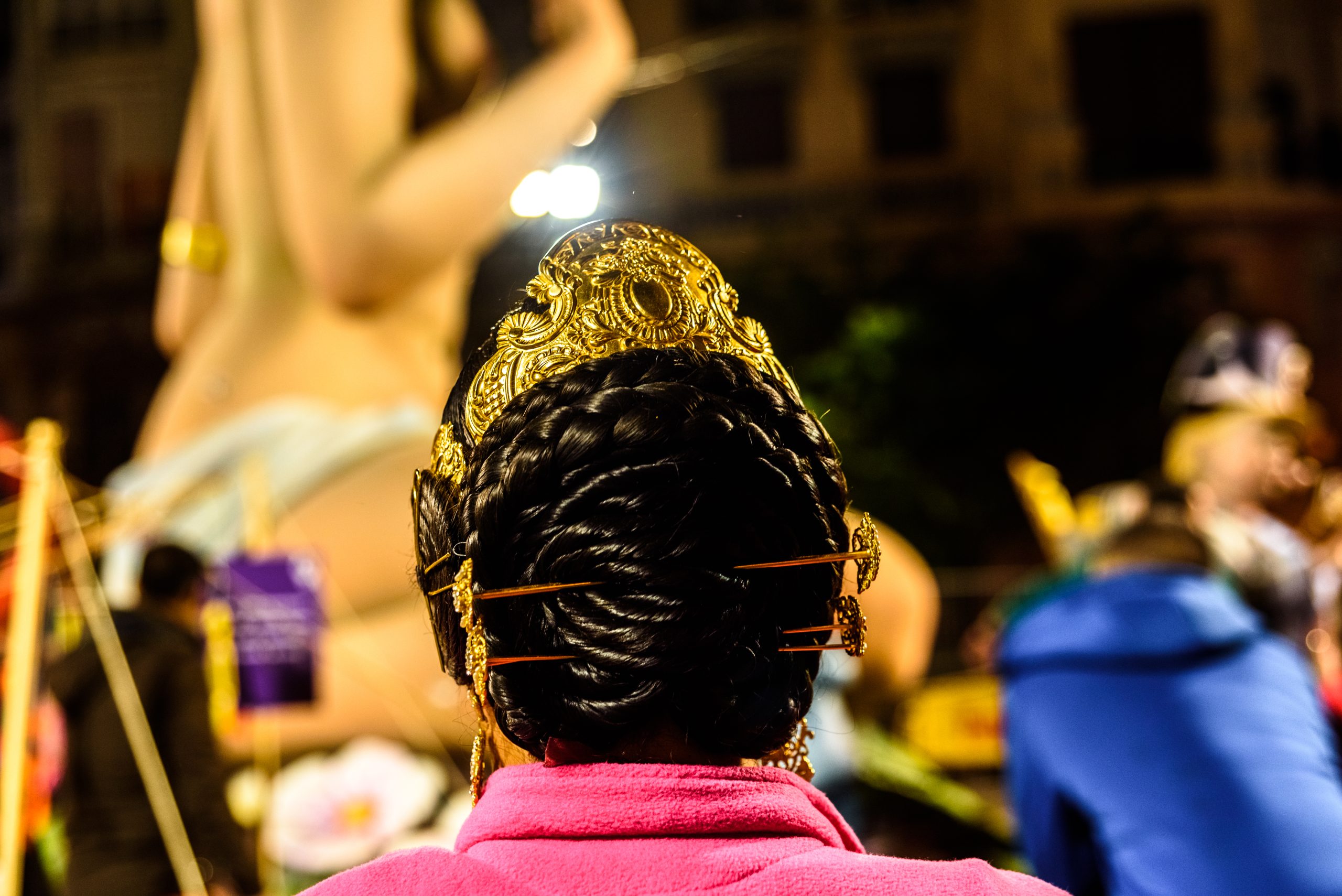
Thousands of falleros and falleras, dressed in their regional costumes, parade to the Plaza de la Virgen to deliver bouquets of carnations to the Virgen de los Desamparados. The flowers are used to make the impressive mantle of a 15-meter wooden structure that represents the “Geperudeta”. It is the most emotional and visually striking act.
The Castles and the Nit del Foc
Every night the sky lights up with fireworks, culminating in the Nit del Foc (early morning of the 18th to the 19th), the largest and longest pyrotechnics show of the festivities.
La Cremà (March 19)
It is the end of the cycle. At midnight, all the city’s fallas burn. It is a moment of catharsis where fire consumes the old to welcome spring.
The Environment: A City That Doesn’t Sleep
To experience the Fallas is to immerse oneself in an organized chaos. Traffic is cut off, the streets are filled with tents (casals) and the music of marching bands sounds on every corner.
The atmosphere is vibrant, noisy and extremely social. People walk for miles to see the monuments, stopping constantly to enjoy the March sun. It is common to see the falleros with their “blosón” (typical shirt) and the fallero scarf around their necks, sharing the festival with tourists from all over the world.
Fallas Gastronomy: The taste of gunpowder
You can’t understand the Fallas without their food. The physical effort of touring the city requires fuel:
- Pumpkin Fritters with Chocolate: It is the official breakfast, snack and dinner. They are sold at street stalls on almost every corner.
- The Paella: Cooking a paella over wood in the middle of the street is the sacred ritual of the Fallas commissions. The smoke from the orange wood mixes with the smell of gunpowder.
- Lunch: Valencian lunch is an institution. A hearty sandwich, peanuts, olives and a “cremaet” (coffee with burnt rum and spices).
Facts and Curiosities: The magnitude of the festival
| Concept | Detail |
| Number of monuments | About 800 (children and adults) in the city of Valencia alone. |
| Apparel | A handmade fallera costume can cost between €2,000 and more than €15,000. |
| Ninot Indultat | From among all the dolls, the public chooses one by popular vote to save it from the fire and take it to the Fallas Museum. |
The Fallas are a monument to the transience of life. The Valencian dedicates a whole year, a fortune and an immense effort to build something whose maximum beauty lies in the moment of its destruction. It is the celebration of the eternal cycle: create to burn, and burn to be born again from the ashes.
If you ever have the opportunity to be in Valencia on March 19, get ready. The heat of the fire, the tears of the Fallera Mayor and the final roar will remind you that, at least for a few days, art and satire are the masters of the world.
Would you like me to delve into a specific aspect, such as the design process of regional costumes or the evolution of pyrotechnic technology?
What if you could go living in Spain every year? Buy a property now with SILC ESTATES and you can enjoy the quality of life in Spain.