When people think of the Costa Blanca, their minds immediately evoke images of endless stretches of fine sandy beaches, turquoise coves, and exceptional Mediterranean cuisine. However, beyond the sun and the sea, the province of Alicante is home to a historical heritage of colossal dimensions, shaped by the passage of the most influential civilizations in Western history. At the urban heart of the provincial capital stands the greatest exponent of this legacy: the Provincial Archaeological Museum of Alicante, universally known as the MARQ.
Opened in its current facilities in the year 2000 and awarded the prestigious Best European Museum Award (EMYA) in 2004, the MARQ marked a turning point in international museography. It is not simply a container for ancient objects lined up in dusty display cases; it is a living, deeply interactive and avant-garde space that invites visitors to become archaeologists for a day. Throughout this extensive article, we will delve into the heart of this essential institution for understanding the DNA of Alicante and the cultural richness that defines the entire Costa Blanca.
1. From Sanatorium to Temple of History: The Architectural Headquarters
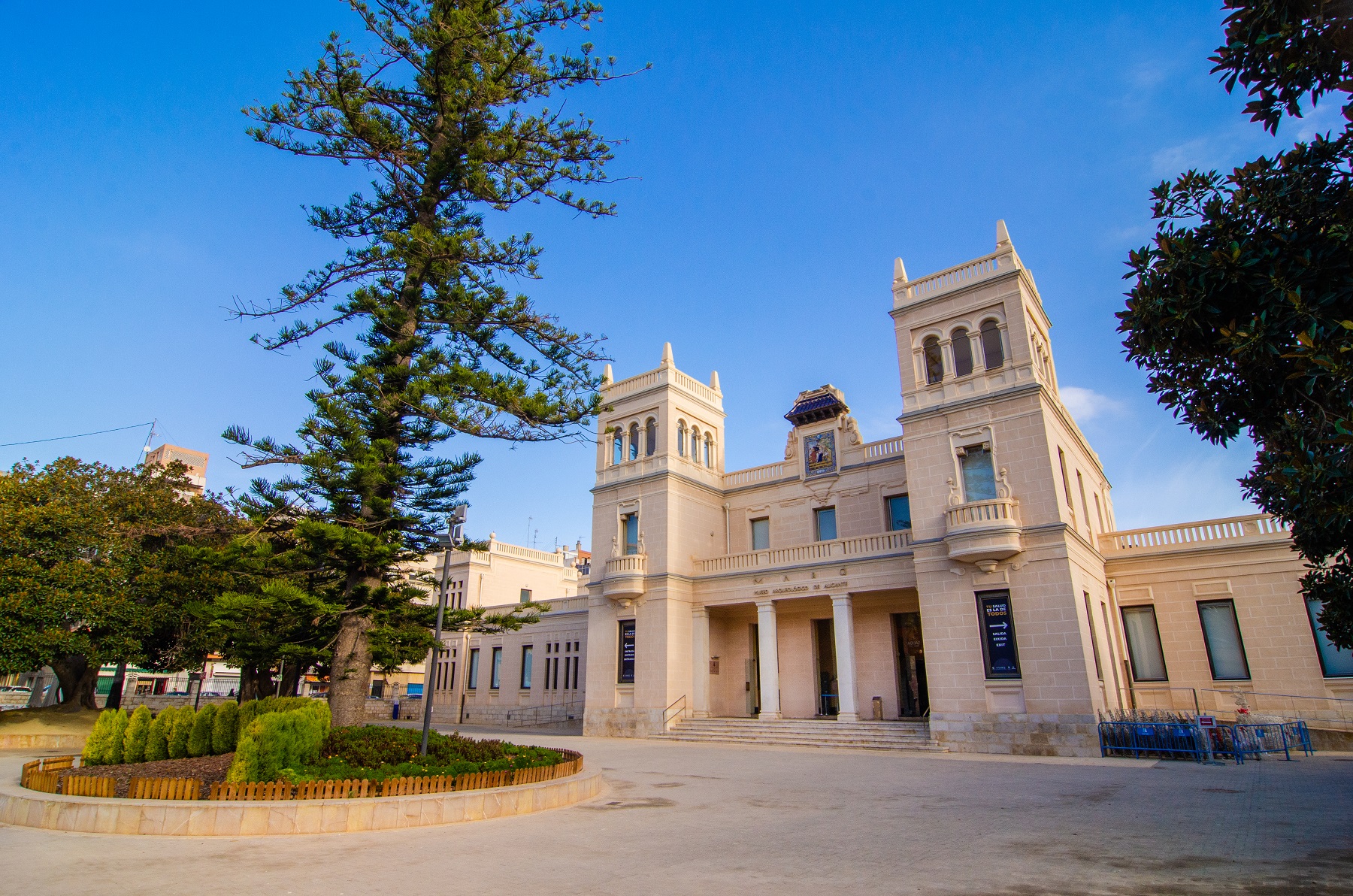
The spectacular nature of the MARQ begins long before crossing its thresholds, specifically with the appearance of the building itself. The museum occupies the former Hospital of San Juan de Dios, a monumental architectural work designed by the renowned Alicante architect Juan Vidal i Ramos and originally inaugurated in 1924 as a charitable sanatorium.
The complex follows an early 20th-century hygienist design, structured around pavilions symmetrically arranged around a large central courtyard, ensuring ventilation, isolation, and sunlight for the patients. For decades, this architectural ensemble represented a milestone in local healthcare, but the passing of time and the modernization of medical infrastructure led to its abandonment at the end of the last century.
The transformation of the former hospital into today’s MARQ at the end of the 1990s became one of the most ambitious and award-winning heritage restoration projects in the Valencian Community. The grandeur of the stone and exposed brick façade was preserved intact, while the interiors were completely transformed into a modern, open-plan space equipped with the most advanced climate control and lighting technologies of the time. The result is a harmonious and striking contrast: the exterior solemnity of a historic classical-style building that encloses an inner universe of technological innovation, where concrete, glass, and digital systems serve the purpose of historical education.
2. A Chronological Journey through the Roots of Alicante
The permanent exhibition at the MARQ is organized in a rigorously chronological manner through 5 main galleries. Each immerses visitors in a unique aesthetic and sensory atmosphere adapted to the era it represents.
Prehistory Gallery: The Origins of Humanity in Southeastern Spain
The journey begins in the Paleolithic period, travelling back tens of thousands of years. This gallery recreates the rugged geography of Alicante and shows how the first hunter-gatherer groups settled in emblematic caves such as the Cova de l’Or (Beniarrés) and the Cova de les Cendres (Teulada-Moraira). Through perfectly crafted flint tools, human remains, and reproductions of Levantine cave art – declared a UNESCO World Heritage Site, the exhibition explains the critical transition from nomadic economies to the Neolithic era, the domestication of animals, and the birth of agriculture.
Iberian Culture Gallery: The Identity of Contestania
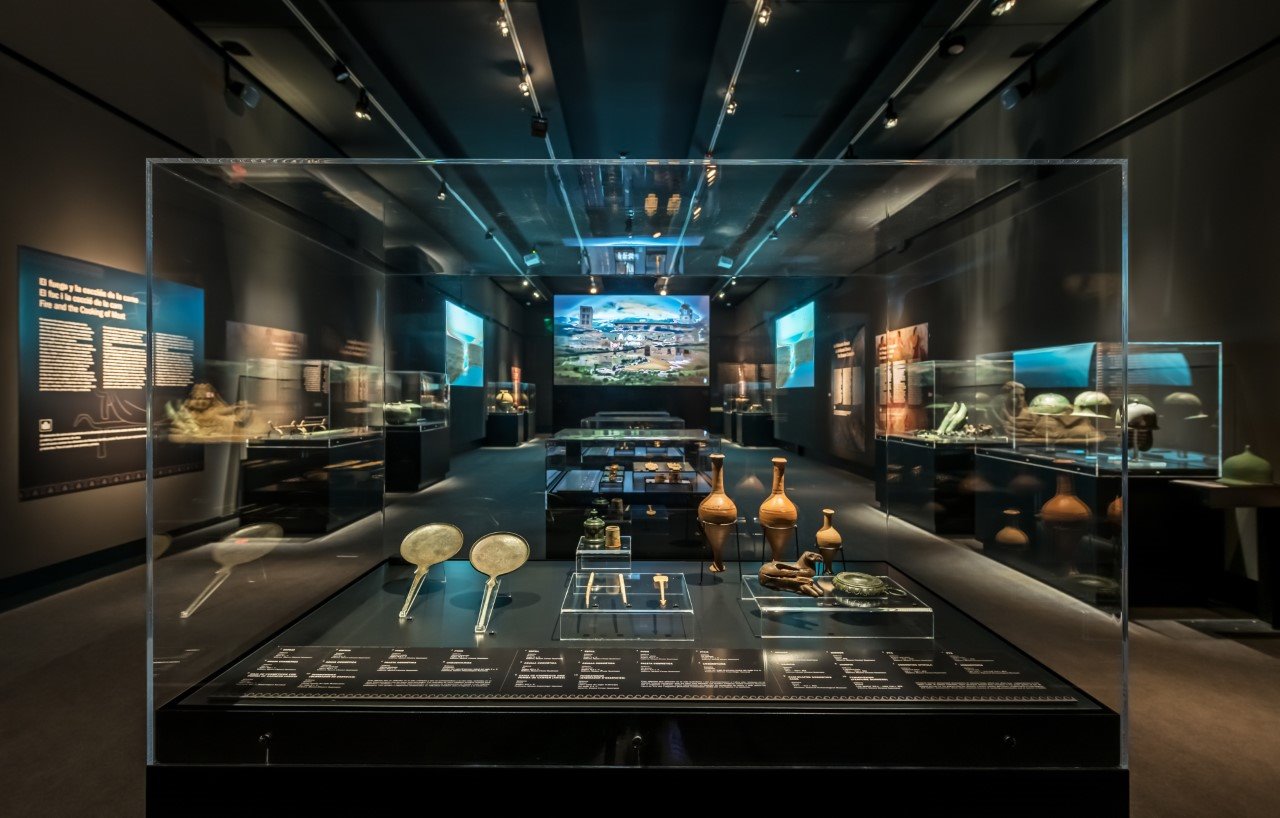
The Iberian people who inhabited the lands of Alicante, known as the Contestani, are undoubtedly one of the museum’s pillars. The province possesses Iberian archaeological sites of international importance, whose treasures are safeguarded in this section. Visitors can admire finely decorated ceramics, weapons such as the famous falcatas (Iberian swords), and bronze religious votive offerings. Among the most iconic pieces is the sculpture of the Lady of Cabezo Lucero (Guardamar del Segura), a stone bust that exemplifies the complexity of the art, mysticism, and clothing of the classical Iberian elites.
Roman Culture Gallery: Lucentum and Life in the Empire
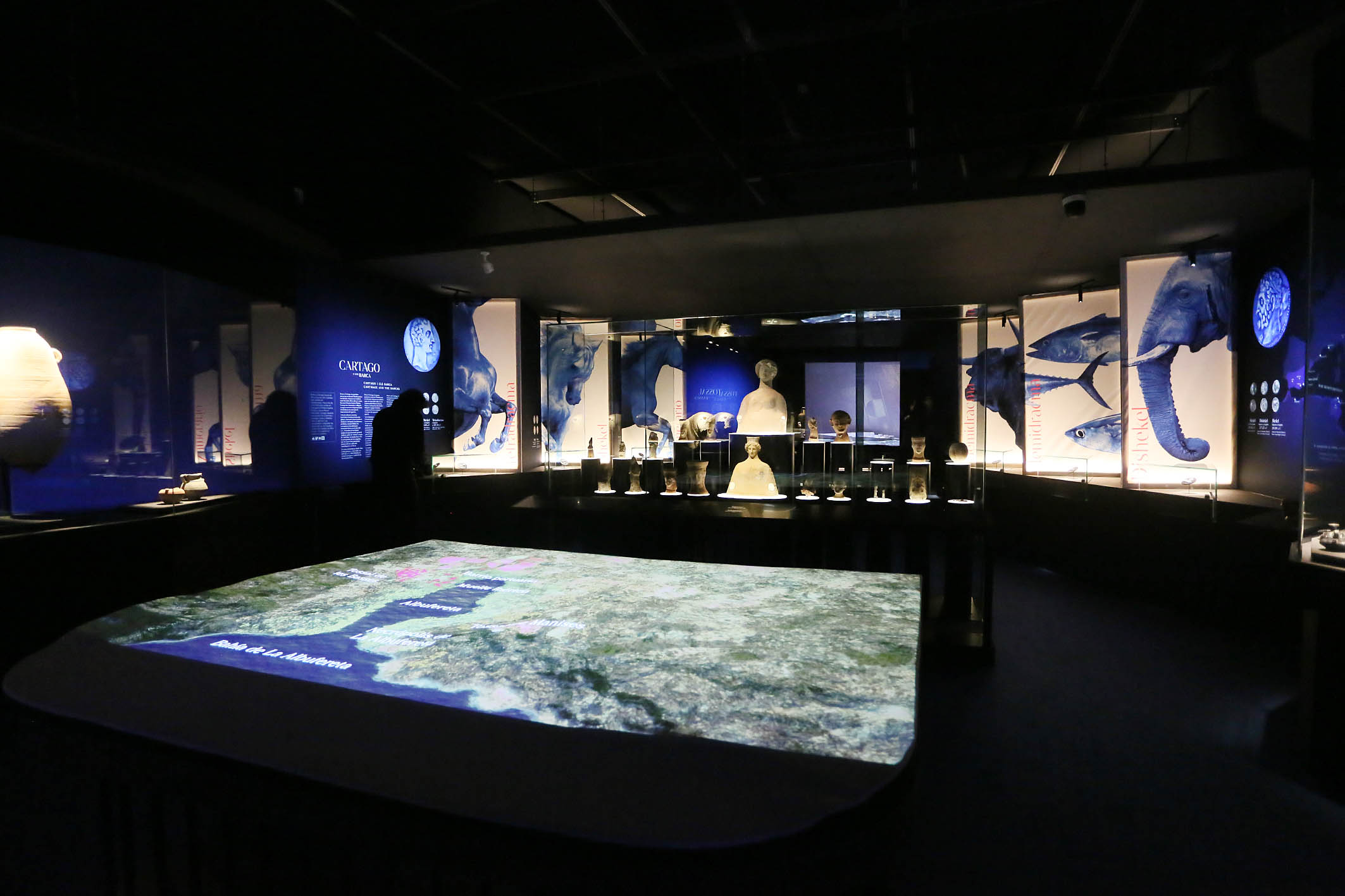
The arrival of Rome radically transformed the urban and social landscape of the Costa Blanca. This gallery focuses particularly on the discoveries made at Lucentum, the original Roman city located in the present-day Alicante district of Albufereta, as well as Illici (Elche). The exhibition recreates the city forum, its baths, and its necropolises. The polychrome mosaics, imperial marble statues, and collections of Latin inscriptions transport visitors to a time when the province was fully integrated into Mediterranean trade networks, exporting wine, olive oil, and the highly prized garum (fish sauce).
Middle Ages Gallery: The Confluence of Cultures
Alicante was a dynamic frontier during the medieval period, a territory where the Islamic and Christian worlds collided, coexisted and mutually influenced each other. The exhibition shows the splendour of Al-Andalus in Alicante (Sharq al-Andalus), with pieces that reveal the refinement of Muslim architecture, calligraphy and irrigation systems. The subsequent Christian conquest by the crowns of Castile and Aragon is staged through armour, royal coins and the reconstruction of the fortified urbanism of feudal castles that dot the geography of Alicante, such as Santa Bárbara in Alicante or Biar.
Modern and Contemporary Age Gallery: The Birth of Modern Alicante
The final major gallery covers the period from the 16th century to the early decades of the 20th century. It tells the story of Alicante’s consolidation as a strategic port of the Spanish Empire, the military sieges suffered during the War of the Spanish Succession, the expulsion of the Moriscos, and later the rise of the Industrial Revolution and the birth of the railway. Industrial artefacts, everyday objects, and historical documentation complete the circle of settlement in these lands, connecting the distant past with the grandparents of present-day Alicante society.
3. The Methodological Revolution: The 3 Thematic Galleries
If the chronological collection is the soul of the MARQ, its 3 thematic galleries are the innovative brain that earned it international recognition. The museum’s designers understood that, to appreciate history, the public must understand how that history is rescued from oblivion. To achieve this, they created 3 spaces dedicated to explaining the branches of archaeological research through life-sized hyper-realistic reconstructions.
- Field Archaeology Gallery: Designed as a full-scale simulation of a terrestrial archaeological excavation. The glass floor reveals different geological strata filled with bones, ceramics, and architectural remains, allowing visitors to understand how the scientific method uses stratigraphy to date the past accurately.
- Urban Archaeology Gallery: Explains the immense challenges of recovering heritage beneath the asphalt of modern cities. Through interactive screens, visitors discover how the construction of apartment buildings in Alicante or Elche often uncovers Roman or Islamic remains, and how archaeologists work against the clock to document and preserve these discoveries without halting urban development.
- Underwater Archaeology Gallery: Perhaps the most visually spectacular. It recreates the interior of a Roman shipwreck lying at the bottom of the Costa Blanca sea. Lighting and sound effects imitate the pressure and atmosphere of the ocean depths while explaining how amphorae and submerged cargoes are recovered using high-precision scientific diving techniques.
4. A World-Class Museum: The Magnet for Major International Exhibitions
The MARQ does not rely solely on its astonishing local heritage. Over the last 2 decades, it has established itself as one of Europe’s most prestigious venues for temporary exhibitions. Its scientific rigour, combined with facilities meeting the highest international standards for security and conservation, has enabled partnerships with cultural giants such as the British Museum in London, the Louvre Museum in Paris, the Hermitage Museum in Saint Petersburg, and the principal state museums of the People’s Republic of China.
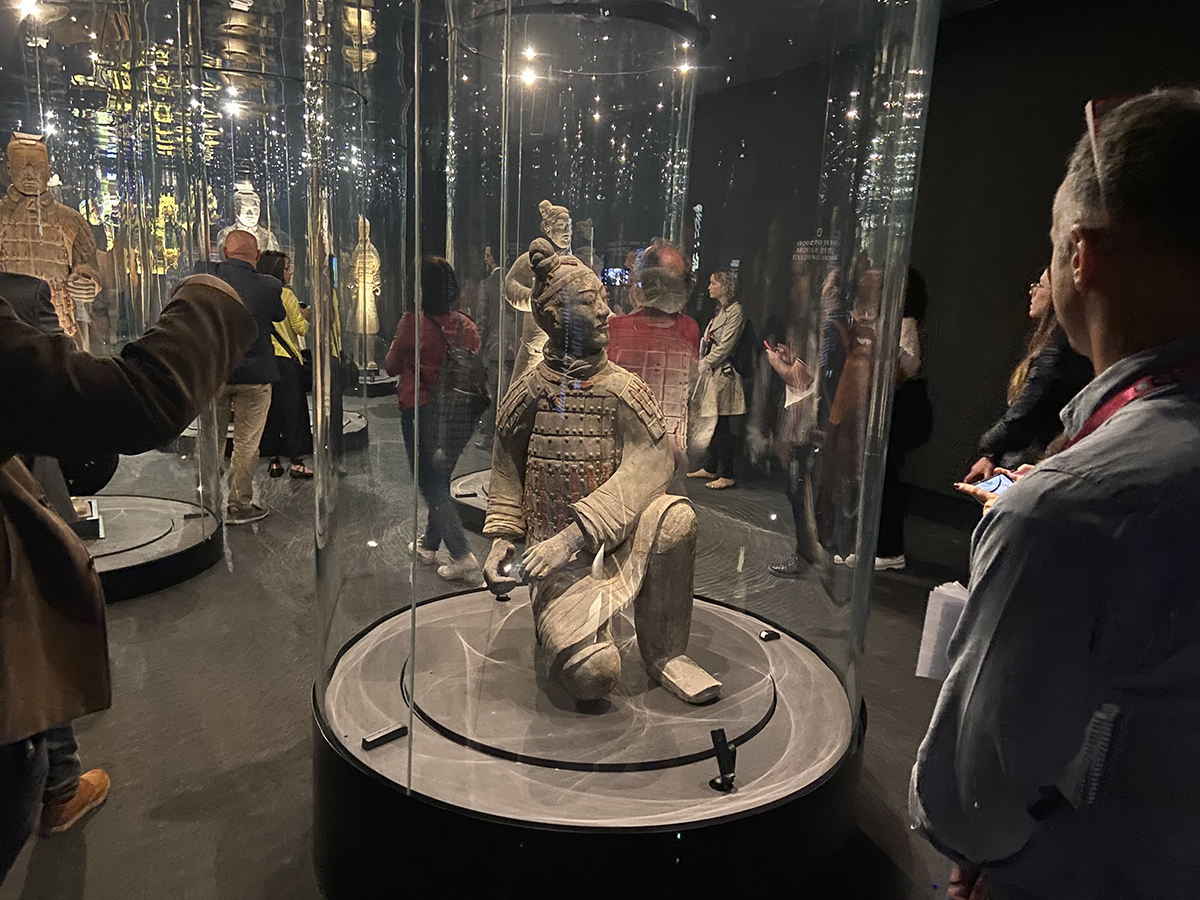
History enthusiasts living in or visiting the Costa Blanca have had the privilege of viewing cultural milestones of humanity without travelling abroad. Memorable exhibitions such as The Mystery of the Mummy, The Warriors of Xi’an (one of the most successful exhibitions in the province’s history), The Kingdom of the Vandals, and monographic collections dedicated to Etruscan art and the gladiators of Rome have transformed the institution into a global cultural beacon. These exhibitions are not merely borrowed collections; they are accompanied by scientific catalogues based on original research and stage designs created specifically by the MARQ team, generating an immersive experience radically different from that of the originating museums.
5. The MARQ Archaeological Network: Open-Air Archaeology
The influence of the MARQ extends far beyond the walls of the former Hospital of San Juan de Dios. The MARQ Foundation directly manages a network of archaeological sites and museum monuments spread throughout the province, allowing cultural tourists to follow a fascinating archaeological route across the Costa Blanca.
Among the most notable sites are:
- El Tossal de Manises (Lucentum Site): Located a few minutes from the centre of Alicante, in the Albufereta. It is the site of the ancient Roman city of Lucentum. Today, it is a model archaeological park where visitors can walk along paved streets, explore the foundations of the walls, defence towers, the urban forum, and the remains of 2 Roman bath complexes.
- La Illeta dels Banyets (El Campello): A coastal enclave of exceptional scenic and archaeological beauty. On this small peninsula (formerly an artificial island), remains from the Bronze Age coexist with a highly important Iberian settlement and a Roman fish-processing factory carved directly into the shoreline rock, popularly known as “the Queen’s Baths.”
- The Sanctuary of Pla de Petracos (Castell de Castells): Located in the interior of the province, in a spectacular mountain setting, it is one of the most important macro-schematic rock art sites in Europe. Its paintings, dating back approximately 8,000 years, served as the religious centre of the first Neolithic farmers and enjoy UNESCO’s highest level of protection.
6. The Impact on Alicante and Costa Blanca’s Tourism Model
Traditionally, the Costa Blanca has been identified as a leading sun-and-beach destination. Towns such as Benidorm, Torrevieja, and Alicante itself have attracted millions of international visitors thanks to their mild climate and comprehensive tourist infrastructure. However, in the 21st century, travellers seek more: meaningful experiences, authenticity, and added value that distinguishes one destination from another.
It is precisely in this diversification that the MARQ plays an absolutely strategic role. By raising the cultural profile of the province, the museum acts as a powerful tool for reducing seasonal tourism. It attracts visitors during autumn and winter, drawing a culturally motivated audience interested in history, gastronomy, heritage, and historical routes. The MARQ demonstrates that cultural and historical heritage is not a luxury expense for public administrations but a direct economic investment and a fundamental driver of the tertiary sector (hotels, restaurants, local commerce), integrating Alicante into the international circuits of high-quality cultural tourism.
7. Practical Guide for Planning Your Visit to the MARQ
If you are planning a trip to Alicante or are a Costa Blanca resident who has yet to visit this cultural landmark, here are some practical recommendations to make the most of your experience:
- Location and access: The museum is located in Plaza del Doctor Gómez Ulla, in the northern district of Pla del Bon Repós. It has excellent transport connections. The best option is to use the Alicante Metropolitan TRAM (Lines 1, 2, 3, and 4), getting off at the underground station “Marq-Castillo,” just a few metres from the main entrance. If you prefer city buses, routes 02, 09, 21, and 23 stop nearby.
- Estimated time of visit: To explore the permanent exhibition properly, paying attention to the interactive displays and audiovisual presentations, at least two and a half hours are recommended. If the museum is hosting one of its major international temporary exhibitions, it is advisable to reserve an entire morning (approximately four hours).
- Guided tours: Although the museum’s presentation is highly educational, using the official MARQ guides elevates the experience to another level. Their entertaining explanations and historical anecdotes are perfect for both experts and families with children.
- Universal accessibility: The MARQ is exemplary in terms of inclusion. The building is fully adapted for people with reduced mobility (ramps and spacious lifts) and provides sign language guides, adapted audio guides, and tactile replicas of key pieces for visually impaired visitors.
A Must-Visit Destination in the Mediterranean
The Archaeological Museum of Alicante transcends the classical concept of a museum to establish itself as a first-class emotional and sensory experience. It is the umbilical cord connecting the radiant modernity of today’s Costa Blanca with the aspirations, technologies, beliefs, and artistic expressions of the women and men who walked these shores thousands of years ago.
Whether you wish to uncover the mystery of the Iberians, relive the Roman imperial order, admire the expertise of underwater archaeologists or marvel at the treasures of the world’s great civilizations showcased in its temporary exhibitions, the MARQ stands as an essential destination. It is a monument to science, education, and sustainable tourism that reminds us that beneath the golden sands of Alicante’s beaches beats a historical heart of incalculable value, waiting to be discovered and shared with the world.
Are you still thinking about buying a dream home in Spain? Contact SILC ESTATES now to make your dreams come true. They will help you throughout the process with no obligation.