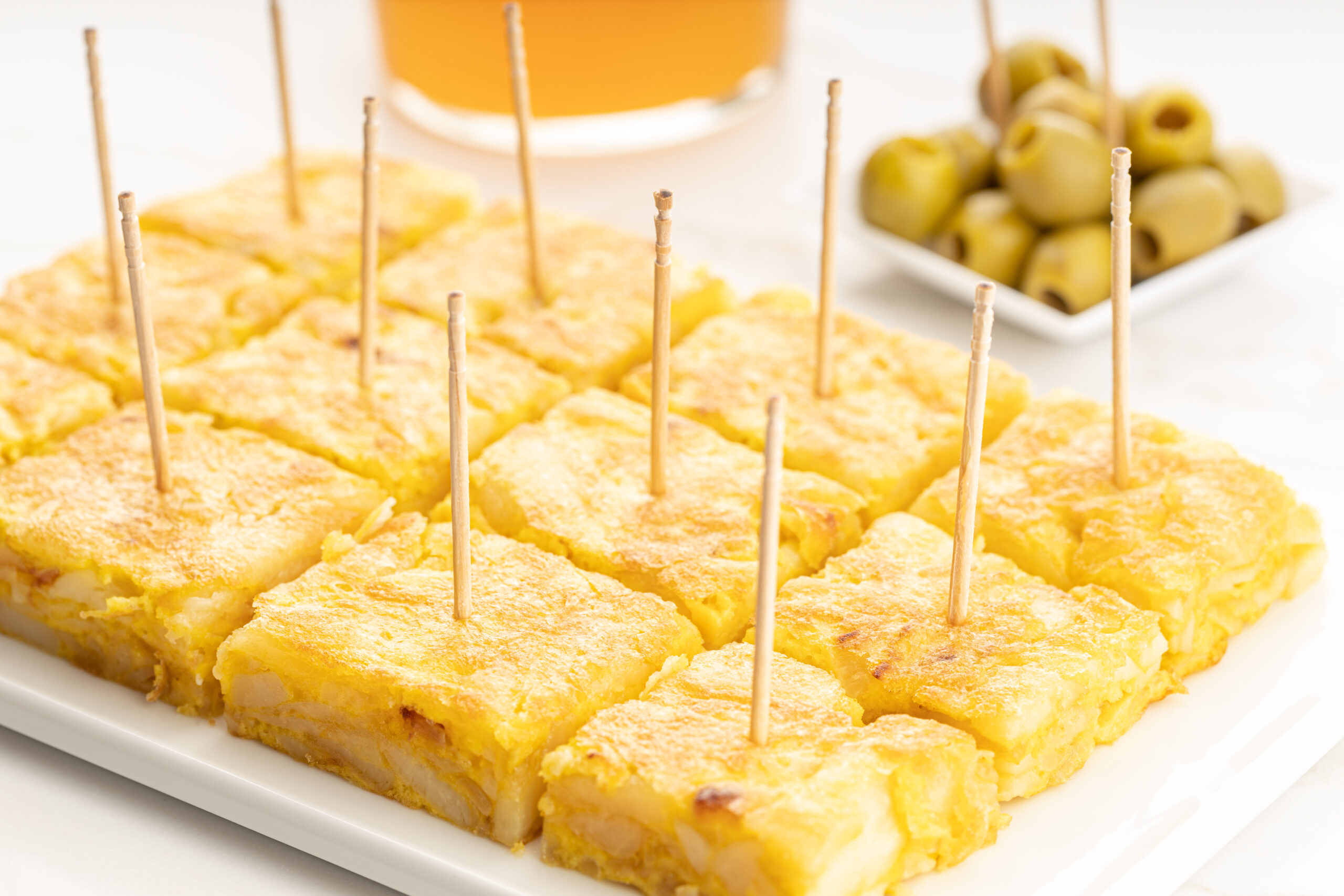
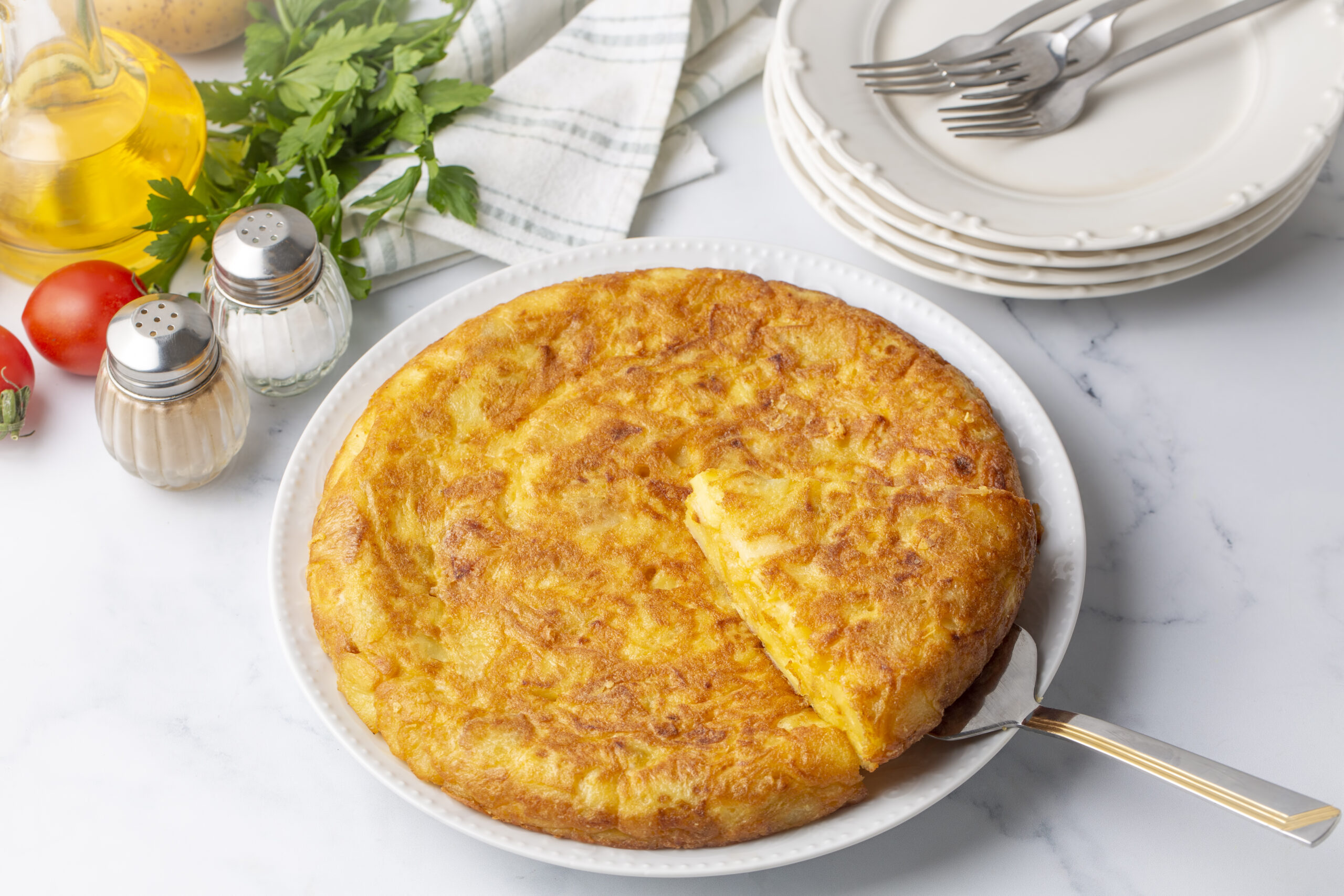
When one thinks of Spain, countless vibrant images immediately spring to mind. It is easy to picture the golden, sun-drenched beaches of the Mediterranean, the passionate strumming of a flamenco guitar, the breathtaking architecture of Antoni Gaudí or the endless olive groves rolling beneath the Andalusian sky. However, to truly understand the soul of this country, sitting down at the table is essential. Spanish cuisine is celebrated around the world for the depth of its flavours, its reverential respect for fresh, local ingredients and its astonishing regional diversity. Nevertheless, among complex paellas, delicate seafood and world-famous cured meats, there stands a humble and unpretentious champion that unites the entire Iberian Peninsula: the potato omelette.
This seemingly simple dish, made primarily from potatoes, eggs, olive oil and salt (with the eternal and heated debate about onions always simmering in the background), is far more than a staple of the daily diet. It is a cultural institution. It is the centre of gravity at family gatherings, the ultimate comfort food, the perfect excuse for a mid-morning break in any workers’ bar and the undisputed star of haute-cuisine counters.
In this comprehensive guide, we will embark on an in-depth journey through the fascinating history of the Spanish potato omelette, examine the almost scientific technique required to create the perfect one, explore the many varieties found throughout Spain and make an essential stop in the Basque Country to discover the astonishing world of its famous tortilla pintxos. Finally, we will discover how living on the idyllic Costa Blanca provides the perfect gateway to enjoying these and other gastronomic wonders, and how to turn that dream into reality with the help of trusted professionals.
The unusual history of the potato omelette
To fully understand the Spanish potato omelette, we must take a journey back in time. The story of this iconic dish is one of global exploration, agricultural adaptation and military urgency. It is a recipe born out of the basic need for survival which, over the centuries, eventually conquered the most refined palates in the world.
The Potato’s Long Journey to Europe
The star ingredient of the omelette, the potato, is not native to Europe. It was first cultivated thousands of years ago by indigenous communities in the Andes, in the territories that are now Peru and Bolivia. When Spanish explorers and conquistadors arrived in the Inca Empire in the 16th century, they discovered this hardy and highly nutritious tuber. By around 1570, the first potatoes had arrived at ports on the Iberian Peninsula.
However, the potato’s reception in the Old World was far from enthusiastic. For more than two centuries, European society regarded it with distrust and suspicion. Accustomed to cereals such as wheat and rye, people considered a crop that grew underground to be coarse, tasteless and suitable only for feeding livestock or members of society living in the most extreme poverty. It was not until the late 18th and early 19th centuries, driven by terrible famines and harvest crises, that Europeans were forced to consume potatoes on a widespread basis, discovering their extraordinary ability to save lives.
The Birth of the Myth: Legend or Historical Fact?
The precise moment when potatoes and eggs were first combined in a frying pan remains the subject of heated debate among historians, suspended somewhere between rigorous documentation and romantic folklore.
The most popular and internationally widespread legend attributes the invention of the omelette to the Carlist general Tomás de Zumalacárregui during the first third of the 19th century, in the course of the First Carlist War of 1833–1840. According to the popular story, the general was searching for a quick, very inexpensive and highly nutritious way to feed his hungry and exhausted troops during the siege of Bilbao. In a humble farmhouse, a peasant woman who had no provisions other than a few potatoes, several eggs and a piece of onion decided to combine everything and cook it in a frying pan. The general was delighted with the result, and it became the official field ration because of its remarkable energy content.
However, contemporary historical research places the origin of the dish several decades earlier and in a far more peaceful setting. In 2008, Javier López Linage, a scientist at the Spanish National Research Council, or CSIC, published a detailed study locating the birthplace of the Spanish potato omelette in the Extremaduran town of Villanueva de la Serena. According to municipal records from 1798, two enlightened landowners, the Marquis of Robledo and Joseph de Tena Godoy, were searching for an economical potato-based food to alleviate the shortage of wheat. After various experiments involving a mixture of potato flour and egg, they arrived at the method of frying sliced potatoes directly before combining them with egg. The original prototype of the Spanish potato omelette we know today had officially and documentarily been born.
The Art and Science of the Perfect Recipe
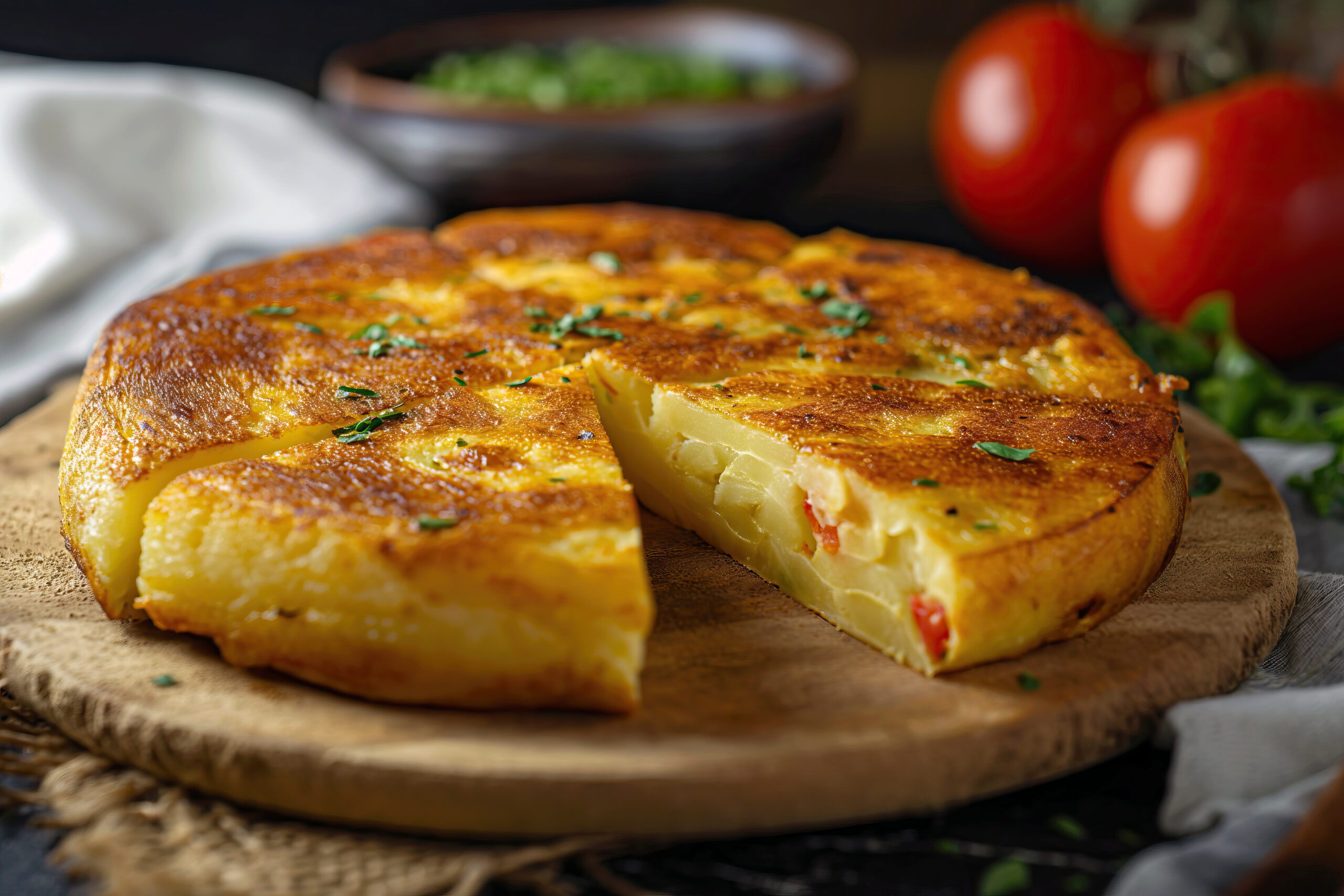
Preparing an excellent Spanish potato omelette requires only four basic ingredients: potatoes, eggs, extra virgin olive oil and salt. However, it is the technique that makes the difference between the ordinary and the sublime. A poorly prepared omelette is usually dry, dense and bland; a perfect omelette is a true work of culinary art: golden on the outside and moist, almost creamy, on the inside, with the potato delicately melting into the egg.
Choosing the Ingredients
- The potato: It is the foundation of the dish, and not just any variety will do. A potato is needed that retains some consistency while becoming exceptionally creamy when cooked slowly. In Spain, varieties such as Monalisa and Kennebec are favoured by experts because of their perfect balance between starch and water.
- The olive oil: There are no shortcuts here. High-quality extra virgin olive oil is essential. The oil does not merely act as the cooking medium, but as an essential seasoning. The potato will absorb its aroma and flavour, meaning that using a robust variety such as Picual or a milder one such as Arbequina will completely transform the final result.
- The eggs: They must be fresh and, wherever possible, free-range or organic, classified as category 0 or 1. The quality of the hens’ diet will determine not only the richness of the flavour, but also the highly characteristic and appetising orange-yellow colour of a good omelette.
- The salt: Ordinary sea salt is used to enhance the natural nuances of the potato and egg in a balanced way.
The technique step by step: Patience, temperature and care
Preparing a traditional Spanish potato omelette is a slow process that cannot be rushed.
- The slicing: After peeling and washing the potatoes, the way they are cut is crucial. Some people prefer thin slices, while others choose small, irregular cubes. What really matters is that the thickness is consistent, ensuring that every piece cooks at exactly the same rate.
- The slow cooking or confit: This is the great secret behind the texture. The potatoes should not be fried over a high heat until crispy, but cooked slowly in plenty of olive oil over a medium-low heat. They should cook gently, almost as though being confited, until they are so tender that they begin to fall apart slightly when pressed with a fork.
- The mixing: Once the potatoes are perfectly cooked, they are removed from the oil using a slotted spoon and drained to eliminate excess oil. Meanwhile, the eggs are beaten, but not excessively, as a foamy texture is not desired. Immediately afterwards, the hot potatoes are added to the beaten egg.
- The sacred resting period: This step distinguishes amateurs from true masters. The egg and potato mixture must be left to rest for at least 15 or 20 minutes before being placed in the frying pan. The heat from the freshly cooked potatoes will gently warm the egg and, most importantly, the potatoes will absorb some of the liquid egg, creating a uniform mixture. This ensures that the inside of the omelette becomes a creamy emulsion rather than dry scrambled egg with loose pieces of potato.
- Setting and turning: A non-stick frying pan is heated with just a few drops of oil. The mixture is poured in and cooked over a high heat for the first few moments to seal the outside quickly, after which the heat is reduced. Then comes the crucial and much-feared moment: turning the omelette. With the help of a large, flat plate—or a specially designed tortilla-turning plate—the frying pan is inverted with a firm, rapid movement. The omelette is then gently slid back into the pan to seal the other side.
The Great Gastronomic Civil War: With-Onion Supporters Against No-Onion Purists
It is completely impossible to discuss the Spanish potato omelette without addressing the country’s most heated social and culinary debate. It is a peaceful but passionate controversy that divides entire families, dominates social media polls and generates heated discussions at bar counters: should an authentic Spanish potato omelette contain onion?
The “Concebollistas” (Onion Supporters)
Those who support the inclusion of onion argue that this ingredient elevates the dish to another dimension. Finely chopping the onion and slowly caramelising it together with the potatoes in the oil adds a subtle sweetness and incomparable moistness to the mixture. Onion supporters argue that an omelette without onion is flat, overly dense and even dry. For this group, onion is the natural source of moisture that guarantees the perfect creamy texture in every bite.
The “Sincebollistas” (Potato and Egg Purists)
At the opposite extreme are the purists. Opponents of onion maintain that the dish is called a “potato omelette” for an obvious reason. They argue that the sweet and sometimes overpowering flavour of onion conceals the delicate nuances of a good potato and the freshness of a high-quality egg. They also claim that onion alters the structure of the omelette, making it excessively soft. For a committed no-onion purist, adding onion is almost an act of sacrilege that destroys the elegant simplicity of the original recipe.
Regardless of which side you choose, both versions are widely available throughout Spain and defended with equal pride and devotion.
Regional varieties: A map of Spain on a plate
Although the classic recipe has legions of loyal followers, the different regions of Spain have developed their own interpretations of the omelette, adapting it to local customs and the produce found in their immediate surroundings.
- Betanzos Style (Galicia): In the town of Betanzos, in the province of A Coruña, the concept of juiciness is taken to its ultimate expression. The Betanzos omelette is famous for being extremely runny, or babosa. It is prepared using a very high proportion of egg yolks and is cooked for only a few moments over a very high heat. When it is cut, the liquid egg floods the plate with a spectacular golden colour. This variety never includes onion.
- Madrid Style: In the Spanish capital, omelettes tend to be firmer, taller and more thoroughly set. They are substantial creations traditionally served in generous wedges accompanied by a good slice of crusty bread, and occasionally with a touch of bravas sauce or mayonnaise.
- Andalusian Variants: In the south, it is common to find thinner omelettes that frequently incorporate other garden produce, such as wild asparagus, artichokes or even small cubes of ham, bringing them slightly closer to the concept of the Italian frittata.
- The Tortilla Paisana: This rustic and substantial version is widespread throughout Spain. It adds ingredients such as chorizo, peas, Serrano ham and red pepper to the classic potato-and-egg mixture, resulting in a colourful dish with an extraordinary intensity of flavour.
The Basque Country and the Astonishing Phenomenon of Tortilla Pintxos
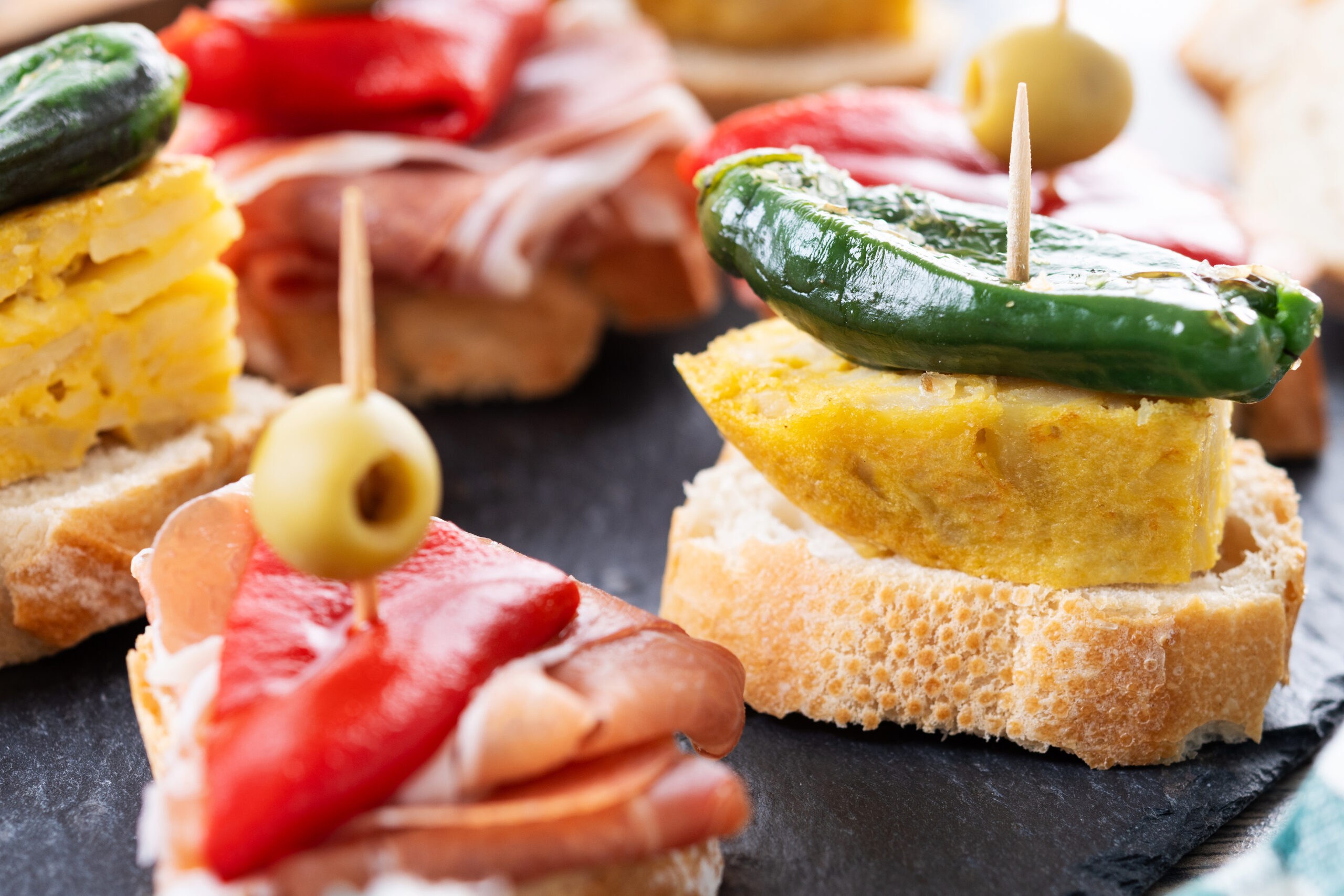
Although the whole of Spain pays homage to the Spanish potato omelette, the Basque Country, or Euskadi, has elevated this everyday dish to the level of miniature haute cuisine. Cities such as Bilbao and San Sebastián are internationally renowned for their pintxos, using the Basque spelling: elaborate displays of delicacies arranged on slices of bread that completely cover the counters of both traditional and modern bars.
In the Basque Country, the custom of going out for txikiteo (moving from one establishment to another while enjoying small drinks and quick bites) is a fundamental pillar of social life. In this stimulating gastronomic circuit, the undisputed king of the bar counter is undoubtedly the tortilla pintxo.
Unlike in other regions, where the omelette is served almost exclusively in its traditional form, Basque chefs use it as a blank canvas for experimentation. It is common to slice the omelette horizontally through the middle, much like a cake, and fill it with countless combinations, or to incorporate ingredients from the region’s rich cuisine directly into the mixture. The visual display of omelettes decorating any bar in Bilbao’s Plaza Nueva or Old Town is a spectacle that awakens anyone’s appetite.
The most desirable Basque variations
- Tortilla filled with txaka: Probably the undisputed queen of pintxo bars. It consists of a moist omelette filled with a mixture of txaka, made from chopped crab meat, mayonnaise and hard-boiled egg. The contrast in temperature between the warmth of the freshly cooked potato and the coolness of the seafood filling is sublime.
- Ham and cheese tortilla: An infallible combination of culinary comfort. A generous layer of melting local cheese and top-quality ham is placed at the heart of the omelette, with everything melting together into an exceptionally rich and creamy mouthful.
- Mushroom and truffle tortilla: Drawing on the north’s great mushroom-picking tradition, this variety incorporates gently cooked wild mushrooms and a subtle touch of truffle oil, offering a deep, earthy flavour that is particularly appreciated during the autumn months.
- Tortilla with piquillo peppers: Sweet and slightly smoky piquillo peppers are placed on top of the pintxo or incorporated inside it, providing the perfect touch of acidity to balance the richness of the egg and oil.
- Spicy tortilla: For those who enjoy stronger sensations, some taverns add crumbled spicy chorizo or chopped local chillies, such as alegría riojana, giving the pintxo an unrivalled intensity.
Enjoying a tortilla pintxo in a Bilbao tavern is a complete sensory experience. The cheerful bustle of the establishments, the clinking of glasses, the friendliness of the waiters serving the slightly warm portion on a small plate and the perfect pairing with a glass of txakoli, the young, fruity and slightly sparkling white wine typical of the region, combine to create one of the finest gastronomic experiences available anywhere in Europe.
From the Costa Blanca to the Basque Country: The perfect culinary journey in less than 2 hours
Reading about these spectacular tortilla pintxos has probably made you hungry, but you may also be thinking: “The Basque Country is in northern Spain, whereas my dream is to live in the south, beside the warm waters of the Mediterranean Sea.”
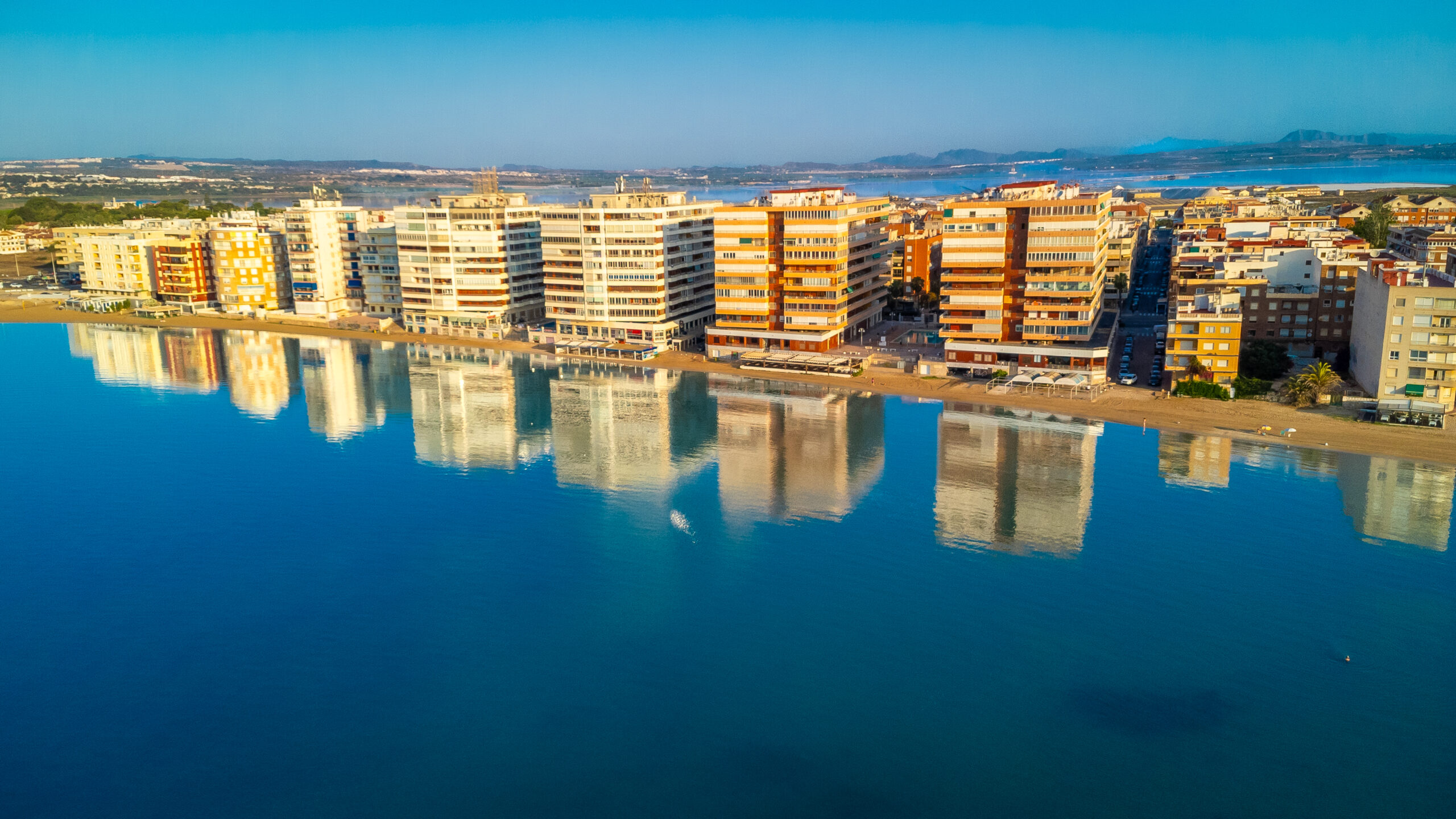
It is precisely this wonderful complementarity that makes establishing a home in Spain, and specifically on the idyllic Costa Blanca, so appealing. This stretch of coastline, centred around the province of Alicante, offers one of the highest, healthiest and most enjoyable standards of living in Europe. We are talking about a region that enjoys more than 300 days of bright sunshine each year, kilometres of Blue Flag beaches, a relaxed pace of life and exceptional Mediterranean cuisine, featuring the finest fresh fish from the bay, vegetables from the local market gardens and Alicante’s incredible rice dishes.
However, choosing the Costa Blanca as your home does not mean giving up the cultural and culinary treasures offered by northern Spain. In fact, the province of Alicante is an unbeatable base thanks to its excellent transport infrastructure.
Through the modern Alicante-Elche Miguel Hernández Airport (ALC), which offers exceptional daily connections, the whole country is within quick and easy reach.
The direct flight connecting Alicante to Bilbao takes just 1 hour and 40 minutes.
Imagine this perfect weekend plan: you wake up in the morning in your spectacular property in Altea, Calpe, Moraira or Jávea; you enjoy a coffee on your terrace while gazing out across the vast blue Mediterranean Sea and then make the comfortable and incredibly quick journey to the airport. In less than two hours of flying time, you will be strolling through Bilbao’s Old Town, surrounded by green mountains and enjoying a superb lunch of filled tortilla pintxos. After a weekend immersed in the north’s rich culture and scenery, you fly home and spend that same evening watching the Mediterranean sunset from your porch. It is the ultimate combination of lifestyles: the peace and climate of the Mediterranean with immediate access to the vibrant north of Spain.
Make the Dream of Your Life in Spain a Reality
Spain is not simply a holiday destination; it is a philosophy of life. It is a place where quality time, good food shared with friends and the pleasure of simple things, such as a freshly prepared Spanish potato omelette, are prioritised. It is a country of extraordinary contrasts where a diversity of landscapes and flavours is always within easy reach.
If you have been longing to take the step and find your own place beneath the Spanish sun, receiving the right advice is essential to ensuring that the purchasing process is straightforward and completely secure. Buying a property abroad requires transparent professionals who understand your expectations and guide you personally through every legal and administrative decision.
In this respect, SILC ESTATES has established itself as one of the most solid, professional and completely trusted estate agencies for European clients wishing to settle in Spain. Its multidisciplinary team, with extensive experience in the sector and in-depth knowledge of the Costa Blanca property market, stands out for its personalised service and exclusive portfolio of dream properties.
Whether you imagine your future in a modern frontline beach apartment with panoramic sea views, a charming traditional rustic-style country property or a contemporary luxury villa with a private swimming pool and every technological convenience, SILC ESTATES will comprehensively manage every aspect of the purchase. Its commitment is to make your transition to the Spanish lifestyle an exciting and completely worry-free experience.
Stop imagining what it would be like to wake up each day in the Mediterranean climate, surrounded by a welcoming culture and with some of the finest cuisine in the world within easy reach. Take the first step today. With the right expert assistance, you will soon be enjoying the sunshine on your new terrace and deciding whether you prefer your slice of tortilla with or without onion.
Begin your Spanish adventure today. We invite you to visit SILC ESTATES’s official website at https://silcestates.com to discover their exclusive property portfolio and begin creating the home of your dreams in the most beautiful corner of the Costa Blanca.