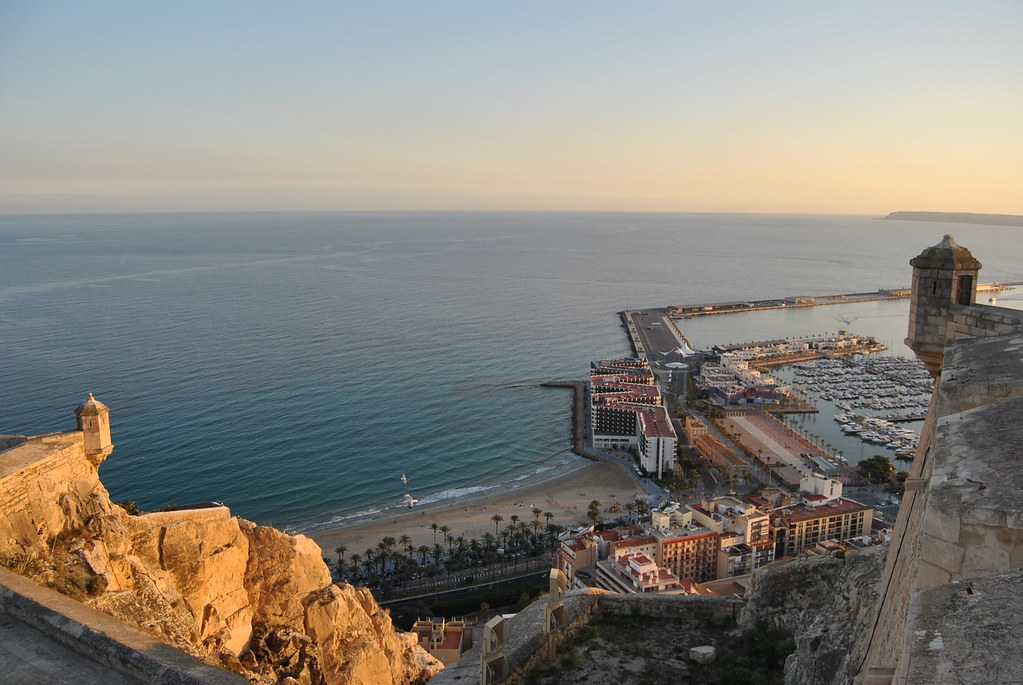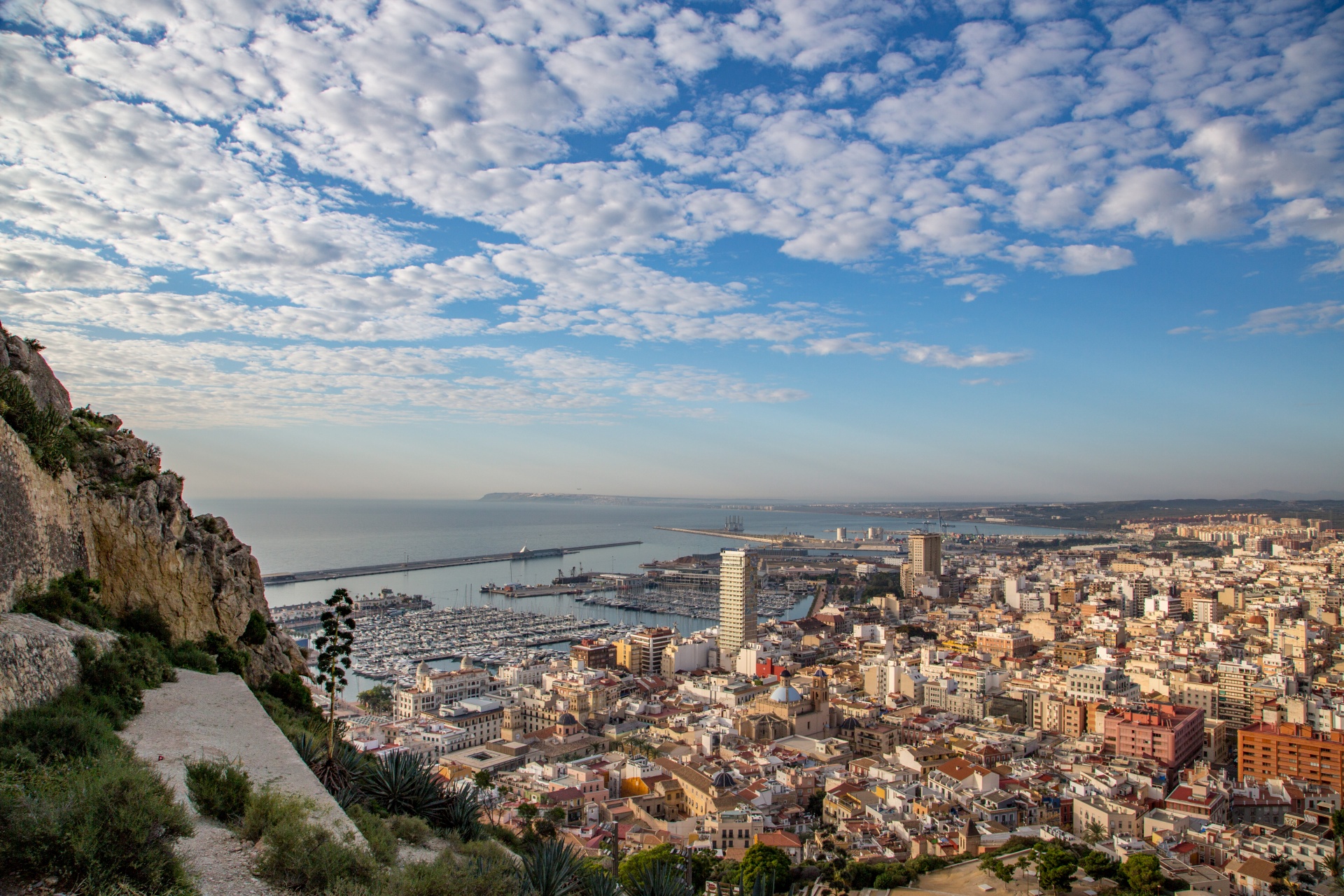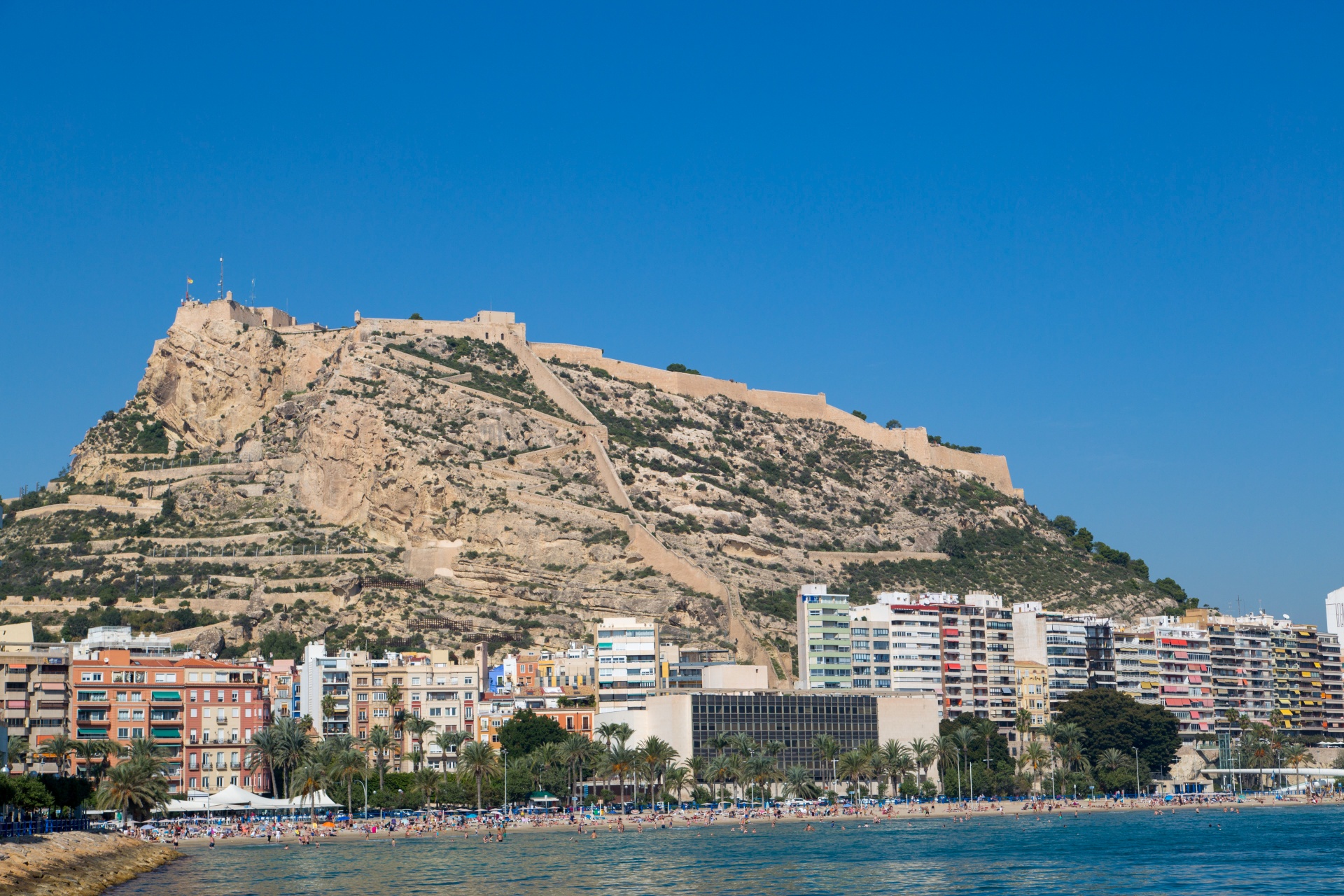
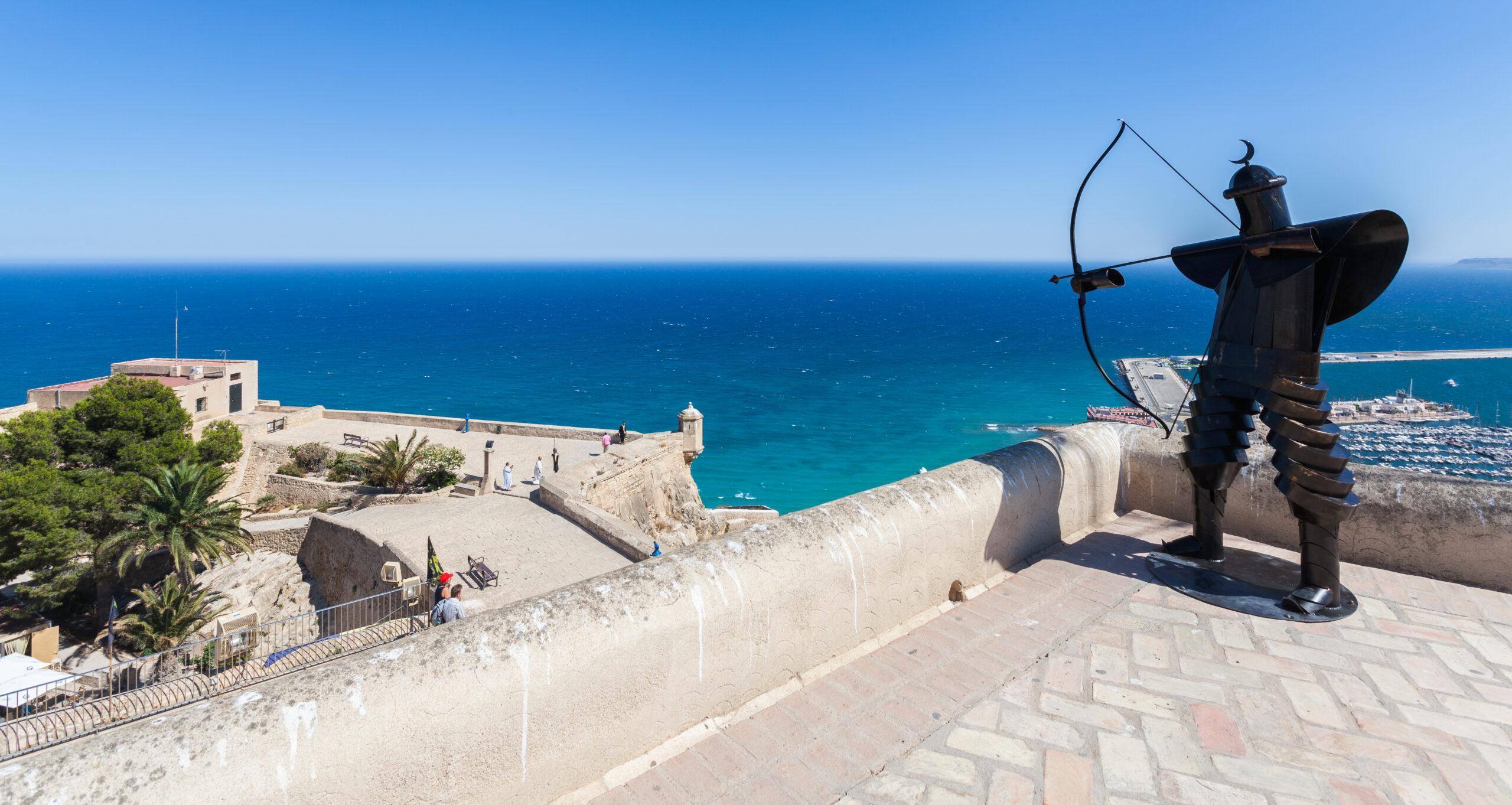
Crowning the city of Alicante from the top of Mount Benacantil, at an altitude of 169 metres, stands the imposing Castle of Santa Barbara. This colossal medieval fortress is not only the unmistakable symbol of Alicante’s profile, but also one of the largest and most important fortified complexes in the Iberian Peninsula. With the Mediterranean Sea at its feet, guarding the bay, its stones narrate centuries of battles, conquests, alliances and transformations that have sculpted the identity of the Costa Blanca.
For travellers, walking along its walls is like taking a trip back in time while enjoying the most spectacular panoramic views of the city. For the locals, it is the guardian of their history and the stage for unforgettable legends. In this article we explore its exciting historical trajectory, the essential places you should visit, all the options available to climb to its summit and the services it offers to guarantee an unforgettable experience.
1. History Carved in the Rock of Benacantil
The origin of human occupation on Mount Benacantil goes back a long way. Archaeological excavations have revealed vestiges of the Bronze Age, the Iberian period and the Roman period. The strategic position of the mountain was simply perfect: an impregnable rocky mass by the sea that allowed any threat to be spotted miles in advance.
The Islamic origin and the Day of Santa Barbara
The construction of the fortress itself began at the end of the ninth century, during the Muslim rule of Al-Andalus. The Arabs transformed this stronghold into a fortified medina, taking advantage of the steep orography to build the first defensive walls.
The current castle owes its name to a key date in the Christian Reconquest. On December 4, 1248, the troops of the infante Alfonso of Castile (the future king Alfonso X the Wise) took the fortress from the Muslims. As the victory coincided with the feast day of Santa Barbara, the site was baptised with the name of the saint, a name that has lasted to this day.
Crown changes and royal reconstructions
The history of the castle is full of transfers of control and structural reforms:
Philip II and the Great Transformation: Between 1562 and 1580, the monarch entrusted the royal engineer Juan Bautista Antonelli with the design of a new fortification system adapted to the use of modern artillery. It was during this period that most of the structures and bastioned fortifications that we can visit today in the intermediate and lower enclosures were built.
1296: James II of Aragon captured the fortress for the Crown of Aragon and ordered the first major remodelling of the enclosure, transforming it into a fortified medieval stronghold.
14th century: Peter IV the Ceremonious and, later, Charles V in the 16th century, undertook defensive extensions due to the constant threat of Barbary pirate attacks that ravaged the Mediterranean coasts.
Centuries of gunpowder, sieges and prisons
The Castle of Santa Barbara has endured the hardships of war on numerous occasions. During the War of the Spanish Succession (1701–1714), the fortress was besieged by Bourbon troops. In 1709, the English, who were defending the castle, suffered the explosion of a large underground mine dug by French sappers beneath the Bastion of the Mine, a dramatic event that destroyed part of the upper structure.
During the Peninsular War and the civil conflicts of the 19th century, its walls once again acted as a first line of defence and, tragically, also as a military and political prison. During the Spanish Civil War, the castle served as a temporary concentration camp for Republican prisoners, leaving engravings and marks on its walls that still testify to the suffering of those who were imprisoned there.
Finally, after decades of neglect, the castle was officially opened to the public in 1963, following the inauguration of the lifts that pierce the heart of the mountain, allowing visitors from around the world to discover its historical and heritage value.
2. What to See at the Castle: A Tour of its 3 Enclosures
The monumental space of the castle is perfectly structured into 3 distinct areas or enclosures, located at different heights. Each of them corresponds to a construction period and offers unique attractions.
| Enclosure | Origin / Period | Points of Interest |
| UPPER ENCLOSURE: LA TORRETA | Islamic Origin – 14th Century / Antiguo Macho | • Bastion of Santa Barbara • El Macho (360° views) • Chapel of San Jorge • Old Cistern |
| INTERMEDIATE ENCLOSURE: THE BASTIONS | 16th Century – Philip II Reforms | • Throne Room • Troop Quarters • Queen’s Bastion • Guard Corps |
| LOWER ENCLOSURE: THE RAVELIN | 18th Century | • Bon Repós Ravelin • Parking and Access • Monument to Gastón • Great Walls |
The Upper Enclosure: “La Torreta” or “El Macho”
It is the highest area and the original core of the Islamic fortress. Here you can truly feel the oldest history of the complex.
- El Macho: It is the highest bastion. From its esplanade you can enjoy spectacular 360-degree views over the entire city of Alicante, San Juan Beach, Cabo de la Huerta, Tabarca Island and the inland mountain ranges.
- The Bastion of Santa Barbara: Facing the sea, it housed the heavy artillery responsible for deterring enemy fleets
- The Tower of Homage and the Old Cistern: Storage and military supply structures essential for withstanding prolonged sieges.
The Intermediate Enclosure: Structures of the 16th and 17th Centuries
This level concentrated the active military life of the complex after the major reforms of the modern era.
- The Hall of Philip II (or Old Troop Corps): A large vaulted rectangular hall that today hosts cultural exhibitions and institutional events.
- The Queen’s Bastion: Located on the northern slope, it offers fantastic views over the Santa Cruz neighbourhood and the northern part of the city.
- The Bastion of the Mine: A historic area associated with the famous mine explosion during the War of the Spanish Succession, where the cuts and reconstructions in the stonework can still be seen.
- The Hermitage of Santa Barbara: A small religious building integrated into the military structure.
The Lower Enclosure: The Ravelin of the 18th Century
It is the lowest area, designed primarily to act as an exterior defensive barrier and advanced storage space.
- The Revellín de Bon Repós: Today it is a large esplanade commonly used for open-air concerts, themed markets and theatrical performances.
- The Face of the Moor: If you look towards the cliff from outside the enclosure or from Postiguet Beach, you will notice the geological formation of the rock, which remarkably resembles the profile of a human head wearing a turban, linked to tragic legends of forbidden love between Arab princesses and Christian knights.
3. Ways to Reach Santa Barbara Castle
One of the great advantages of this fortress is its accessibility. Depending on your physical condition, the time available and the type of experience you are looking for, there are several ways to reach the summit of Mount Benacantil.
| Access Method | Starting Point | Approx. Duration | Ideal for… | Cost |
| Integrated Elevator | Juan Bautista Lafora Avenue (opposite Postiguet Beach) | 1 minute | Families, people with reduced mobility and visitors seeking maximum comfort | Free for children under 5 and seniors. Reduced general admission fee |
| On Foot through the Neighbourhood | Santa Cruz neighbourhood / Ereta Park | 25-35 minutes | Lovers of urban hiking, photography and historical charm. | Free |
| On Foot along the Wall | Near Plaza del Carmen | 20-30 minutes | Enjoying a unique rustic and monumental setting. | Free |
| Tourist Vehicle / Bus | North Road Access (Vázquez de Mella) | 5-10 minutes | Quick, convenient access or for those travelling by car. | From 10€/day |
Option 1: The Elevator (Underground Convenience)
This is the most popular and surprising option. Just opposite Postiguet Beach, a 204-metre-long tunnel carved directly into the heart of the mountain leads visitors to the lifts. These travel vertically for 142 metres in just one minute, taking you directly to the upper enclosure (El Macho).
Option 2: On foot through the Parque de la Ereta and Barrio de Santa Cruz (The most picturesque)
If you have good shoes and you like to walk, this is the most beautiful route. It winds through the narrow, colourful and flower-filled streets of the Barrio de Santa Cruz. As you go up, you will enter the Parque de la Ereta, a stepped green space on the slope of the mountain with fountains, viewpoints and rest areas. The climb is steep and features quite a few stairs, but the changing views of the old town rooftops make the effort worthwhile.
Option 3: On foot along the Castle Wall (The Medieval Route)
This route follows the layout of the old outer walls connecting the fortress with the city. The path is well maintained and offers direct immersion into the atmosphere of a defensive fortress surrounded by Mediterranean vegetation and unique rocky landscapes.
Option 4: By car or city bus
If you prefer to travel up by vehicle, there is a fully paved access road on the northern side of Mount Benacantil (accessible from Vázquez de Mella Street). Visitors can use private vehicles, the dedicated shuttle bus service or the Alicante Tourist Bus (Turibús), which stops near the entrance to the lower enclosure.
4. Services Available to Visitors
Santa Barbara Castle is not just a static monument; it is a vibrant cultural centre adapted to the needs of modern tourism. It has a complete infrastructure of public and private services:
- Information Points and Guides: In the intermediate enclosure you will find the visitor reception office. Official guided tours are regularly offered in several languages, along with themed guided tours for families with children and QR codes distributed throughout the route for downloading audio guides onto smartphones.
- Gastronomic Spaces: The venue has cafeteria areas, kiosk-type terraces and a restaurant where you can taste snacks, ice creams or traditional Alicante dishes in the shade of the walls, enjoying the sea breezes.
- Souvenir and Craft Shops: Small aesthetically integrated establishments where you can buy typical products of the province of Alicante (Turrón (nougat), wines with D.O., handmade footwear) and historical souvenirs.
- Public Toilets and Accessibility: Toilets are strategically distributed throughout the middle and lower enclosures. Much of the route is adapted for wheelchairs and pushchairs through the use of wooden ramps and level flooring, although access to El Macho still requires overcoming some natural slopes.
- Active Cultural Programming: Throughout the year, the exhibition halls (such as the old Guard Corps or the Cisterns) house temporary art collections, archaeological exhibitions or military history. In addition, during the summer nights, the parade ground and the esplanades are transformed into privileged settings for film cycles, classical music concerts and theater performances.
Tips for your Visit
To make the most of your experience in this Mediterranean stronghold, keep in mind the following practical recommendations:
- Sun Protection: In the spring and summer months the sun beats down strongly and there are few areas of natural shade in the parade grounds. Bring a hat, sunglasses, sunscreen and water.
- The Sunset: If you’re looking for the perfect photograph, plan your climb for the late afternoon. The sun setting behind the mountains of the interior dyes the limestone walls of the castle and the entire bay of Alicante in golden and reddish tones.
- Footwear: The stone on the floors of the castle is centuries old and, in many areas, is polished and slippery due to the passage of time. Comfortable shoes with good grip are strongly recommended.
The Castle of Santa Barbara is, in short, an essential stop in the Valencian Community. A place where the majesty of military defensive architecture blends perfectly with the endless blue of the Mediterranean.
The Castle of Santa Barbara: Your New Daily Horizon
Visiting Santa Barbara Castle is an experience that captivates the senses, but the real magic lies in making it part of your everyday life. Imagine waking up each morning to the Mediterranean breeze, admiring the silhouette of Mount Benacantil from your terrace or strolling along the walls of this imposing fortress whenever you wish, transforming one of the Costa Blanca’s most iconic landmarks into part of your everyday surroundings.
To turn this dream destination into your daily reality, choosing the right real estate agent is essential. SILC ESTATES has established itself as a leading international reference in the Costa Blanca residential market, specialising in high-quality new-build properties, exclusive residential resorts and golf-front developments.
What sets SILC ESTATES apart is not only its catalogue of first-class homes, but also its comprehensive 360º service. Its team of professionals accompanies you with closeness, honesty and empathy every step of the way: from initial legal and financial advice to personalised inspection visits, including decoration and impeccable after-sales service. Its turnkey philosophy ensures that the procurement process is simple, secure and completely stress-free.
If you are looking for the home of your dreams under the Alicante sun – a refuge where history, contemporary design and the sea go hand in hand – trust the experience and rigour of SILC ESTATES. Your new home next to the guardian of the Mediterranean is waiting for you.