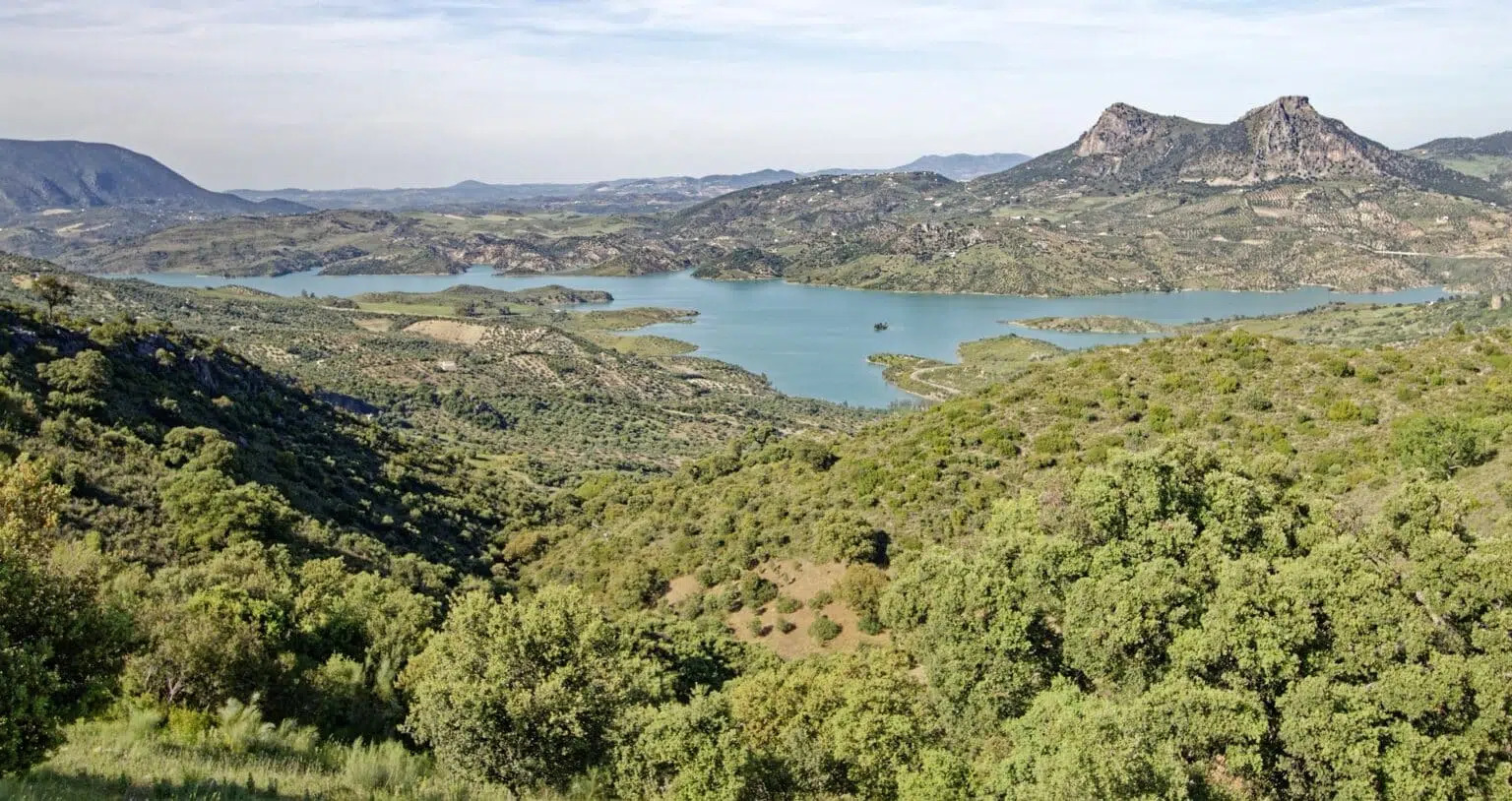
Andalusia is a part of Spain that is well known for its gastronomy and for allowing you to enjoy sunshine almost all year round. In fact, when we think of Spain, and especially the south of the peninsula, the first image that comes to mind is that of a radiant sun, infinitely blue skies, high temperatures and miles of fine sandy coastlines. It is the perfect cliché and, without a doubt, a wonderful part of our geography.
However, Spain is not only sun and beaches. Our country is one of the most mountainous in Europe and is home to ecosystems of overwhelming diversity. Green, lush, humid and wild areas that are authentic treasures to discover and that completely break with all international stereotypes.
Today we are going to leave aside the sand, towel and beach umbrella to enter the greenest, purest and most unknown parts of Andalusia. Far from the coastal crowds hides a paradise of pure air, ancient forests, surprising microclimates and mountains that will take your breath away. Forests of Spanish firs that survived the glaciations, immense chestnut groves that dye the valleys copper, cork oak forests that seem to be taken from a tropical jungle and extensive pine forests cover some of the most spectacular landscapes in southern Spain.
They are perfect places to walk without haste, breathe fresh air, disconnect from urban stress and discover the enormous natural, cultural and culinary diversity of the region. Below, we present an extensive guide to nine spectacular Andalusian forests and natural landscapes that deserve a must-see, detailing their location, what to do, which villages to visit around them and, of course, what gastronomic delights you cannot miss.
1. Copper Forest – Genal Valley, Malaga
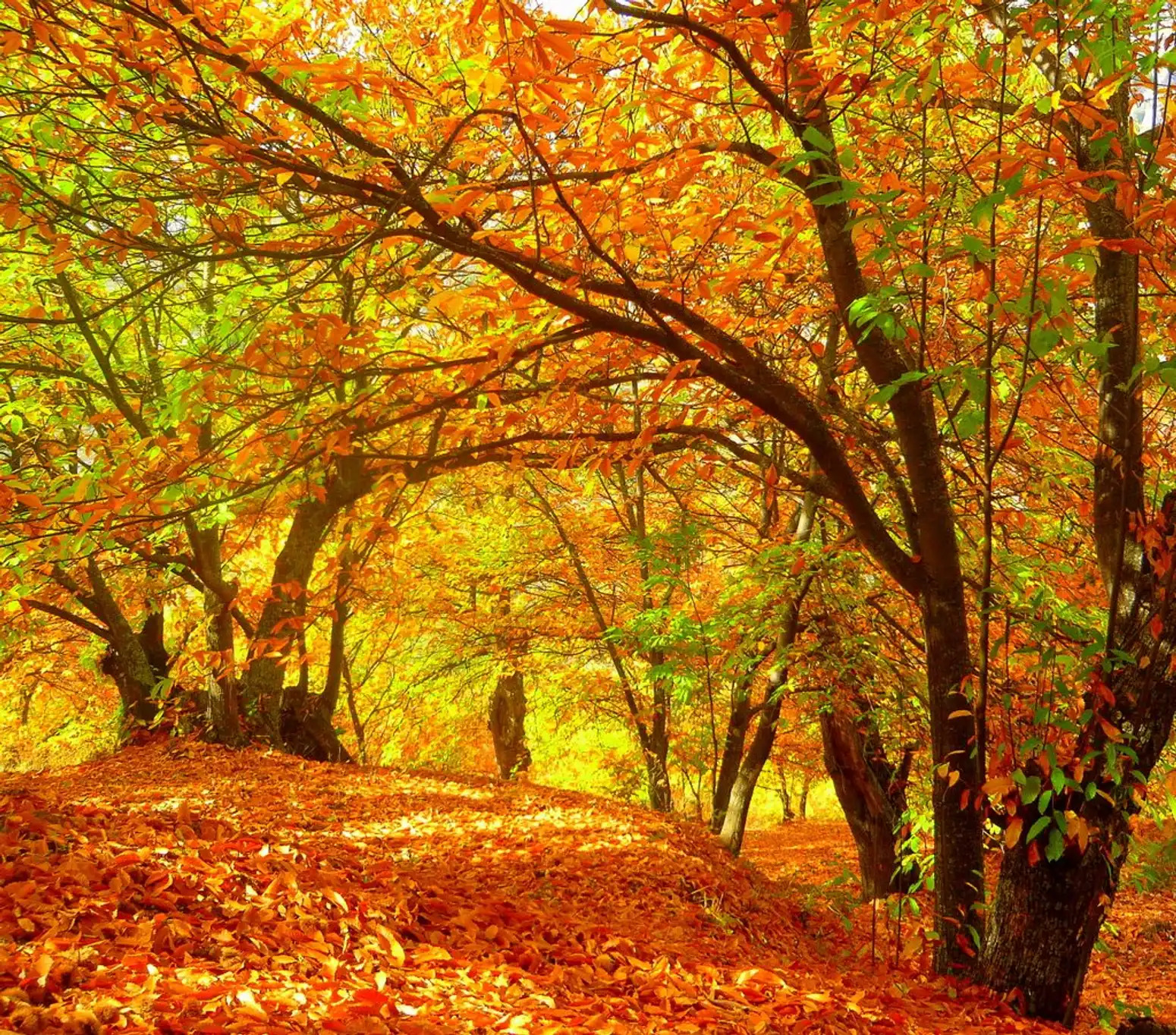
Nature and activities: In the heart of the Serranía de Ronda, the Genal Valley is home to one of the most beautiful natural spectacles in southern Europe. The so-called Copper Forest is not a single forest, but an extensive and intricate natural landscape made up of thousands of chestnut trees. During autumn, the leaves of these trees change colour, transforming the entire valley into a canvas of reddish, yellow, ochre and copper tones. Numerous trails and circular routes run through the valley and allow you to discover a rural, mountainous, humid Malaga far from the great tourist destinations on the coast. It is an absolute paradise for hiking, landscape photography and rural getaways.
Charming villages to visit: To explore this area, the best option is to get lost in the white villages that dot the valley. Júzcar, known worldwide as the “Smurf Village” for its blue-painted houses, is a curious and fun stop. Not far away is Igualeja, famous because the spectacular source of the Genal River takes place right there, which flows directly from a cave. Other villages such as Parauta (with its famous enchanted forest full of sculptures carved in wood), Cartajima or Alpandeire preserve a Moorish architecture of narrow and steep streets that invite you to stroll calmly.
Gastronomy of the area: The gastronomy of the Genal Valley revolves, as it could not be otherwise, around the chestnut. During the autumn and winter months it is typical to enjoy tostones (roasted chestnuts). In addition, chestnut flour is used to thicken pork stews and to make exquisite local desserts. You cannot leave without trying the cured meats and sausages of the villages, accompanied by a good must from the area (a young unfiltered wine), or the traditional migas rondeñas accompanied by chorizo, peppers and garlic.
2. Pinsapar de Grazalema – Cádiz
Nature and activities: In the heart of the Sierra de Grazalema Natural Park is one of the most unique and valuable ecosystems in all of Andalusia: the Spanish fir. Its absolute protagonist is the Spanish fir (Abies pinsapo), a dark, elegant and robust Mediterranean spruce that is considered a true botanical relic, as it survived the last ice age. Surprisingly, this mountain range is the place where it rains the most in all of Spain, creating an exceptionally green microclimate. Walking through the dense shade of the Spanish fir is like travelling back in time. Important note: As it is a Reserve Area, the Pinsapar route requires prior authorisation from the Junta de Andalucía.
Charming villages to visit: The route of the White Villages of Cadiz has its maximum splendour here. Grazalema, which gives its name to the mountain range, is an impeccable municipality, historically famous for its textile industry and its blankets made of pure sheep’s wool. Nearby, dizzyingly overlooking a turquoise blue reservoir, stands Zahara de la Sierra, crowned by a medieval castle that offers unparalleled views. El Bosque and Benaocaz are two other small essential municipalities, with cobbled streets and water routes that run next to old flour mills.
Gastronomy of the area: Grazalema is a paradise for cheesemakers. Here the famous Payoyo Cheese is produced, made with the milk of Payoya goats and Grazalema merino sheep; a gourmet product recognized worldwide. To warm up after a route, there is nothing better than the Grazalema Soup, a comforting broth made with bread, egg, chorizo and mint. Game meats, such as venison in sauce or wild boar, together with scrambled eggs of wild asparagus freshly cut from the mountains, complete an unforgettable feast.
3. Castañar de Pujerra – Malaga
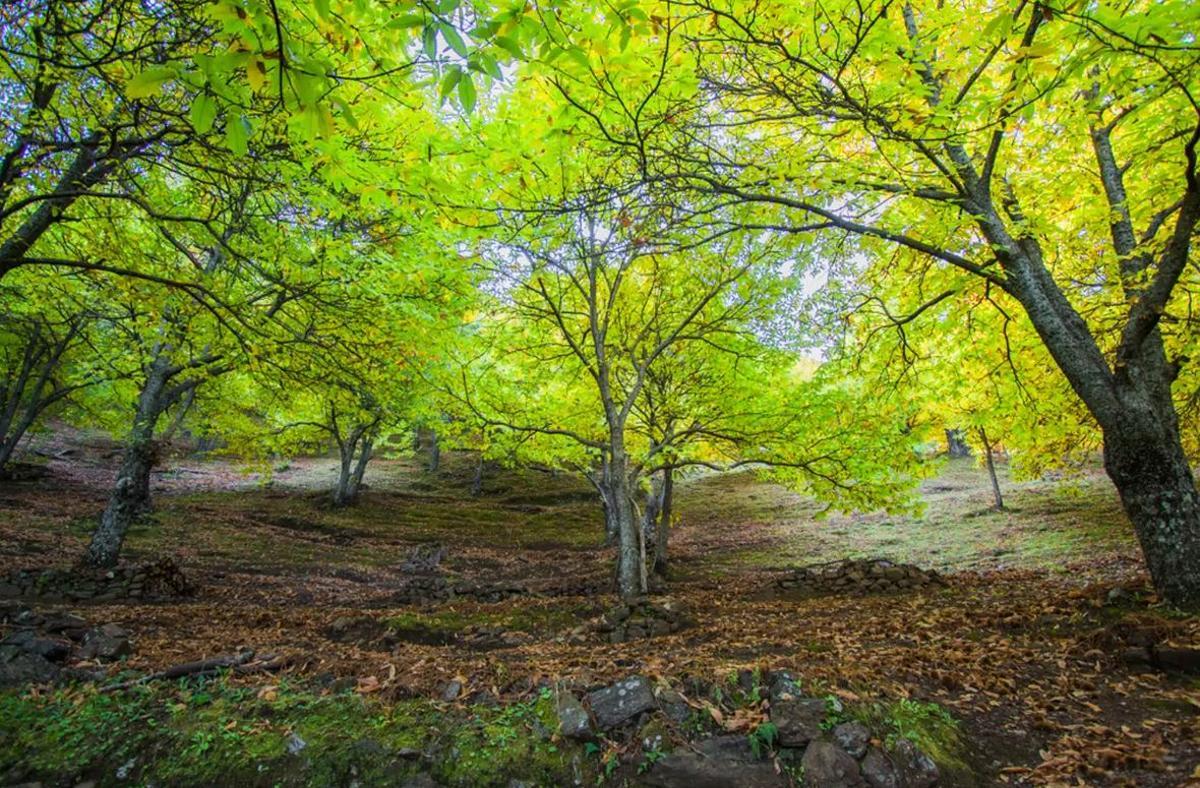
Nature and activities: Although geographically it belongs to the surroundings of the Genal Valley and the Copper Forest, Pujerra is an enclave with so much personality that it deserves its own exclusive stop. This small municipality in Malaga is surrounded by extensive chestnut groves, but in a much denser and closer way. The chestnut is not just a tree here; it has been part of the economy, the landscape and the traditions of the town for countless generations. It is a perfect place to walk leisurely along the Bentomiz path, ideal for an intimate and contemplative getaway as a couple or to teach botany to the little ones with the family.
Charming villages to visit: The focus here is the town of Pujerra itself. Strolling through its labyrinthine streets, a direct legacy of its Andalusian past, is an exercise in deep relaxation. The Church of the Holy Spirit stands out and, especially, the Chestnut Museum, where visitors can learn the entire process of harvesting, peeling and using this historic fruit. From its viewpoints you can contemplate the sea of chestnut trees that surrounds everything, radically changing its appearance in each season of the year.
Gastronomy of the area: The local cuisine is deeply linked to the countryside. In addition to the products derived from the chestnut in jams and sweets, the star dish when it is cold is the Olla Serrana or the fennel stew, hearty and humble stews that lift the spirits. Pujerra is also known for Mistela, a sweet homemade liqueur made with brandy, coffee, sugar and spices that is traditionally offered to visitors at local festivals to accompany artisanal pastries.
4. Sierra de Aracena and Picos de Aroche – Huelva
Nature and activities: In the north of the province of Huelva we find a completely different landscape from the rest of Andalusia. The Sierra de Aracena and Picos de Aroche Natural Park is made up of immense dehesas (clear forests of holm oaks and cork oaks) and humid valleys of chestnut and gall oaks. It is a soft, undulating terrain, crossed by countless trails that connect villages and towns separated by just a few kilometers apart. The perfect activity here is to combine morning hiking under the shade of the holm oaks with gastronomic tourism in the afternoon.
Charming villages to visit: Aracena is the capital of the region and hides a geological wonder under its Templar castle: the Gruta de las Maravillas, an immense cave full of underground lakes, stalactites and stalagmites that leaves you speechless. Another essential town is Alájar, crowned by the magical Peña de Arias Montano, which offers views of the entire mountain range. Linares de la Sierra, hidden in a valley, keeps its “llanos” (cobbled at the doors of the houses) in perfect condition. And, of course, Jabugo, the world capital of ham.
Gastronomy of the area: To talk about the Sierra de Aracena is to talk about the summit of Spanish gastronomy: the 100% Iberian Acorn-fed Ham (PDO Jabugo). The raising of the Iberian pig in freedom in these pastures results in a product of world prestige. But the mountains are much more. In its restaurants you have to order the noble cuts of the grilled pig: the secret, the presa and the Iberian feather. In addition, in autumn and spring, this mountain range is one of the best mycological destinations in Spain; try a scrambled eggs of gurumelos (an endemic and highly valued mushroom) or So many it is a religious experience.
5. Los Alcornocales – Cádiz and Malaga
Nature and activities: Los Alcornocales Natural Park is literally the last forest in Europe. It is home to the largest mass of cork oak forest in the Iberian Peninsula and one of the largest in the world. Its location, receiving the humid winds from the Strait of Gibraltar, creates a fascinating microclimate. The jewel of this forest is the “joints”, enclosed and narrow river valleys that maintain extreme humidity and are covered by subtropical vegetation from the Tertiary period: laurels, rhododendrons and giant ferns. Entering the joints walking along the banks of the rivers is one of the most surprising nature adventures that can be experienced in Spain.
Charming villages to visit: On the edges of this great jungle sit villages steeped in border history. Castellar de la Frontera is unique: a picturesque village of white houses and streets adorned with flower pots that is built entirely within the walls of an imposing medieval castle. Jimena de la Frontera, with its Roman-Arab castle dominating the landscape, is another of the main enclaves, perfect for starting hiking routes. Alcalá de los Gazules stands out for its historical-artistic complex that climbs the hill.
Gastronomy of the area: The proximity to the forest sets the culinary standard. Game meat rules here: stews of venison (deer), wild boar, partridge and rabbit, cooked over a low heat with aromatic herbs from the area. It is also the land of the prestigious Retinta breed beef, native to the region. In the field of vegetables, the king is the tagarnina (the thistle), a wild plant that is collected in the countryside and stars in delicious stews and scrambled eggs. In addition, cork and honey from forest flowers are typical products to take home.
6. Sierra de Cazorla, Segura and Las Villas – Jaén
Nature and activities: To talk about Andalusian forests means, inevitably, to talk about Cazorla. It is the largest protected area in Spain and the second in Europe. It is an immense territory of wild limestone mountains, extensive pine forests, deep valleys, vertiginous viewpoints and a spectacular hydrographic network that includes the very source of the Guadalquivir River. It is a paradise for wildlife (immortalized by the documentaries of Félix Rodríguez de la Fuente), with the sightings of deer, mountain goats, mouflons, griffon vultures and eagles being common. It takes more than a weekend to explore its trails and waterfalls.
Charming villages to visit: Cazorla Villa is a labyrinth of white streets that culminates in the imposing Castillo de la Yedra and the spectacular Ruins of Santa María. Nearby, overlooking the abyss on a rocky cliff, is the impressive castle of La Iruela. To the north, in the Segura area, the walled town of Segura de la Sierra rises majestically at an altitude of more than 1,100 metres, offering small streets of Islamic layout, Arab baths and the house of the famous poet Jorge Manrique. Hornos de Segura, overlooking the Tranco reservoir, is another visually unforgettable stop.
Gastronomy of the area: Jaén is the empire of the olive tree, and in this area an Extra Virgin Olive Oil (EVOO) of the Royal variety is produced, which is pure liquid gold. The gastronomy is highlands, strong and tasty. It is essential to try the Rin-Ran, a cold or warm tapa based on mashed potatoes, chorizo peppers, olives and cod. The Gachamigas (flour crumbs) are ideal for cold days, and thanks to the pure rivers of the mountains, trout with ham is a classic of local restaurants, along with the famous roasted Segureño lamb.
7. Sierra Nevada and La Alpujarra – Granada and Almería
Nature and activities: Although the Sierra Nevada is known worldwide for its high peaks (the Mulhacén and the Veleta, the roofs of the Peninsula) and its ski resort, its forest wealth is amazing. When the snow melts, the water flows down forming mighty rivers and “acequias” that irrigate lush valleys. In the lower middle altitudes there are spectacular oak groves, holm oak groves, riverside groves and reforestation pine forests. A fantastic activity is hiking along the water channels (the old Moorish ditches) or ascending to the high mountain refuges, going from intense green to the alpine lunar landscape.
Charming villages to visit: The southern slope of the Sierra Nevada is La Alpujarra, one of the most unique regions in Spain. The villages of the Barranco de Poqueira (Pampaneira, Bubión and Capileira) are perched on the slopes of the mountain, staggered one on top of the other. Its architecture of Berber origin is unique: white cubic houses without roofs (with flat clay roofs or “launa”), tall chimneys and the picturesque “tinaos” (covered passageways). Climbing even higher is Trevélez, one of the highest municipalities in Spain, famous for its ham drying sheds.
Gastronomy of the area: If you go to La Alpujarra you have to go hungry. The absolute protagonist is the hearty Alpujarreño Dish, which includes in the same portion: potatoes a lo pobre, fried peppers, eggs, loin of orza, black pudding and chorizo. A delicious caloric bomb to regain strength. The Jamón de Trevélez (PGI), cured with the cold and dry winds of the mountain, is exquisite. For dessert, the Arab heritage is present in the confectionery with the famous soplillos (sweets made of egg white, sugar and almonds) and almond curds.
8. Sierra de las Nieves – Malaga
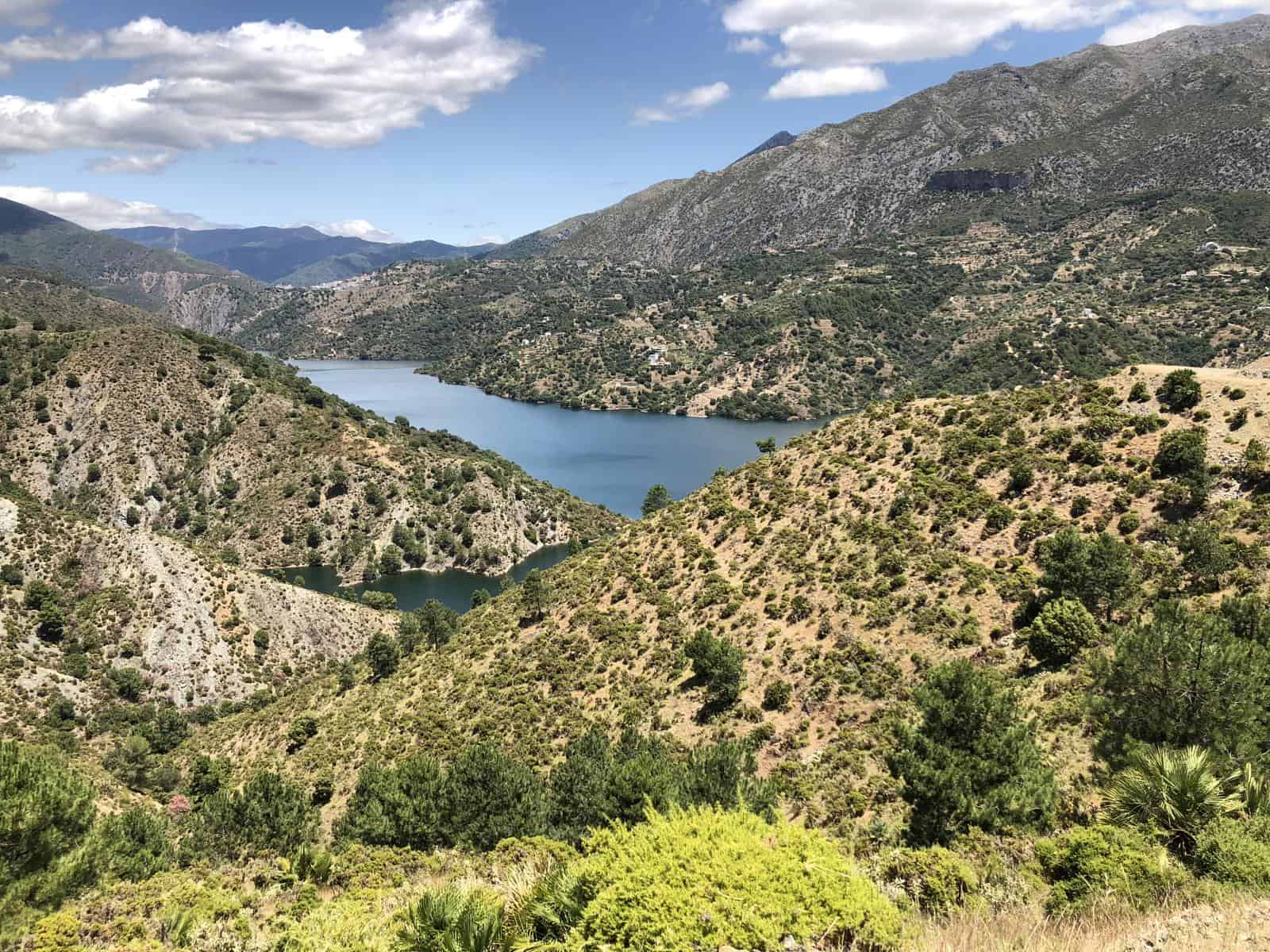
Nature and activities: The recently declared Sierra de las Nieves National Park is a magnificent example of the strong contrast offered by the province of Malaga. Located just over half an hour from the cosmopolitan beaches of the Costa del Sol and cities such as Marbella, there is a mountain massif of white limestone rocks, very deep chasms and peaks that reach 2,000 metres (the Torrecilla Peak). Its most precious treasure is once again the forest of Spanish firs, which here forms impressive tree masses in the shady areas. It is the perfect place for hiking in the middle and high mountains, exploring caves and discovering the more vertical and rugged side of the south.
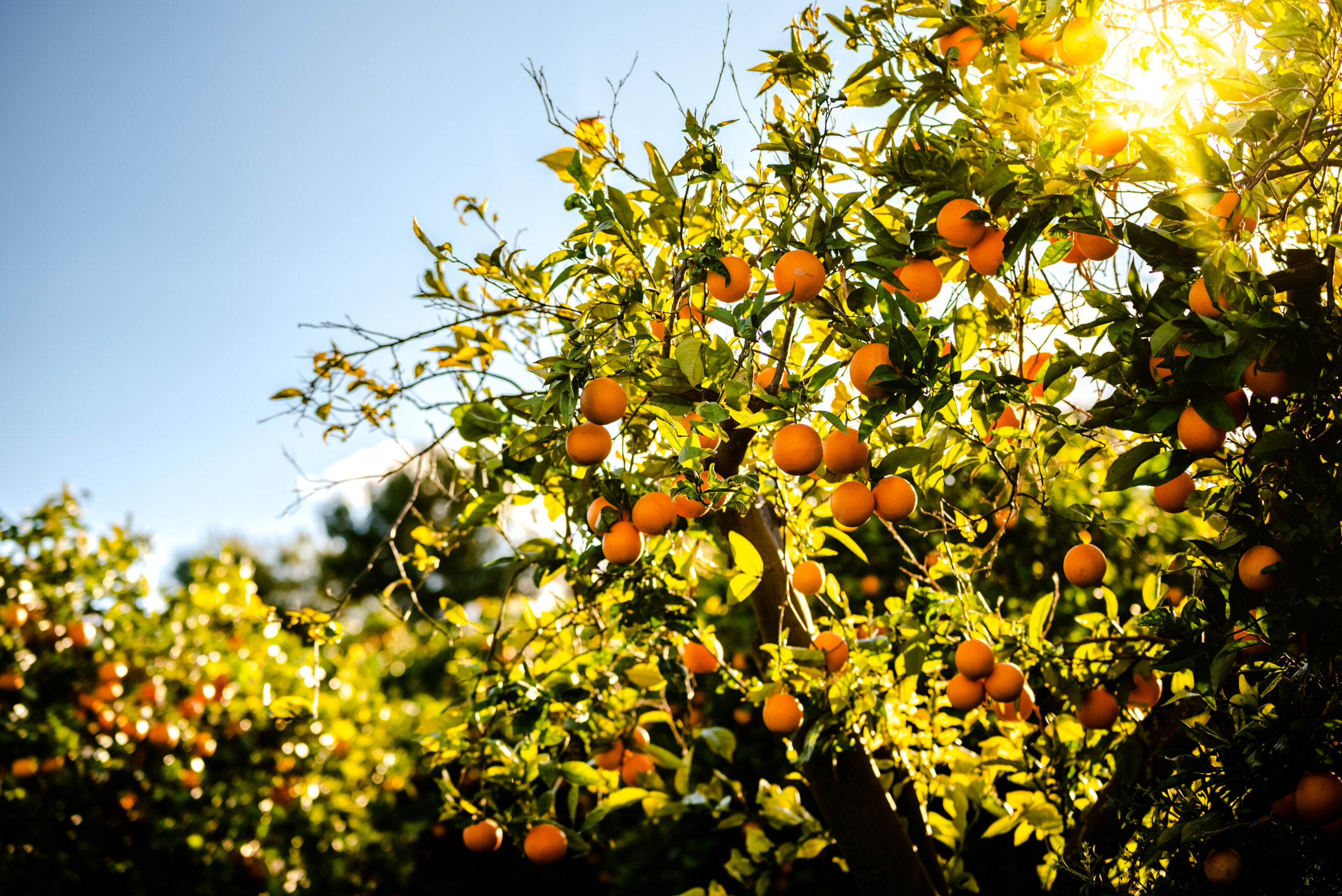
Charming villages to visit: The villages that serve as the gateway to the mountains retain all the Andalusian charm. Tolox is a haven of peace, famous for its sulphurous water spa surrounded by orange trees. Yunquera, known as the paradise of the Spanish fir, offers an urban centre dotted with churches and watchtowers, as well as excellent viewpoints. Istán, known as the “Spring of the Costa del Sol”, is a paradise of water through which numerous springs flow. Casarabonela or El Burgo are other villages of Roman and Muslim heritage that are essential.
Gastronomy of the area: The gastronomy of the Sierra de las Nieves is based on the products of the orchard, local livestock and olive trees. In Tolox, the Soup of the Seven Branches, made with basic ingredients from the countryside (tomato, pepper, onion, garlic, bread, asparagus and oil). Another delicacy of the region is the Malaga suckling goat, a native breed of goat whose meat is very tender, either roasted in the oven or cooked with garlic. All this must be accompanied by the famous Aloreña olives (seasoned and crushed) and finished with a tasting of the excellent local flower honey.
9. Sierra Norte de Sevilla (The Extra Essential Corner)
Nature and activities: To close this green route, we move to the province of Seville, to the gentle reliefs of the Sierra Morena. The Sierra Norte de Sevilla Natural Park is an immense tapestry of undulating pastures of holm oaks and cork oaks, gallery forests next to the rivers and geological natural monuments. The queen activity in this area is the Cycle tourism. Rent a bike to tour the Sierra Norte Greenway (an old flat and accessible mining railway line) is a spectacular plan. On the route, you will discover wonders such as the Cerro del Hierro, an ancient karst and mining landscape that seems to be from another planet, and the beautiful and shady Huéznar Waterfalls.
Charming villages to visit: The unofficial capital of this mountain range is Cazalla de la Sierra, a noble municipality, full of convents, stately churches and arcaded squares where time passes slowly. Constantina stands out for its monumental castle at the top of the hill and for its neighborhood of La Morería, with labyrinthine streets. Right in the heart of the park and the water is San Nicolás del Puerto, where the Huéznar river is born and has a curious artificial beach very frequented in summer.
Gastronomy of the area: Cazalla de la Sierra is legendary throughout Spain for its distilleries of traditional liqueurs; trying its famous anise or its cherry liqueur (Miura) is a must. When it comes to good food, the pastures set the pace: grilled cuts of Iberian pork, exquisite sausages and game meat stews (such as wild boar in red wine or venison). When the first autumn rains arrive, the kitchens of the mountains are filled with mushrooms and chanterelles collected in the nearby forests.
Pack your backpack: the greenest Andalusia awaits you
Sometimes, to discover the true magic of a territory you have to get off the beaten track. As we have seen, from the ochre chestnut forests of the Genal Valley to the prehistoric Spanish firs of Grazalema and the Sierra de las Nieves, passing through the endless pine forests of Cazorla and the jungle joints of Cádiz, the Andalusian interior hides some of the most impressive, pure and biodiverse natural spaces in all of Europe.
They are places designed to walk, disconnect from the noise, marvel at millenary ecosystems, discover small villages where people continue to live at a different pace and sit at the table to taste a gastronomy that feeds the soul.
Comfortable hiking boots, a good backpack, a camera and a desire to explore. You don’t need more. Leave sun and beach tourism for a moment, go into the forest and get ready to fall in love with the spectacular green Andalusia that is, silent and splendid, waiting to be discovered.
Your perfect refuge to discover it all
All this immense natural and cultural wealth is just a small sample of what our country has to offer. Can you imagine having the freedom to explore these wonderful Andalusian forests, or any other natural jewel, whenever you wish? Buying a house in Spain is much more than buying a home; it is the key to enjoying an unbeatable lifestyle.
And you don’t need to live in the mountains to have it within your reach. Establishing your home anywhere in the country, and even in enclaves as privileged as the Costa Blanca, allows you to enjoy the coveted Mediterranean climate in your day-to-day life, while having the rest of the autonomous communities – and, in particular, the magic of Andalusia – just a few hours away.
If you are thinking of taking the plunge, we recommend you consult with the experts at SILC ESTATES. Their team will guide you with total professionalism to find that ideal property that will become your perfect base camp to explore, year after year, all the contrasts of Spain.