The history of the railway in Spain has its roots in the nineteenth century – with milestones such as the Barcelona-Mataró line in 1848 or the Madrid-Aranjuez section in 1851 – but its modern structure was marked by the mid-twentieth century. After the ravages of the Civil War, the State decided to nationalise the different existing private companies and group them under a single entity on 24 January 1941: the National Network of Spanish Railways (RENFE) was born.
For 64 years, RENFE exercised an absolute and absolute monopoly over the Spanish railway sector. Not only did it operate all passenger and freight trains, but it was also responsible for building, maintaining and managing the railways, stations and signalling. It was a vertically integrated state giant that saw the birth of the first Talgo in 1950 and the iconic arrival of the high-speed train (AVE) on the occasion of the Universal Exposition in Seville in 1992.
The Birth of ADIF and the Arrival of Liberalization
The panorama changed radically with the transposition of the European directives on the liberalisation of rail transport. To allow multiple companies to compete on equal terms, the European Union made it mandatory to separate infrastructure management from train operation.
Thus, on 1 January 2005, the former RENFE split into two totally independent organisations:
- ADIF (Railway Infrastructure Administrator): It inherited control of the tracks, catenaries, stations and the security system, guaranteeing neutral and regulated access for any operator who wanted to circulate in Spain.
- Renfe Operator: The commercial division exclusively responsible for the operation of trains and passenger service.
The total opening of the market to European competition did not materialise overnight, but went through several phases until culminating at the end of 2020 and during 2021, breaking the passenger monopoly on the country’s most important high-speed corridors and progressively incorporating new international players.
The Main High-Speed Companies in Spain
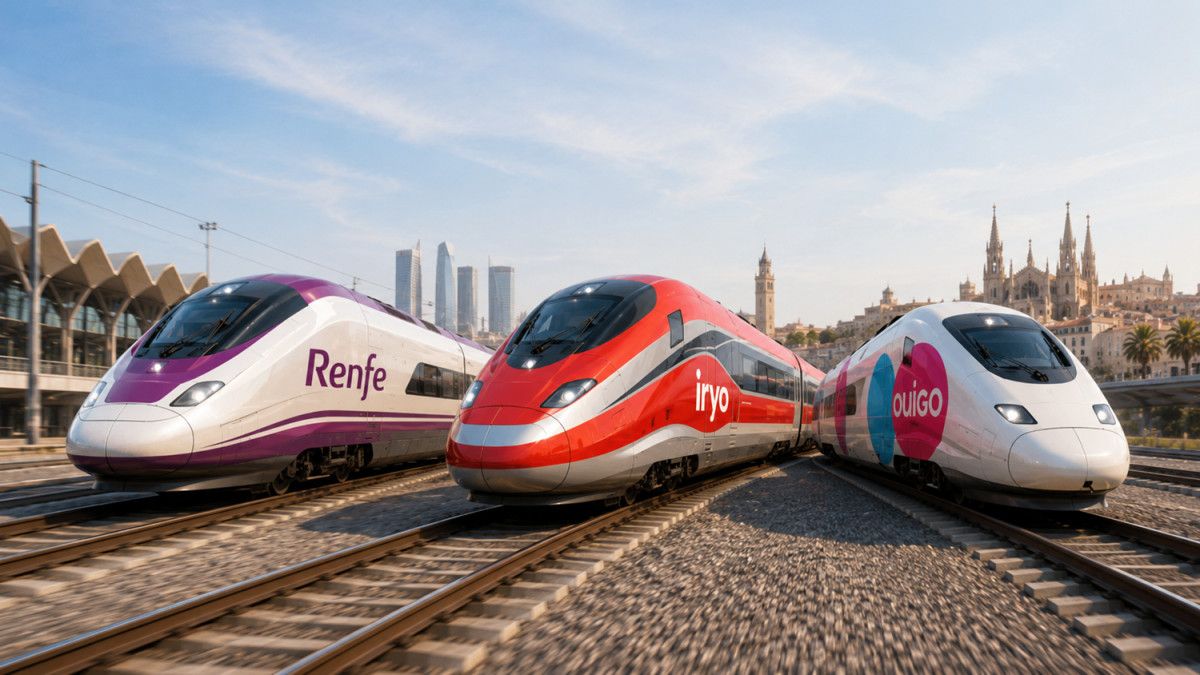
Today, the Spanish high-speed market has three major competitors that have democratised travel and drastically reduced prices.
1. Renfe and Avlo (The Historic Operator)
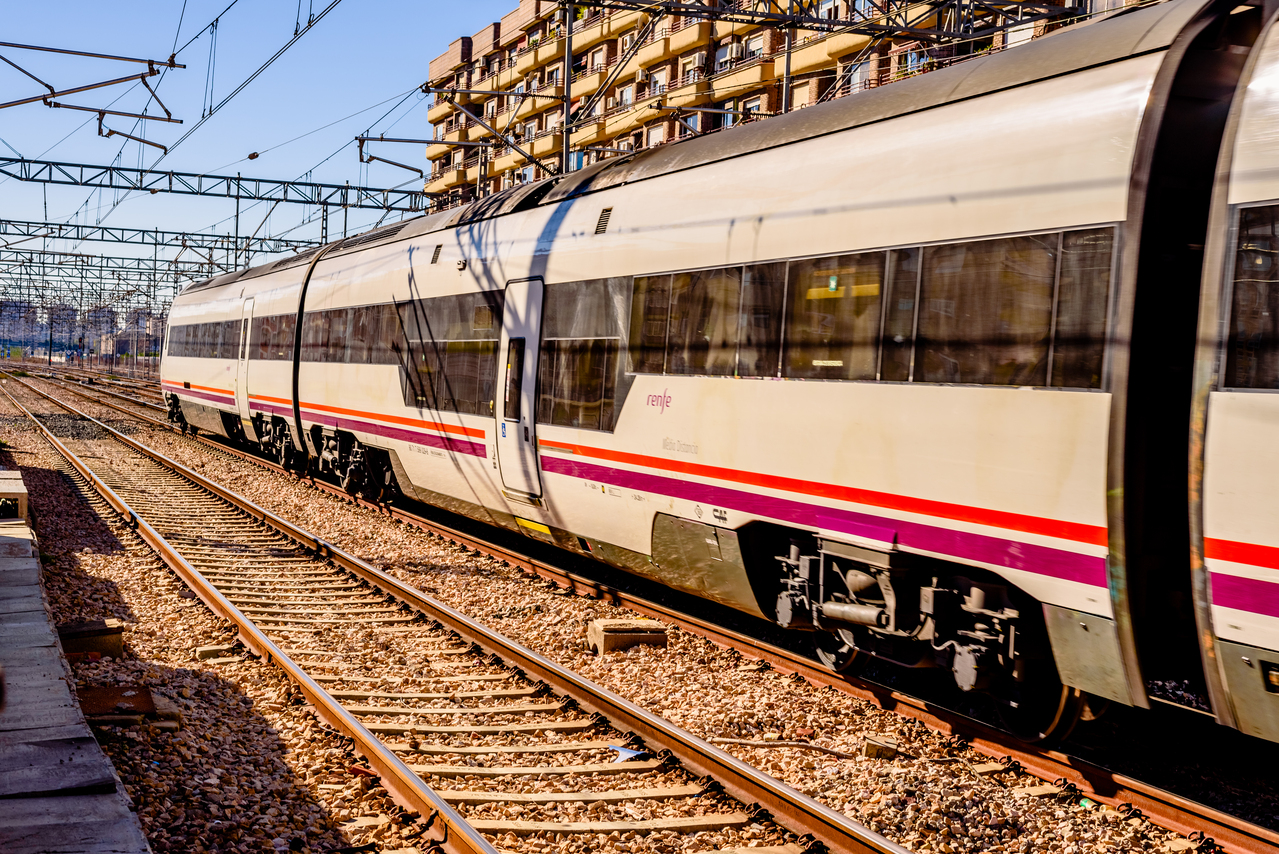
- Origin of the brand: Renfe is the direct heir of the traditional Spanish state operator. Faced with pressure from new low-cost competitors, in 2021 it launched Avlo, its own high-speed “low cost” brand to compete in a cheaper price segment.
- Available routes: It is the most extensive network in the country. It connects Madrid with Barcelona, Valencia, Alicante, Seville, Malaga, Granada, León, Ourense, Valladolid, Murcia, among many other capitals, as well as international connections with France.
- Types of rates:
- AVE (Basic, Elige and Premium): The Basic model offers the cheapest price with restrictions on changes; Elige allows you to customize flexibility, seat selection and pet transport; and Premium includes a Comfort category seat, in-seat food and access to club lounges.
- Avlo: Single economic fare of a basic nature, where the ticket includes a carry-on suitcase and a smaller bag, allowing you to add paid extras such as additional baggage or seat selection.
2. Ouigo Spain
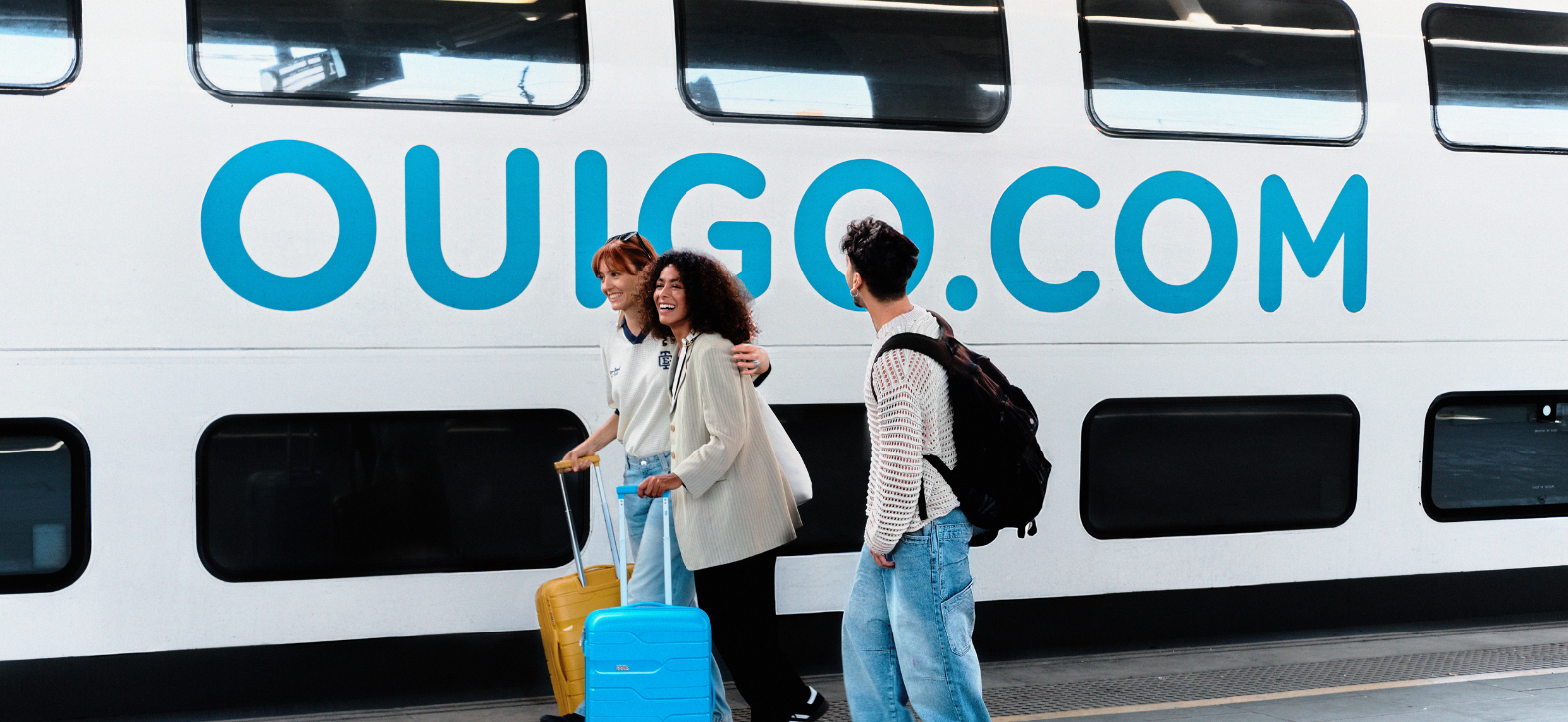
- Origin of the brand: Subsidiary of the French public company SNCF (Société Nationale des Chemins de fer Français). It arrived on the Spanish market in May 2021 with the intention of revolutionizing the sector through a low-cost model based on the massive use of double-decker trains (TGV Duplex), which allows a high capacity of passengers per journey.
- Available routes: It operates mainly on the high-speed corridors linking Madrid with Barcelona, Zaragoza, Tarragona, Valencia, Alicante, Valladolid and, more recently, the routes to Andalusia (Cordoba, Seville and Malaga).
- Fare modalities: They work with a very low base ticket to which modular supplements can be added: additional baggage, option to travel with pets, choice of standard or XL seat, and the Ouigo Full package (which includes total flexibility of changes and extra luggage).
3. Iryo
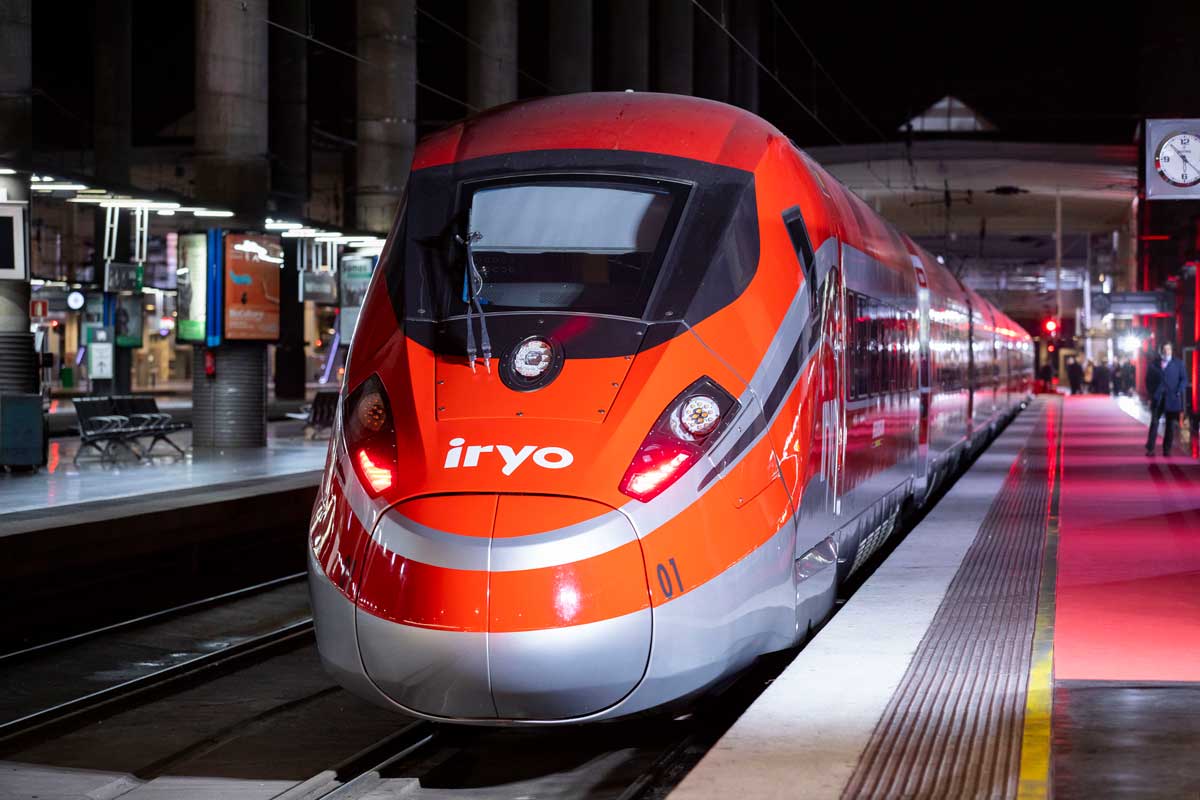
- Origin of the brand: It is the trademark of the company ILSA, a consortium formed by the Valencian airline Air Nostrum, the construction company Globalvia and the Italian public company Trenitalia (the transalpine railway giant). It began operating in November 2022 with a focus on premium comfort and flexibility at competitive prices.
- Available routes: It connects Madrid with Barcelona (via Zaragoza and Tarragona), Valencia, Alicante, Cordoba, Seville and Malaga.
- Types of fares: Structured in four classes focused on both leisure and business travelers:
- Initial: The most economical option while maintaining high quality standards on board.
- Unique: Designed for professionals, with very comfortable seats.
- Singular Only You: A variant of the previous one aimed at personalized spaces.
- Infinite: The most exclusive experience, with superior seating and flexible dining options on board.
Usage and Market Share Statistics
Railway liberalisation has been a resounding success in terms of sustainable mobility. According to data from the sector, Spanish high-speed has experienced exponential growth, exceeding the volume of passengers recorded before the 2019 pandemic by more than 75%.
- Passenger growth: There are usually more than 30-40 million passengers per year on the main corridors, driven by a general drop in fares of up to 40%.
- Market share: Although Renfe (adding AVE and Avlo) remains the undisputed leading operator with a share of between 50% and 62% of journeys depending on the corridor, the sum of the new entrants (Iryo and Ouigo) has managed to capture between 34% and 50% of the market share together on the routes where they compete directly. This shows that users actively value the diversity of options and price competition.
Multicompany Platforms: Why Use Trainline to Save
With three different operators operating on the same tracks – each with its own mobile apps, cancellation policies, loyalty programmes and fare structures – searching for the cheapest ticket manually can become a complex and tedious task. This is where multi-company aggregation and sales platforms such as Trainline take centre stage.
Using a metasearch engine and centralized booking platform like Trainline offers key advantages to optimize your budget for train travel:
- Instant comparison on a single screen: It allows you to simultaneously view the timetables, durations and prices of Renfe/Avlo, Ouigo and Iryo for the same journey, avoiding having to open three different applications or websites.
- Detection of cheaper cross-fares: Often, outbound schedules can be cheaper with one operator and return times with another. Trainline automatically combines tickets from different companies to create the cheapest possible round-trip itinerary.
- Transparency in extras and advanced filters: Makes it easy to filter results based on price, schedule, seat class, or baggage and pet policies with no last-minute surprises in the checkout process.
- Unified management: All your bookings, compatible discount cards and e-tickets are stored in a single profile, simplifying changes, cancellations or viewing QR codes directly from your mobile.
The Privilege of Connectivity: Alicante, Valencia, Murcia and the Costa Blanca
Living on the Costa Blanca, in cities such as Alicante, Valencia or Murcia, places passengers in a privileged location on the map of Spanish high-speed. What once meant long and complex journeys to the centre or north of the peninsula, today has been transformed into a network of high capillarity with extremely competitive travel times.
Connecting Axes and Main Routes
The arrival of high-speed rail and subsequent liberalisation have made the Mediterranean arc one of the most dynamic corridors in the country:
- Alicante/Elche – Madrid Corridor: With a duration of around 2 and a half hours, it has daily frequencies operated by Renfe (AVE/Avlo), Ouigo and Iryo, which generates intense price competition with tickets that can often be found from very small figures in promotional campaigns.
- Valencia – Madrid Corridor: It is one of the busiest routes in Spain, with an approximate travel time of 1 hour and 40 minutes. It is intensively covered by the three operators (Renfe, Ouigo and Iryo), offering dozens of daily trains in both directions.
- Connection Murcia – Elche – Alicante – Madrid: The progressive integration of high-speed rail in the Region of Murcia and the south of the Costa Blanca has drastically shortened the distances with the central plateau, allowing direct connections without transfers.
- The Mediterranean Corridor and the transversal connection: The current and developing infrastructures facilitate direct interconnection to the north (towards Catalonia and the French border) and to the rest of the national nodes, allowing easy travel to Castilla-La Mancha, Aragon and Andalusia through optimised links.
Residing in this area of the southeast of the peninsula not only guarantees an exceptional climate and quality of life, but also offers an open door to modern, fast and sustainable rail transport, making it easier to escape to any point of the Spanish geography in total comfort and at the best price thanks to the current competition between operators.
“Rail liberalisation unleashed a veritable unprecedented price war on key corridors such as Madrid-Barcelona or Madrid-Alicante. While in the time of monopoly high-speed travel implied rigid fares that often exceeded 80 or 100 euros per journey, the arrival of competing operators broke the market with launch campaigns and minimum tickets from 7, 9 or 15 euros. Faced with this drastic drop in revenue per passenger, Renfe was forced to cut operating costs, accelerate digitalisation and launch its own ‘low cost’ brand (Avlo). The objective was clear: to compete in the minimum price segment against foreign structures highly optimised for mass volume, which forced the entire sector to reinvent its margins and force down the average ticket price in Spain.”
High-speed fleets in Spain stand out for their technological diversity and interior design, conditioning the travel experience according to the operator chosen. Renfe operates on its AVE service with single-decker trains from manufacturers such as Talgo and Siemens (such as the S-102, S-112 and the modern S-106 Avril), offering ample seats in Turista and Confort classes, a traditional cafeteria car and a generous luggage policy that allows up to three pieces of luggage with a joint limit of 25 kg. Its low-cost brand, Avlo, uses similar but high-density configurations with standardised single-class seats, dispensing with the cafeteria car – replaced by vending machines – and limiting the luggage included to one cabin suitcase and one carry-on bag, charging a supplement for additional pieces.
For its part, Ouigo breaks the traditional scheme by using huge double-decker trains (the Alstom TGV Duplex models), where the experience changes radically depending on whether you choose to travel up or down. The upper floor is especially coveted by travelers to enjoy better panoramic views during the journey. Its seats are divided between Standard and XL class (with more legroom), they have their own cafeteria car called OUIbar and apply a restrictive baggage policy on their basic fare, allowing a cabin suitcase and a compact backpack, with additional fees for heavier or larger packages.
As for Iryo, the private operator is committed to the avant-garde Frecciarossa 1000 single-decker trains, manufactured by Hitachi and Bombardier, renowned for their acoustic insulation and aerodynamic design. Its interior is structured into four different classes (Initial, Singular, Singular Only You and Infinita) equipped with ergonomic leather seats. In the gastronomic section, it has a bistro wagon and mobile food trolley services that arrive directly at the seat, complemented by a flexible baggage policy that includes up to three pieces of luggage and suitcases as standard depending on the class chosen.
Living on the Costa Blanca is not only about enjoying an idyllic climate, beaches with crystal clear waters and an enviable quality of life; it is also about having first-class connectivity that links it directly to the heart of Spain thanks to one of the most advanced railway networks in the world.
Whether you are to establish your permanent residence, enjoy frequent getaways or invest in a privileged environment, this Mediterranean corner offers the perfect balance between the tranquility of the coast and the immediate proximity to the main capitals. To take the plunge and find the ideal home that suits your lifestyle, there is nothing better than relying on the advice of the best real estate experts at SILC ESTATES, your gateway to the property of your dreams on the Costa Blanca.