Located in the heart of the province of Alicante, Elche (Elx in Valencian) is a city that defies convention. It is not simply a sun and beach destination, nor a classic medieval city. Elche is a true oasis in the middle of the semi-arid landscape of southeastern Spain, a city where nature, history and culture are intertwined in such a way that they have been recognised by UNESCO on three separate occasions. With its vast palm forest, its Iberian, Roman and Andalusian legacy, and its unspoilt beaches in the surrounding area, Elche presents itself as a first-class tourist jewel.
This complete guide will take you through the centuries of Elche’s history, take you into the lush Huerto del Cura, guide you through its monumental streets and show you the treasures that await in its surroundings.
1. A Journey Through Time: The History of Elche
The history of Elche is a tapestry woven by multiple civilizations that found in this corner of the Mediterranean the ideal place to prosper, thanks to the Vinalopó River and its mild climate.
The Iberian Origins and the Lady of Elche
The first important settlements in the area date back to the Iberian period (fifth century BC), at the archaeological site of La Alcudia. It was here that the Iberian culture of the Contestans flourished. From this period comes the most universal find of the city: the Lady of Elche. Discovered by chance in 1897 by a young farm worker, this limestone bust is the pinnacle of Iberian art. Its mysterious beauty, intricate buns, and detailed attire continue to fascinate the world. Although the original resides in the National Archaeological Museum in Madrid, the spirit of the Lady permeates every corner of Elche.
Roman Ilici
With the arrival of the Romans, the Iberian settlement was transformed into Colonia Iulia Illici Augusta. The Romans structured the city, built thermal baths, sewers and villas with spectacular mosaics that can still be admired at the site of La Alcudia. Ilici became an important commercial centre of Tarragona Hispania, connected by the Via Augusta.
The Andalusian Legacy: The Birth of the Palm Grove
The true current physiognomy of Elche was forged during the Islamic domination (eighth to thirteenth centuries). It was the Arabs who moved the city of La Alcudia to its current location, founding Ils. More importantly, it was they who created the complex irrigation system that allowed the expansion of the Palmeral. They introduced the date palm in the form of an intensive agricultural plantation, designing a network of structured ditches that transformed the dry land into a productive orchard.
The Christian Conquest and the Modern Age
In 1265, James I the Conqueror took the city after a Mudejar revolt. From then on, Elche became part of the Crown of Aragon (and the Kingdom of Valencia). The city was walled and the first Christian temples were built on top of the old mosques. During the following centuries, Elche experienced periods of growth and crisis (such as the expulsion of the Moors in 1609, which seriously affected agriculture).
In the nineteenth and twentieth centuries, the arrival of the railway and industrialization (especially the powerful footwear industry) propelled Elche to become the economic engine it is today, without ever losing its agricultural and cultural identity.
2. The Palm Grove of Elche: The Oasis of Europe
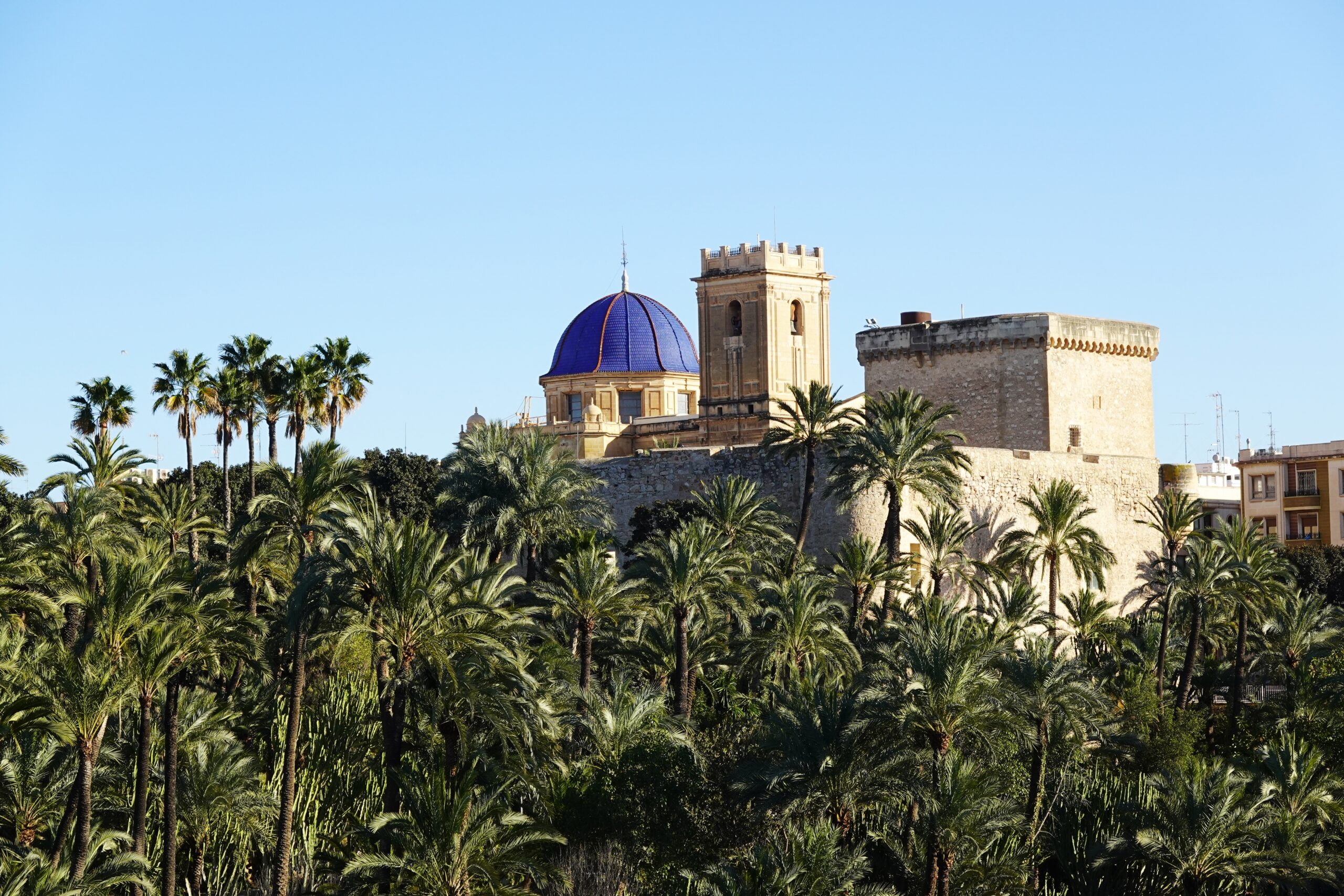
Elche cannot be understood without its Palm Grove. Declared a World Heritage Site by UNESCO in 2000, it is not a natural forest, but a cultural landscape, an immense agricultural plantation designed by the Arabs more than a millennium ago.
With more than 200,000 specimens (although some historical estimates speak of half a million), it is the largest palm grove in Europe and one of the largest in the world. The palm trees are not arranged randomly; they are planted on the margins of rectangular plots (the so-called “orchards”), creating a microclimate inland that protects other crops (such as pomegranate trees and vegetables) from the scorching sun and wind.
How to visit: The Palm Grove is integrated into the urban fabric. You can stroll through the Municipal Park, a beautiful public garden in the center of the city where palm trees mix with fountains and temples. It is also highly recommended to do the Palm Grove Route (the PR-CV 439 Trail), a route of about 2.5 km that takes you through more rustic orchards, where you can observe the original system of ditches.
3. The Priest’s Orchard: The Jewel in the Crown
Within the vast ocean of palm trees, there is a corner that stands out for its exceptional beauty: the Huerto del Cura (often referred to simply as the Parque del Cura). This historic garden was declared a National Artistic Garden in 1943.
The origin of its name comes from its former owner, chaplain José Castaño Sánchez, who took care of the orchard until 1918. Unlike traditional agricultural orchards, the Huerto del Cura was progressively transformed into a recreational botanical garden. Here, palm trees coexist with a spectacular collection of cacti from all over the world, bougainvillea, ponds and peacocks that walk freely in an atmosphere of absolute peace.
The Imperial Palm Tree
The undisputed attraction of the Huerto del Cura is the Imperial Palm Tree. It is a rare specimen of date palm (Phoenix dactylifera) that, instead of growing with a single trunk, developed seven arms (offshoots) that were born from the same trunk at about two meters high. Its symmetry and size make it unique in the botanical world.
The name “Imperial” was given to it by Chaplain Castaño himself in honor of Empress Sissi (Elisabeth of Bavaria), who visited the garden in 1894. The empress, marveling at the majesty of the seven-branched palm tree, suggested to the priest that he baptize it in honor of an empire, since it had the strength and power worthy of one.
Strolling through the Huerto del Cura is a sensory experience: the sound of water in the small ponds, the dappled shade under the canopies of the palm trees and the vibrant colors of the tropical flowers make it a must-see.
4. The Historic Center: What to see in
Elche The old town of Elche, known as the Vila Murada, is compact, monumental and very easy to get around on foot.
Basilica of Santa María
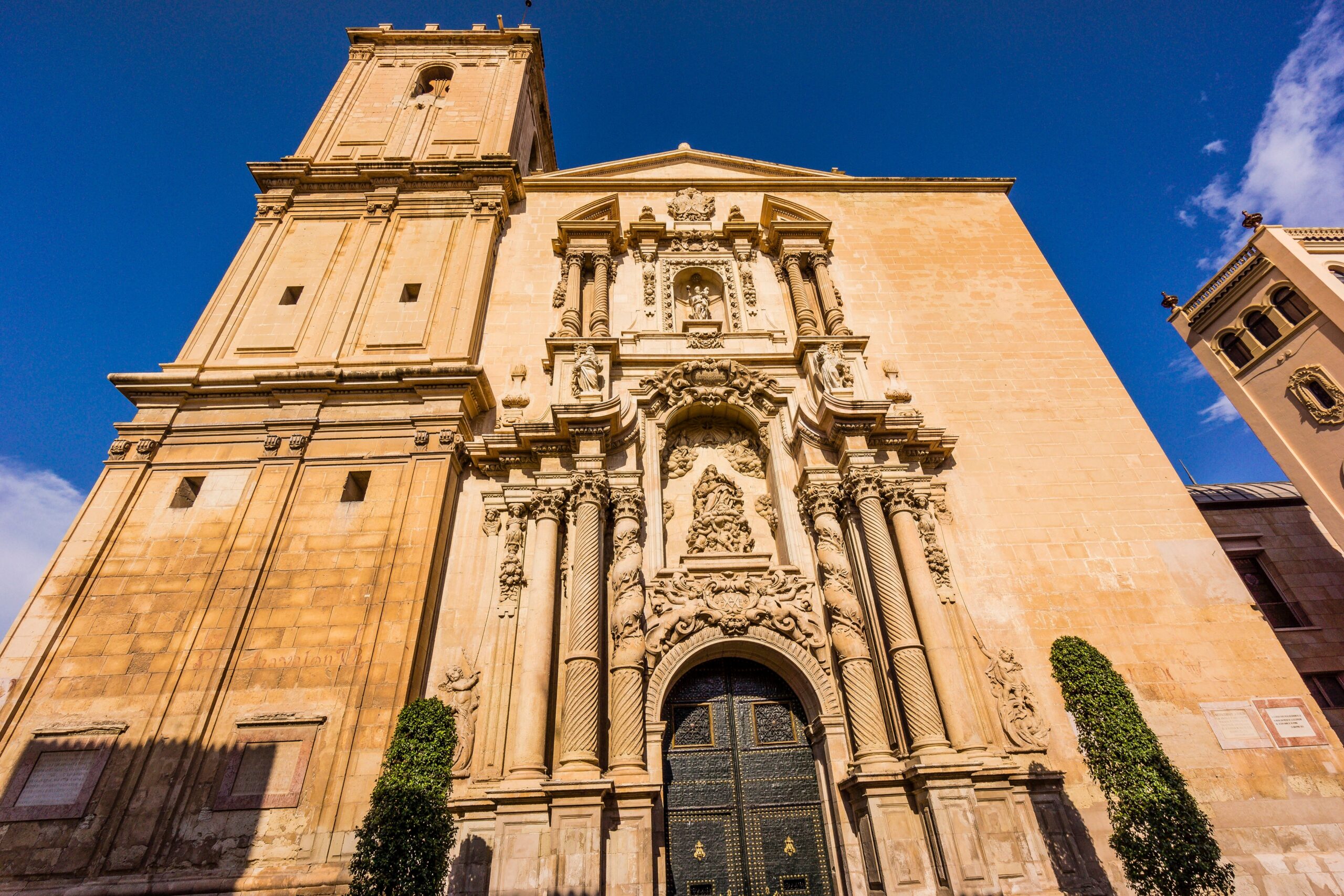
Built on the site of the old main mosque, the Basilica of Santa María is an imposing example of Spanish Baroque with Renaissance and Neoclassical touches. Its main façade is a true masterpiece of Baroque sculpture.
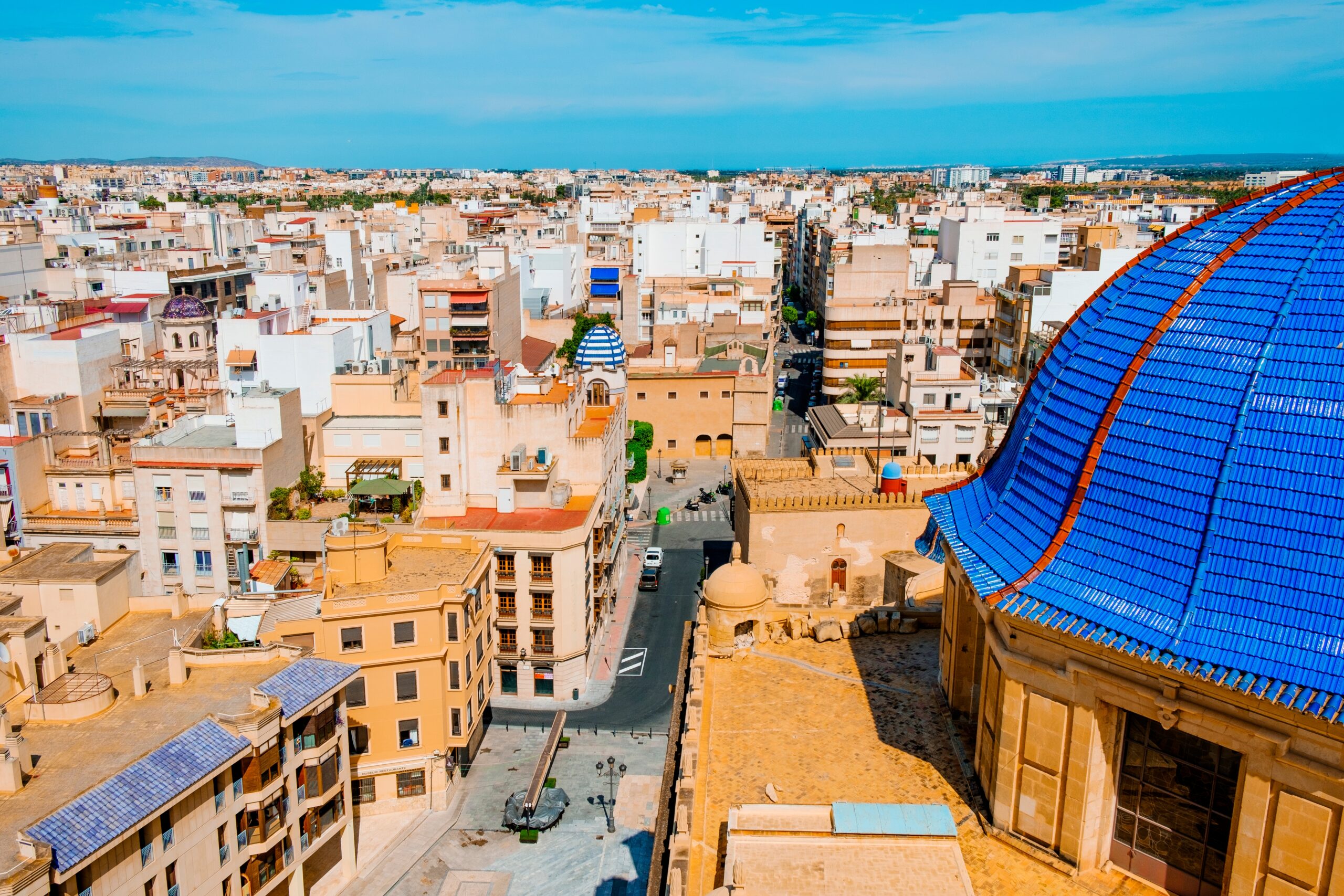
In addition to its architectural value, the Basilica is famous worldwide for being the stage where the Misteri d’Elx is performed every August. It is highly recommended to climb the bell tower, from where you can get a spectacular panoramic view of the city “floating” on the sea of palm trees.
Palace of Altamira (Alcázar de la Señoría)
Next to the Vinalopó riverbed stands this sturdy fortress dating from the 15th and 16th centuries, although it sits on previous Islamic buildings (from the 11th century). With its imposing keep, the palace was the residence of the lords of the city and, for years, served as a prison. Today, it has been wonderfully restored and houses the MAHE (Archaeological and History Museum of Elche), where you can review the entire history of the city, from prehistory to the present day, with modern museography and pieces of enormous value (including exact replicas of the Lady of Elche).
The Calahorra Tower
Near the Basilica is this quadrangular tower of Islamic origin (12th century). Originally it was the watchtower that defended the main gate of the walled city towards the road to Alicante. Its walls hide Masonic frescoes from the 19th century, when it was used as a lodge.
The Arab Baths
Hidden in the basements of the current Convent of La Merced, these public baths (hammam) from the twelfth century are one of the few examples of Islamic civil architecture that are preserved in the Valencian Community. Their visit, supported by audiovisual projections, allows you to understand the importance of water and the purification rituals in the Andalusian culture.
The Plaza de la Glorieta and the Corredora
To take the pulse of local life, there is nothing better than strolling along La Corredora (the commercial artery par excellence, today pedestrianised) and sitting at La Glorieta. This square is flanked by historic cafes and presided over by a replica of the Lady of Elche and a beautiful fountain crowned by an angel.
5. Elche’s Culture and Identity
Elche is not just physical monuments; its intangible heritage is just as impressive.
The Misteri d’Elx (The Mystery of Elche)
Declared a Masterpiece of the Oral and Intangible Heritage of Humanity in 2001, the Misteri is a sacred-lyrical drama that recreates the Dormition, Assumption and Coronation of the Virgin Mary. It has been performed uninterruptedly since the Middle Ages (fifteenth century) inside the Basilica of Santa María. Sung a cappella in Old Valencian and Latin by an entirely male choir (female roles, including the Virgin, are performed by boy singers, following the medieval tradition), the Misteri impresses with its complex aerial stagecraft. The “Mangrana” stands out, a spherical artifact that descends from the dome with an angel inside. It is performed on August 14 and 15, although there are previous dress rehearsals.
The Pusol Project
The third UNESCO recognition of Elche came in 2009, when the Pusol School Museum Traditional Culture Centre was included in the Register of Good Safeguarding Practices. This pioneering educational project began in 1968, when teachers and students from a rural school began to collect objects and testimonies of the traditional agricultural environment of Elche that was disappearing due to mechanisation. Today it is a fascinating museum that preserves the memory of rural and commercial Elche in the last century.
6. Flavours of the Oasis: Local Gastronomy
Elche’s gastronomy combines the seafood cuisine of the Mediterranean with the products of its orchard and inland traditions.
- Rice with Crust (Arròs amb Costra): It is the star dish of the city. Although there are variants throughout the region, Elche is legendary. It is prepared in a clay pot with rice, chicken, rabbit, and various sausages (white, red, butifarrón). The master touch occurs at the end: it is covered with beaten egg and finished cooking in the oven (or with a traditional “costrera” covered with embers), which makes the egg rise like a soufflé, forming a golden and fluffy crust.
- The Delicias de Elche: The date, fruit of the Palm Grove, is omnipresent. One of the most famous tapas are the “Delicias de Elche”: pitted dates, stuffed with almonds, wrapped in bacon or bacon and fried. An exceptional sweet-savoury contrast.
- The Mollar Pomegranate: Elche is the main European producer of pomegranates. The Mollar de Elche variety (with Designation of Origin) is famous for its sweetness and because its seeds are very soft and are hardly noticeable.
- Torta de Elche: For those with a sweet tooth, this cake based on almonds and syrup is the perfect traditional dessert to accompany a lavender liqueur (a very typical herbal digestive of the province).
7. The Surroundings: From Vinalopó to the Mediterranean
The municipality of Elche is huge and has 9 kilometres of virgin coastline. In addition, its strategic position allows for memorable nearby excursions.
The Beaches of Elche
Unlike other areas of the Costa Blanca where brick has gained ground, Elche has been able to protect a large part of its coastline.
- Arenales del Sol: With fine golden sand, it is one of the most family-friendly beaches with the best services. Connected by a long wooden promenade and surrounded by the Clot de Galvany Natural Park.
- El Carabassí: A wild beach at the foot of a cliff, surrounded by a system of protected dunes and pine forests. It is popular with lovers of nudism in some of its sections and for water sports.
- El Pinet and La Marina: To the south, these beaches extend flanked by old fishermen’s houses and areas of salt flats.
El Clot de Galvany
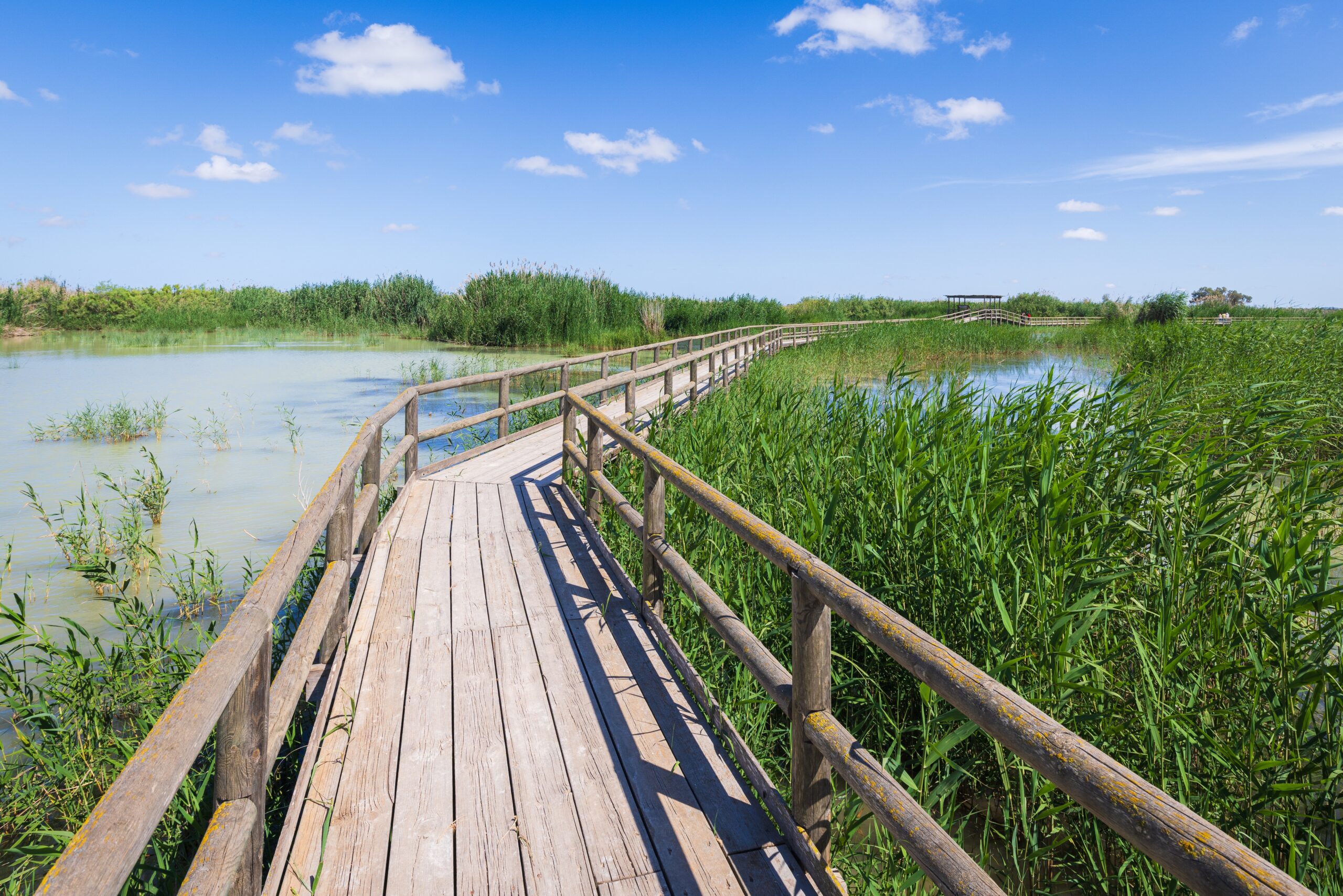
Located near the sea, this wetland is a paradise for ornithological tourism. With its ponds, old cultivation terraces and bunkers from the Spanish Civil War hidden among the vegetation, it is a perfect place to hike at sunset and observe water birds, such as the marbled teal or flamingos of passage.
Santa Pola and the Cape
Just 15 kilometres from Elche is the fishing village of Santa Pola. Its fishing port is one of the most important in the Mediterranean. From here you can visit the Renaissance Castle-Fortress in the centre of the town or drive to the Santa Pola Lighthouse, located on a spectacular headland that offers heart-stopping views over the sea and suspended walkways perfect for photographs. The Salinas de Santa Pola, a natural park that borders Elche, will allow you to see mountains of white salt and large colonies of pink flamingos that live there all year round.
The Island of Tabarca
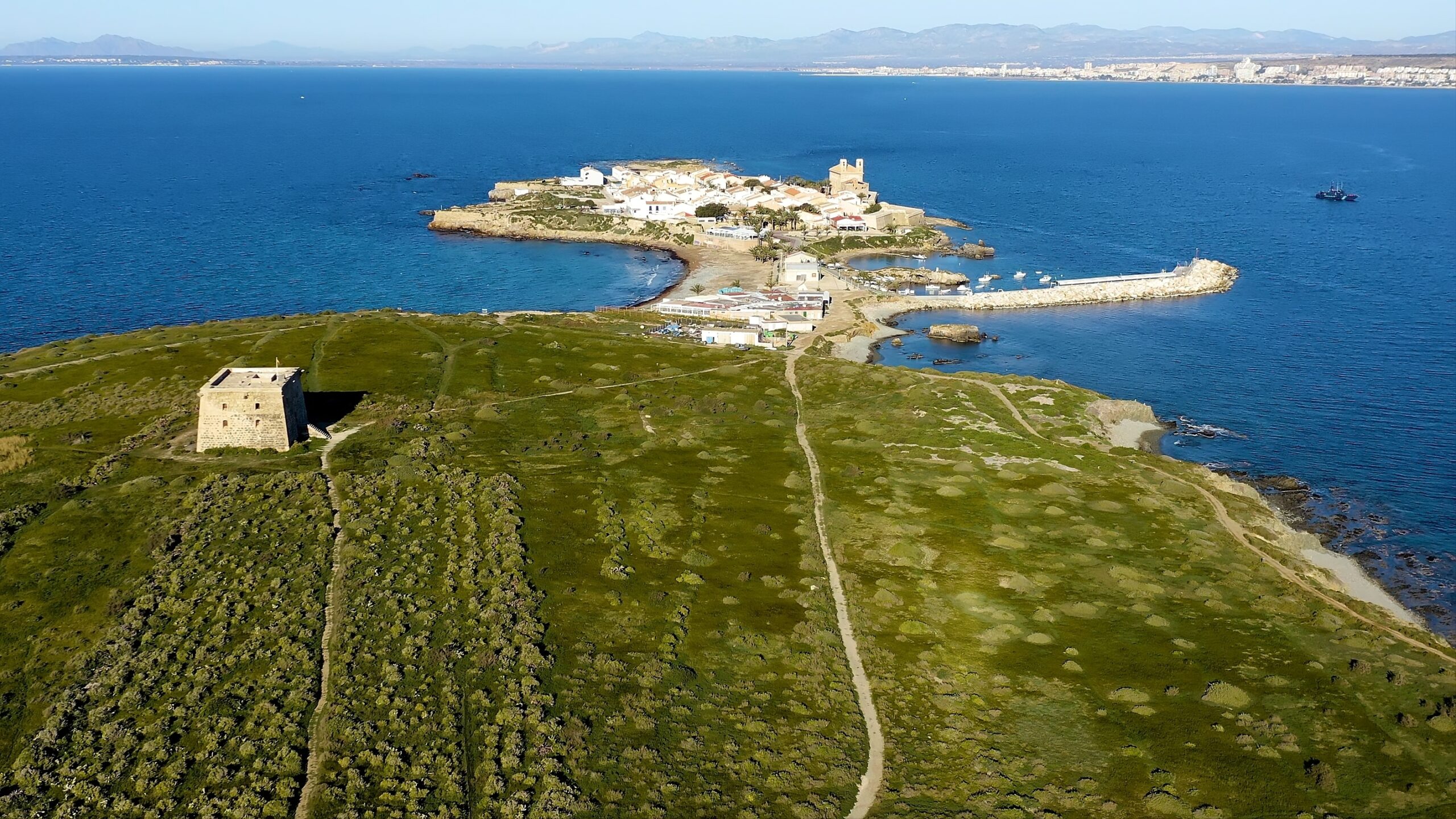
From Santa Pola the boats (or “tabarqueras”) leave daily that in about 20 minutes leave you on the Island of Tabarca, the only inhabited island in the Valencian Community. Originally a refuge for Barbary pirates, King Carlos III fortified it in the eighteenth century to settle there families of Genoese fishermen rescued from the Tunisian island of Tabarka. Today it is a Marine Reserve with crystal clear waters ideal for snorkeling and diving, and famous for its seafood rice dishes in cauldron.
Archaeological Site of La Alcudia
Just a couple of kilometres south of the town centre of Elche, this site is located where, as we mentioned before, the Lady of Elche was found. Today it is an archaeological park open to the public with an interpretation centre that allows you to walk through the ruins of the Iberian houses, the Roman baths and the remains of the Visigothic basilica, an authentic compendium of the ancient history of the Iberian Peninsula.
Conclusion: Elche, the Open City
Elche is a destination that requires time. It is not a city of quick consumption. It demands that the traveller stop to feel the freshness under the shade of the Imperial Palm Tree in the Huerto del Cura, that he listen to the mystical silence inside the Basilica of Santa María, and that he calmly savour a bite of Arroz con Costra.
It is a city that has been able to honour its past without renouncing progress. With its enviable quality of life, its festivals full of gunpowder (such as the emblematic Nit de l’Albà), its world-famous footwear and its trio of World Heritage Sites, Elche is not only a natural oasis, but a true cultural refuge where you always want to stay.
Have you ever considered buying a house in Spain? Contact SILC ESTATES to make the process professional and simple. They will help you through every step of the buying process and advise you on the best properties according to what you are looking for.