Santa Pola: between saltpeter, millenary history, and the blue of the Mediterranean
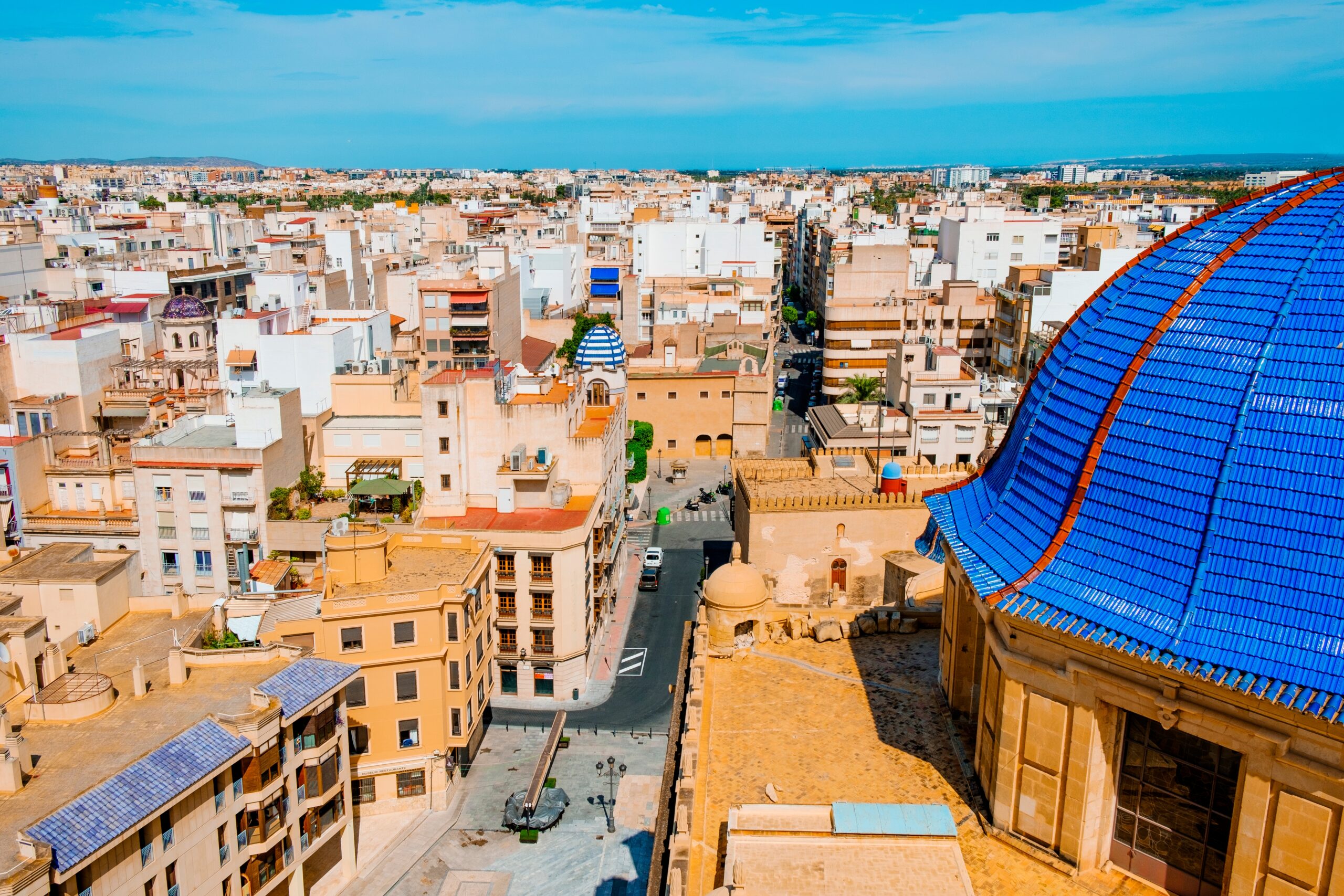
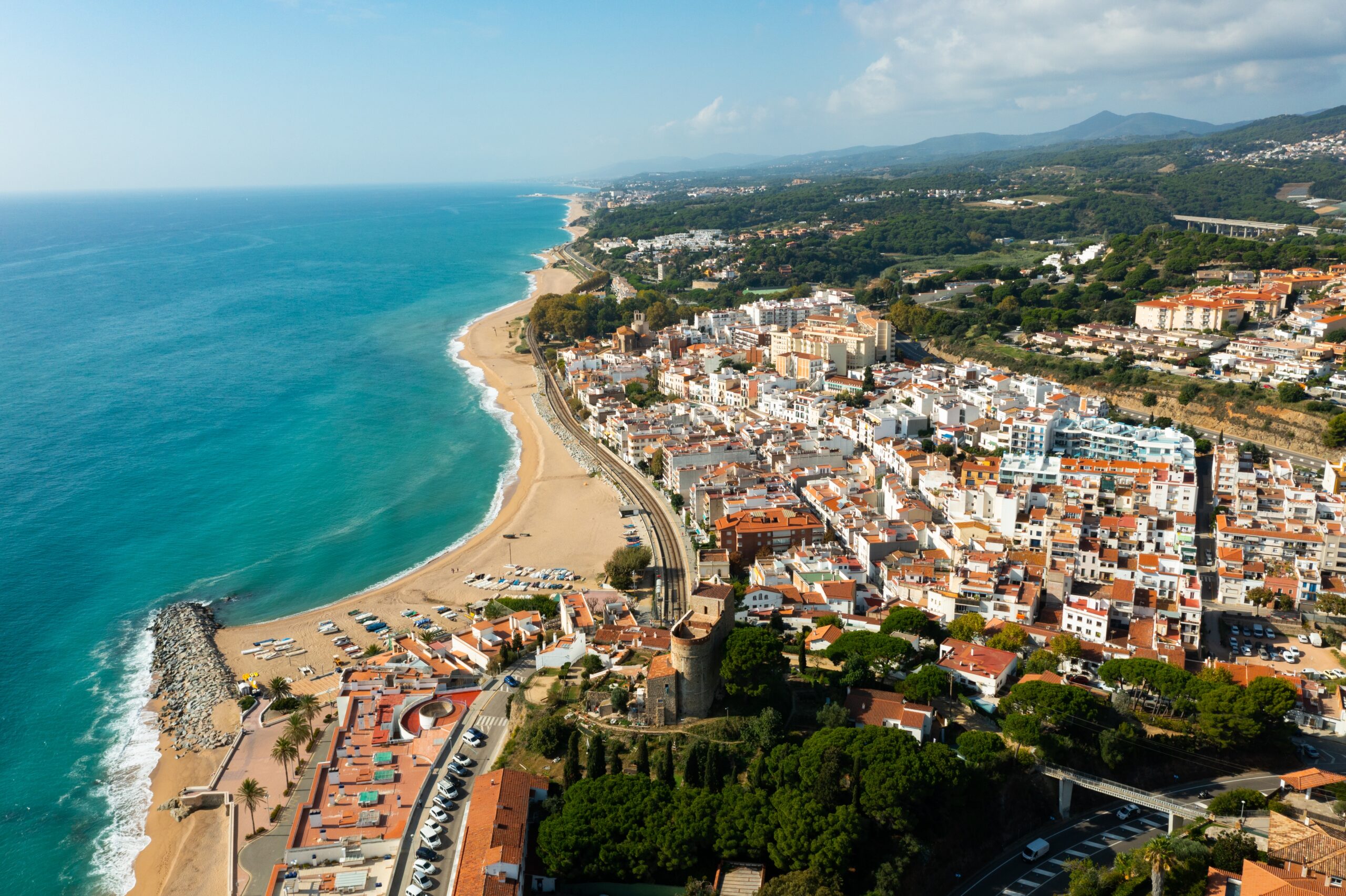
In the heart of the Baix Vinalopó region, just twenty kilometers south of the city of Alicante, lies a fishing village that has managed to preserve its soul despite the passage of centuries and the push of modern tourism. Santa Pola is not just a sun and beach destination on the Costa Blanca; it is a land shaped by the sea, the wind, and the salt, where every corner preserves the memory of Iberians, Romans, Berber pirates, and entire generations of fishermen.
Bathed by the warm waters of a wide bay and guarded by a cape that is a living fossil of the Mediterranean, this town offers an uncommon balance between historical heritage, ecological richness, and authentic daily life. Walking its streets, peeking out from its cliffs, or listening to the bustle of its fish market at dusk allows you to understand why this site has been coveted and inhabited almost continuously for more than two millennia.
A history marked by the sea and defense
The history of Santa Pola is inseparable from its strategic position. Located opposite the island of Tabarca and equipped with a natural anchorage protected from east winds by the Cape mountain range, the Santa Pola coast was since Antiquity an open gateway to Mediterranean trade, but also a vulnerable target against maritime incursions.
From the Iberians to the splendor of Portus Ilicitanus
The first traces of a stable settlement in the area date back to the late 5th century BC, when the Iberians built a fortified enclosure in the area known as La Picola. This site, designed under a clear Hellenic influence, functioned as a commercial port from which agricultural and mineral products from the interior were exchanged with ceramics, wines, and oils brought by Greek and Punic navigators.
However, the real economic and urban boom came with Romanization. From the 1st century AD the settlement consolidated as Ilicitan Port, the large seaport of the neighboring Colony of Julius Augsburg (present-day Elche). During the Roman Empire, Santa Pola experienced a period of extraordinary prosperity. Its port became a vital hub for the export of oil, wine, esparto grass, and especially salted fish and garum, the prized fermented sauce that delighted Roman tables. The existence of extensive marsh areas facilitated the production of sea salt, creating an industry that would endure to this day. From that glorious past, remains of port warehouses, a salting factory, and luxurious stately homes decorated with geometric mosaics survive.
The fear of pirates and the birth of the fortress
With the fall of the Roman Empire and the subsequent Islamic period, port activity declined significantly. The coast became a dangerous place, exposed to raids and plundering. After the Christian conquest in the 13th century, the territory came under the jurisdiction of Elche, and for centuries it was barely populated by a few guards and fishermen due to the constant threat of Barbary corsairs from North Africa, who used the nearby island of Santa Pola (now Tabarca) as a base of operations to attack the Levantine coast.
To put an end to this defenselessness, the Viceroy of Valencia, Bernardino de Cárdenas, Duke of Maqueda and lord of Elche, ordered in 1557 the construction of a fortified enclosure capable of housing a military garrison and protecting the civilian population. The project was commissioned to prestigious military engineers of the time, including the Italian Juan Bautista Antonelli, a key figure of Renaissance defensive architecture. Thus was born the Santa Pola Castle-Fortress, soon complemented by a network of coastal watchtowers—such as those at Tamarit, Escaletes, and La Atalayola—which communicated with each other by smoke signals during the day and fire at night to alert them of enemy sails on the horizon.
From the segregation of Elche to the fishing capital
The gradual pacification of the Mediterranean in the 18th century, driven by King Charles III’s decision to fortify and repopulate the island of Tabarca in 1770 with Genoese families rescued from slavery in Tunisia, allowed Santa Pola to begin to grow outside the walls. Under the protection of the castle, the first streets of low houses of fishermen and sailors appeared.
Demographic and economic growth soon awakened the desire for administrative autonomy. After several failed attempts, on January 23, 1835 Santa Pola achieved its long-awaited separation from Elche, establishing itself as an independent municipality. During the 19th century and the first half of the 20th, the local economy was built on three pillars: trawling and small-scale fishing, industrial exploitation of the salt flats, and riverside shipyards, where master carpenters built wooden boats that operated throughout the western Mediterranean. From the 1960s onwards, tourism development transformed the coastal landscape of the town, multiplying its population during the summer months, although never erasing the maritime identity that beats in its port and old town.
What to see in Santa Pola: heritage, culture, and maritime life
Exploring Santa Pola requires alternating a leisurely stroll through its historic center with visits to its natural spaces and vibrant seafront. These are the must-see spots to understand the essence of the town.
The Castle-Fortress and the Sea Museum
The geographical and symbolic heart of the town is the Castle-Fortress, located in the central Plaza de la Glorieta. Built of ashlar stone, it has a square plan with two defensive bastions at the sea-facing corners (the Duke’s and the King’s) and two semicircular towers on the land side. Its sobriety outside contrasts with the warmth of its spacious Parade Ground, a porticoed space that today hosts concerts, exhibitions, and cultural events.
Inside it houses the Chapel of the Virgin of Loreto, patroness of the town, whose devotion dates back to 1643, when a storm forced a boat transporting the image from Italy to dock in the port. Additionally, the castle’s quarters house the Sea Museum, a must-visit to understand the municipality’s historical relationship with the ocean. Its rooms cover everything from prehistory and the Roman world to traditional fishing techniques, shore carpentry, and the daily life of sailors, with model boats, amphorae recovered from the seabed, and original tools.
Roman sites: the Casa de El Palmeral and the Salting Factory
Just a few minutes’ walk from the town center, Santa Pola preserves two archaeological treasures that allow you to travel directly to the Portus Ilicitanus. The most notable is the Roman Villa of El Palmeral, a luxurious manor house from the 4th century AD. Built around a porticoed courtyard or peristyle. What truly makes this site exceptional is the excellent state of preservation of its polychrome mosaics, decorated with geometric and vegetal motifs that paved the noble rooms and corridors. The space is musealized and protected under a roof that allows comfortable passage through walkways.
Very close to the port is also the Archaeological Park of the Salting Factory, where you can see pools lined with opus signinum (a Roman waterproof mortar) in which fish was macerated with salt to produce sauces and preserves intended for export.
The Fishing Port, the Fish Market, and the Museum Ship
If the castle is the historic heart, the Fishing Port is the driving force of Santa Pola. With one of the most important artisanal and trawl fleets in the Spanish Mediterranean, the port offers a fascinating spectacle every afternoon from Monday to Friday. Around half past four or five in the afternoon, the boats return to port accompanied by flocks of seagulls and unload the day’s catches at the Fish Exchange.
From an upper gallery open to the public, visitors can watch the downhill auction, a dizzying ritual in which wholesalers and restaurateurs bid on the coveted red prawn, Norway lobster, red mullet, whiting, or octopus, all protected under the Peix de Santa Pola quality brand. Right next door, at the Fishermen’s Guild, it is possible to buy fish freshly unloaded from the boat.
Moored in the same port is the Esteban González Museum Ship, an old wooden fishing boat built in the local shipyards in 1954. Converted into a floating museum, it allows you to go down to the engine room, look out at the bridge, and learn about the harsh conditions in which the crews lived and worked during the long days at sea. Just a few meters away, in Fernández Ordóñez Square, the Aquarium Municipal, the oldest in the Valencian Community (inaugurated in 1966), dedicated exclusively to the native fauna and flora of the Mediterranean Sea, with large tanks where groupers, moray eels, rays, and sea turtles swim.
Nature in its purest form: salt flats, cliffs, and beaches
Beyond its urban center, Santa Pola surprises with the extraordinary diversity of its natural landscapes. In just a few square kilometers, internationally important salt wetlands coexist, along with a unique fossil reef in Europe, and more than eleven kilometers of beaches and coves.
Santa Pola Salt Pans Natural Park
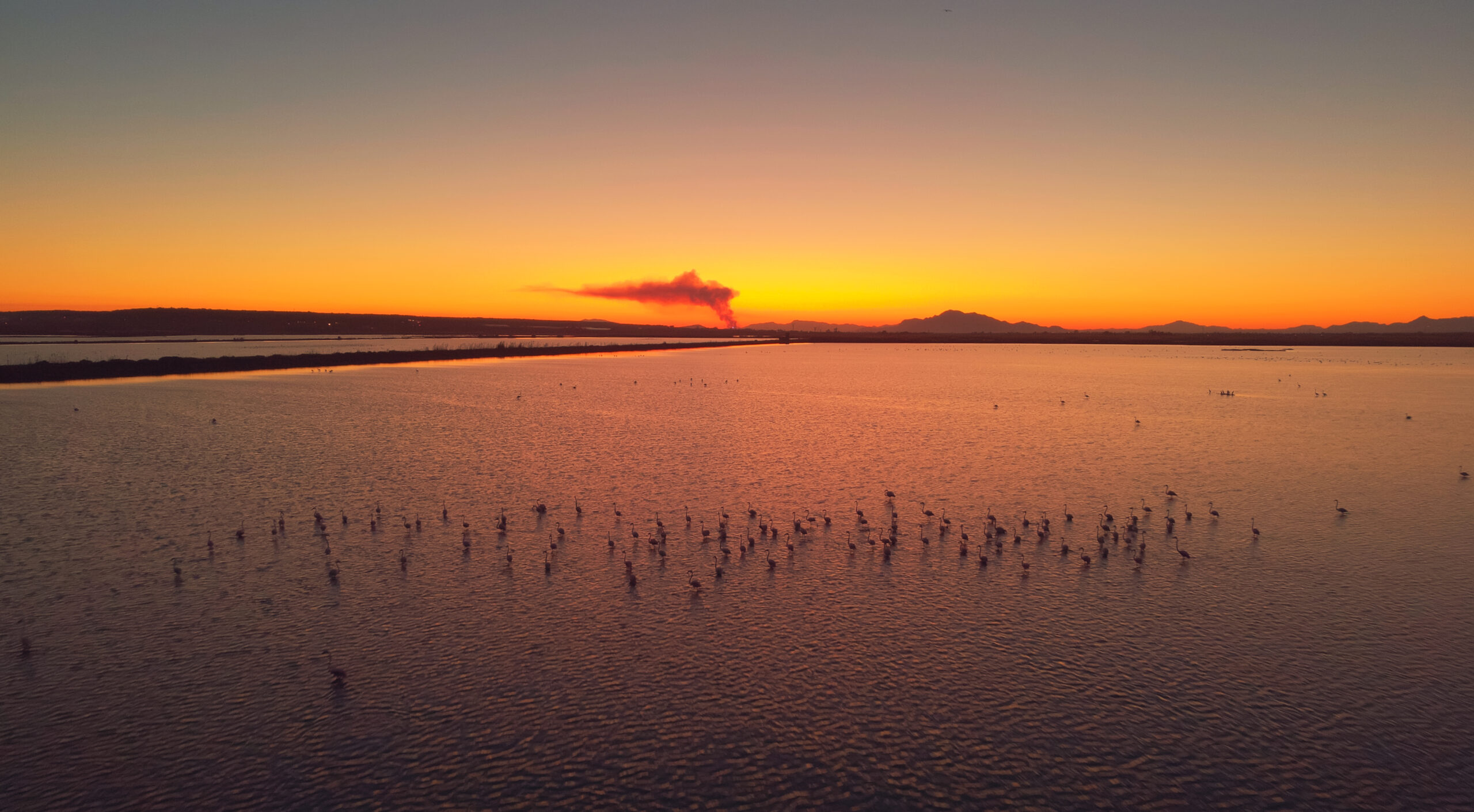
To the west of the urban center, flanking the national road N-332, stretch the nearly 2,500 hectares of the Santa Pola Salt Flats Natural Park. This wetland is a masterful example of the symbiosis between human activity and environmental conservation: salt exploitation — which has been active since the late 19th century — maintains a system of seawater reservoirs with varying degrees of salinity that provides food and shelter year-round to thousands of waterfowl.
The park’s most iconic scene is starring the common flamingos, which can be counted by the thousands at certain times of the year, dyeing the lagoons pink at sunset. Alongside them live avocets, storks, teals, white marblers, and marsh harriers. The park has an interpretation center located in the old salt mill — the Salt Museum—, from where several marked routes and wooden walkways lead to birdwatching observatories. One of the most photogenic spots of the wetland is the Tamarit Tower, an old defensive watchtower from the 16th century surrounded by water and reed beds that, at sunset, offers one of the most spectacular sunsets in the province of Alicante.
Cape Santa Pola and the Lighthouse Viewpoint
At the opposite end, to the east, the terrain rises sharply forming the Sierra and Cape Santa Pola. From a geological point of view, this 144-meter-high promontory is a true gem: it is a fossil coral reef formed about six million years ago, during the Messinian period, when the Mediterranean was a tropical sea. Its slopes, covered with Aleppo pine, mastic, and rosemary, are crisscrossed by trails heavily used by cyclists and hikers, where old cisterns and bunkers from the Civil War can still be seen.
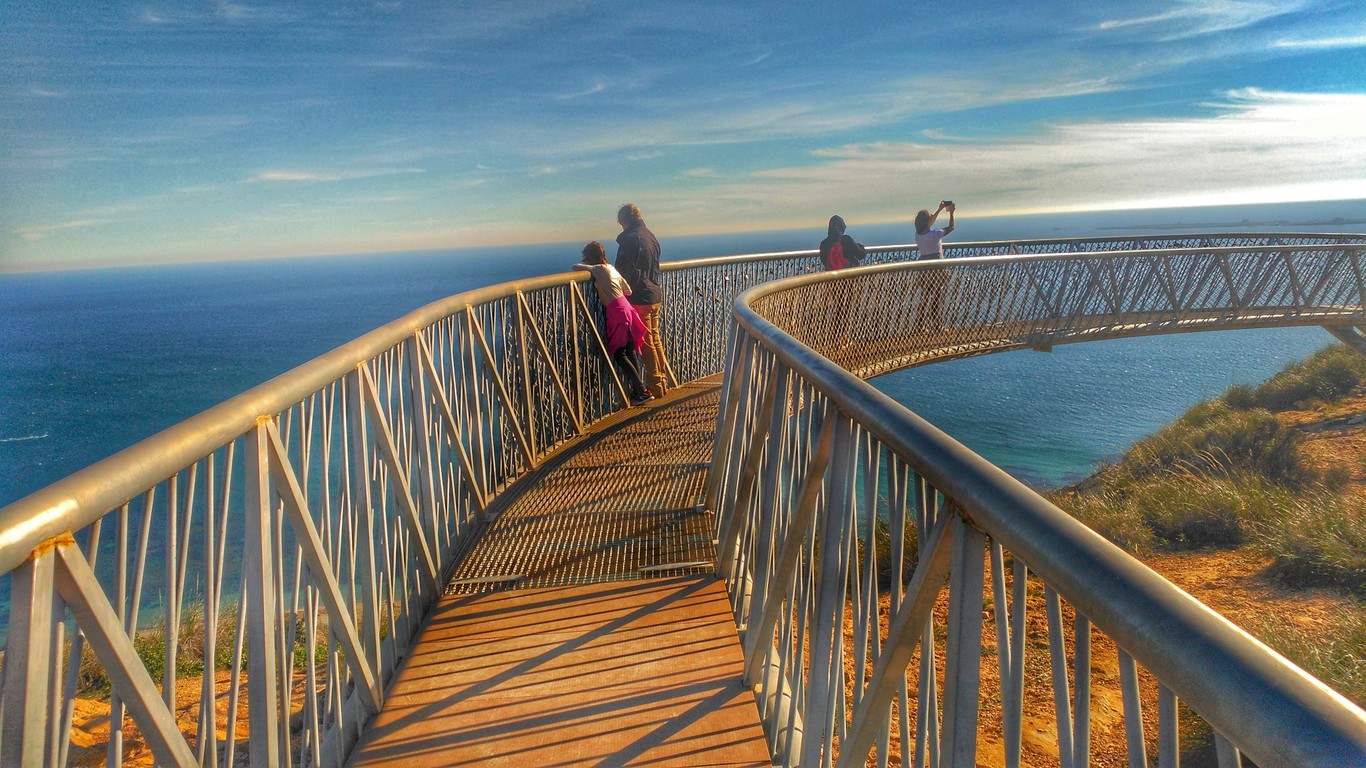
At the top of the cliff rises the Santa Pola Lighthouse, built in 1858 on the site of the old 16th-century Watchtower tower. Next to it is the famous Mirador del Faro, a metal cantilevered walkway that projects over the void and offers a breathtaking panorama of the entire bay of Alicante, the Guardamar coastline, and, just opposite, the elongated silhouette of Tabarca Island. It is also a highly appreciated takeoff point for paragliding enthusiasts, who take advantage of the thermal currents rising up the cliff.
Beaches for every taste
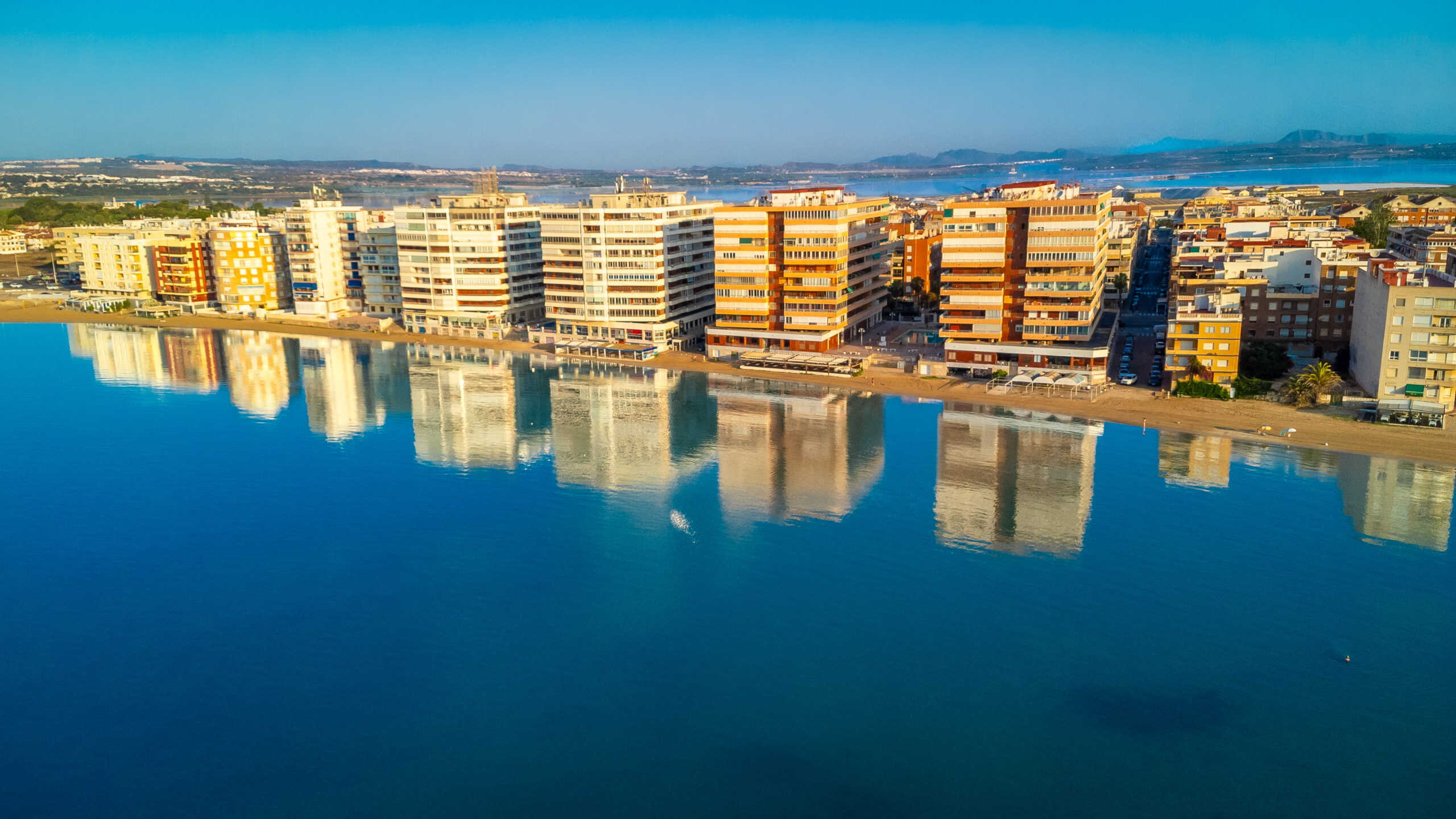
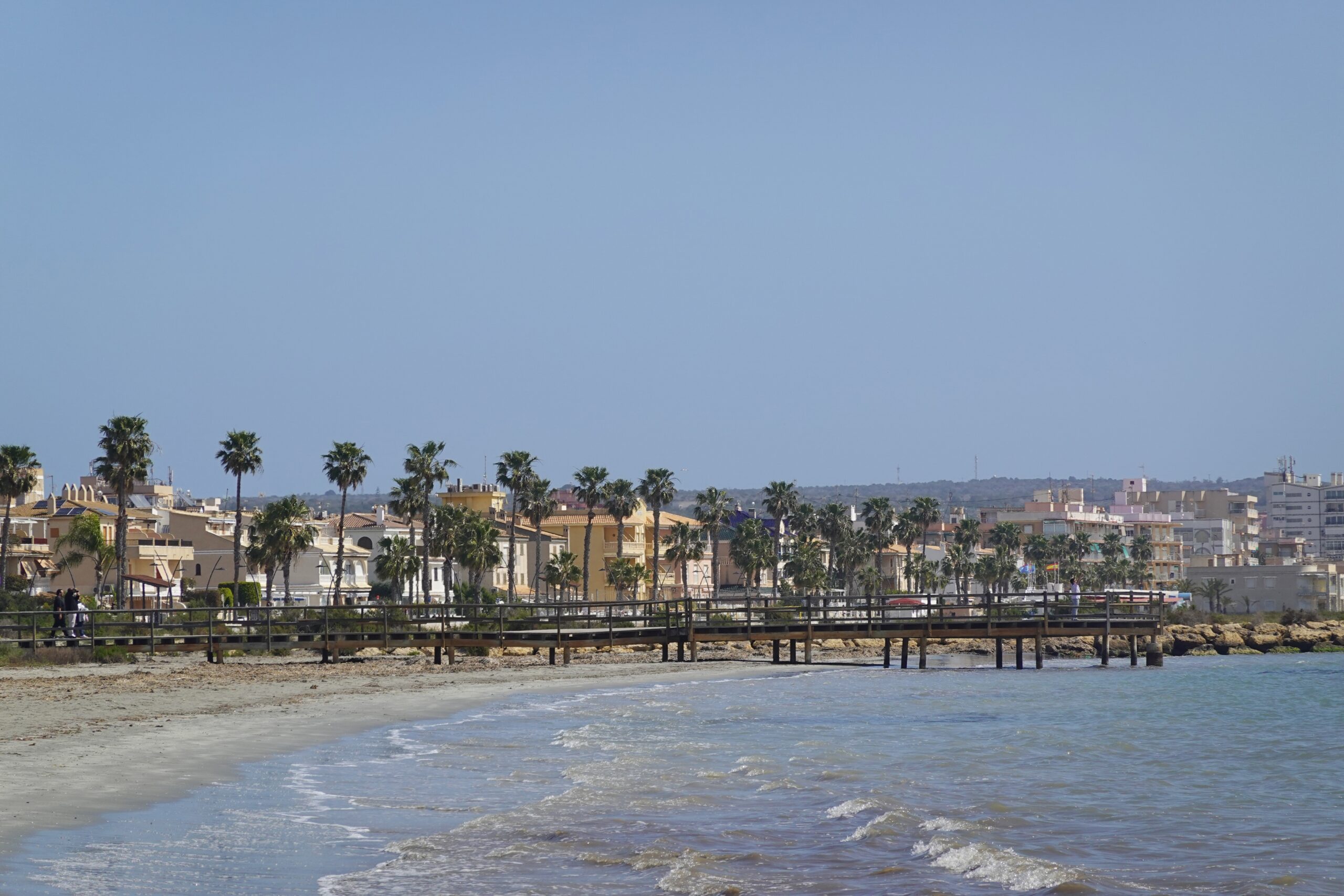
The Santa Polo coastline offers a variety uncommon on the Levantine coast. In the urban area, protected by breakwaters and with calm, shallow waters, there are Levante Beach, Gran Beach , and Playa Lisa, ideal for families and for water sports such as windsurfing, kitesurfing , or paddle surfing.
Those seeking a wilder environment and crystal-clear waters for snorkeling should head east, skirting the Cape road. There lie the Calas del Este, the Calas de Santiago Bernabéu, and, already beneath the cliffs of the sierra, the virgin coves of Bancal de l’Arena and Cala del Cuartel, where the turquoise blue of the sea contrasts with the reddish rock walls and the underwater meadows of Posidonia oceanica.
The must-do getaway: Tabarca Island
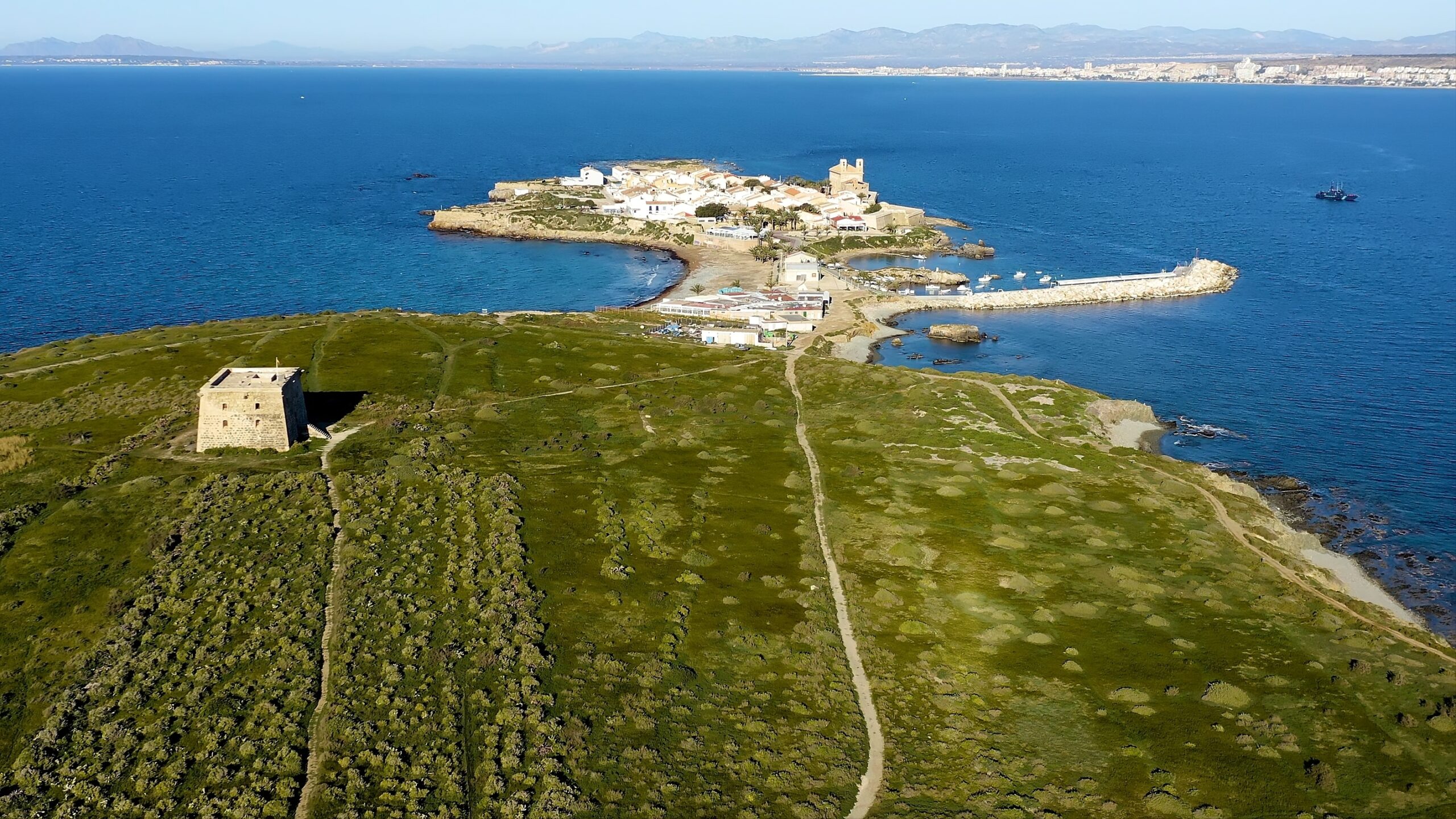
No visit to Santa Pola would be complete without crossing the narrow channel barely four kilometers long that separates it from Tabarca Island (or New Tabarca). Although administratively it belongs to the municipality of Alicante, Santa Pola is the closest peninsular point, and from its port numerous boats — popularly known as tabarqueras — and fast boats depart daily, making the crossing in just fifteen or twenty minutes.
Tabarca is the only inhabited island in the Valencian Community and was declared in 1986 the first Marine Reserve in Spain. Its small urban center, surrounded by an 18th-century wall with three monumental gates, preserves the intact charm of a car-free fishing village, with white houses with blue shutters, a baroque church dedicated to Saint Peter and Saint Paul, and a solitary lighthouse at its eastern end. Its waters, protected for decades, harbor an explosion of underwater life that turns any swim with glasses and snorkel into an unforgettable experience.
Bay flavors: Santa Pole
Santa Pola’s cuisine is a direct tribute to the fruits that arrive at its market every afternoon. Simple in its conception but extraordinary in the quality of its raw materials, it has in the cauldron to its star dish. Of humble origin—it was born as the ranch that fishermen cooked on board with rockfish or junk which had no commercial outlet—is traditionally served in two batches: first cooked fish (usually hen, milk, grouper, or dentex) accompanied by potatoes and a generous portion of aioli; and then a creamy rice cooked in that same concentrated broth, intense and full of marine nuances.
Alongside the caldero, other emblematic dishes stand out, such as arroz a banda, black rice with bay cuttlefish, seafaring gazpacho (made with unleavened bread cakes and fish), and peix sec (salted and sun-dried fish, like melva, octopus, or pintarroja), a direct heir to the salted tradition of Portus Ilicitanus. All of this is accompanied by wines from the Alicante Designation of Origin and topped off on the promenades with a good artisanal ice cream or fresh horchata.
Santa Pola achieves something increasingly difficult on the Mediterranean coast: keeping its identity alive without giving up opening up to the traveler. Those who arrive attracted solely by its beaches usually leave captivated by the pink light of its salt flats, the imposing silence of its fossil cape, the authentic bustle of its port, and the tangible trace of two thousand years of history by the sea. It is, ultimately, a place to explore without hurry, letting yourself be guided by the smell of saltpeter and the constant murmur of the waves.
Why buy a house in Santa Pola?
Beyond being a top-tier holiday destination, Santa Pola meets all the conditions to become the ideal year-round home or a real estate investment with great potential on the Costa Blanca. Its privileged climate with more than three hundred days of sunshine annually, its strategic proximity to Alicante-Elche International Airport, and a quality of life defined by tranquility, full services, and daily contact with the sea make it an incomparable place to live. If you are thinking of taking the step and finding your home in the villa — whether an apartment with bay views, a house next to the coves of the Cape, or a property right in the center —, contact SILC ESTATES to make the entire buying process easier with the best real estate experts, offering close, transparent advice fully tailored to your needs.