To master the art of legumes in Spain, you first have to understand that not all lentils are the same. Each variety has its own texture, skin, and cooking time, which ultimately determine how it should be used in the kitchen.
Here’s a complete guide to the main varieties and the best way to prepare them.
1. The Brown Lentil: The Perfect Choice for Rich, Slow-Cooked Stews
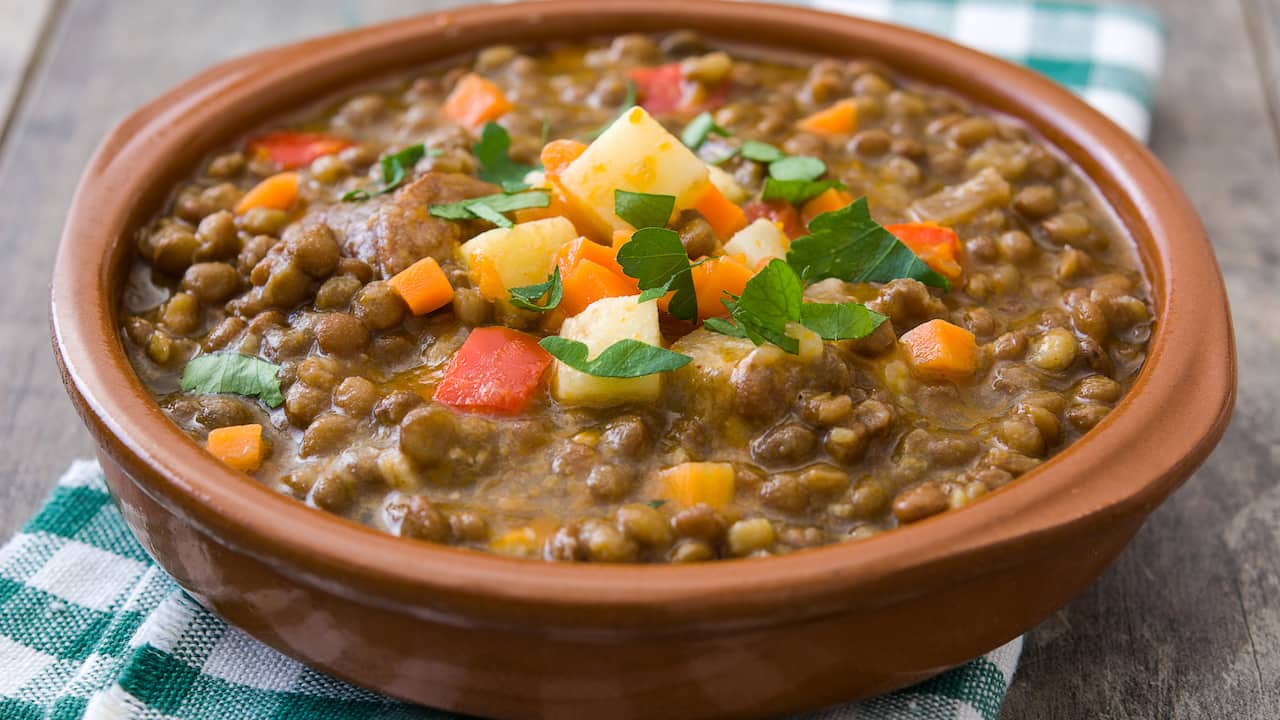
This is the most common in Spain. Small, earthy brown and with a very thin skin that does not come off during cooking.
- Characteristics: It does not need soaking (although 30 minutes helps). It holds its shape very well.
- Ideal Use: Traditional stews and hearty dishes.
Recipe: “Classic” Stewed Lentils
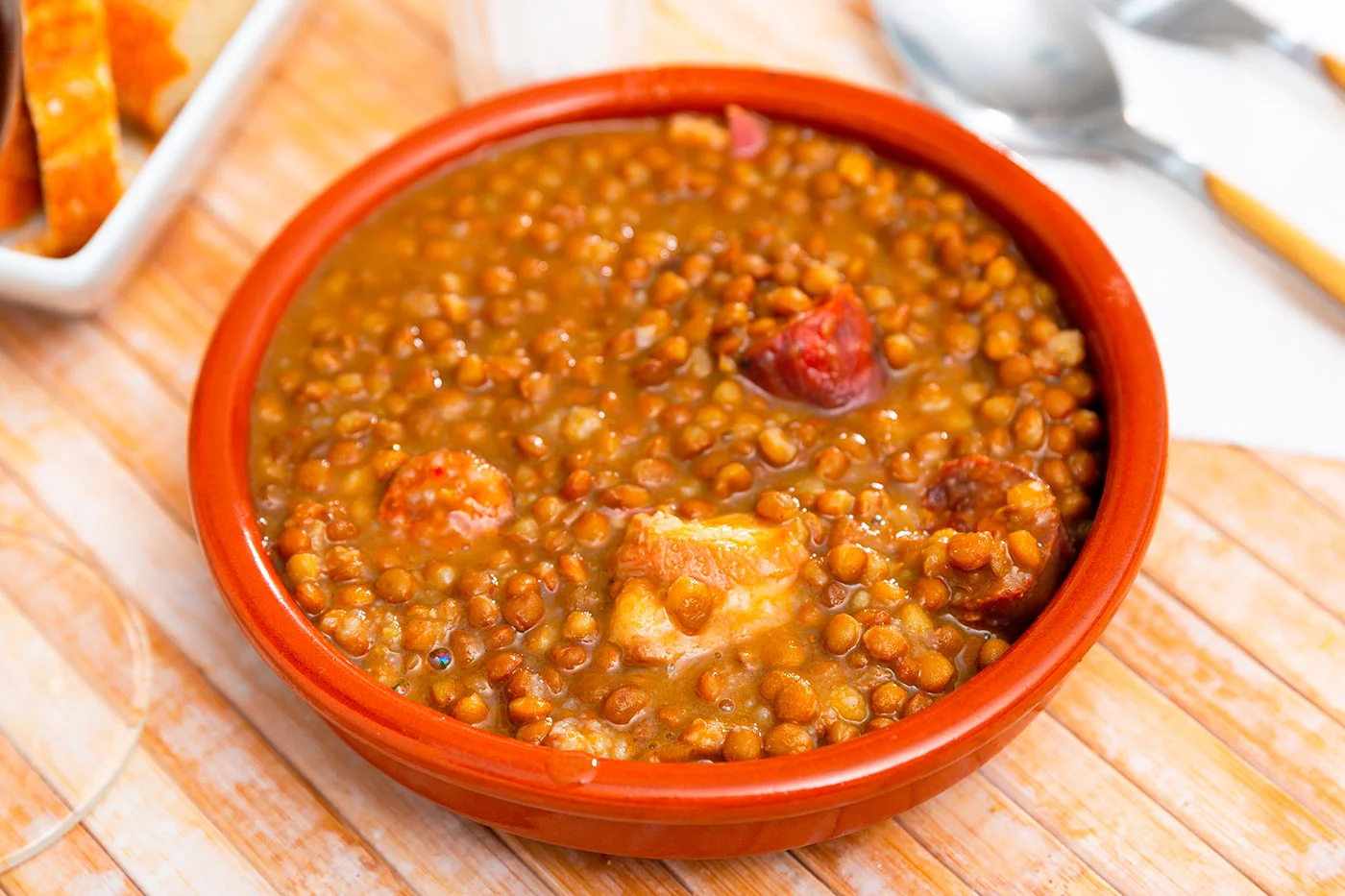
Ingredients: 300g of pardina (brown) lentils, 1 chorizo sausage, 1 piece of cured ham, 1 carrot, 1 potato, 1 bay leaf and Pimentón de La Vera (smoked paprika).
- Place the lentils in a pot with cold water (enough to cover them by about 3 cm).
- Add the chorizo, ham, chopped carrot and bay leaf.
- In a separate pan, prepare a sofrito with onion and garlic. Once golden, add a teaspoon of paprika, stir for 5 seconds, and pour it into the pot.
- Simmer for 45-50 minutes (or 15 minutes in pressure cooker). Season with salt and pepper at the end.
2. The Castilian Lentil: Big and buttery
It is lighter and larger than the pardina. Its texture is much softer and flourier, which makes it perfect for those looking for a denser broth.
- Characteristics: Requires prior soaking (minimum 2-4 hours). Their skin is a little more delicate.
- Ideal Use: Hearty winter dishes.
Recipe: Lentils with Ribs and Rice
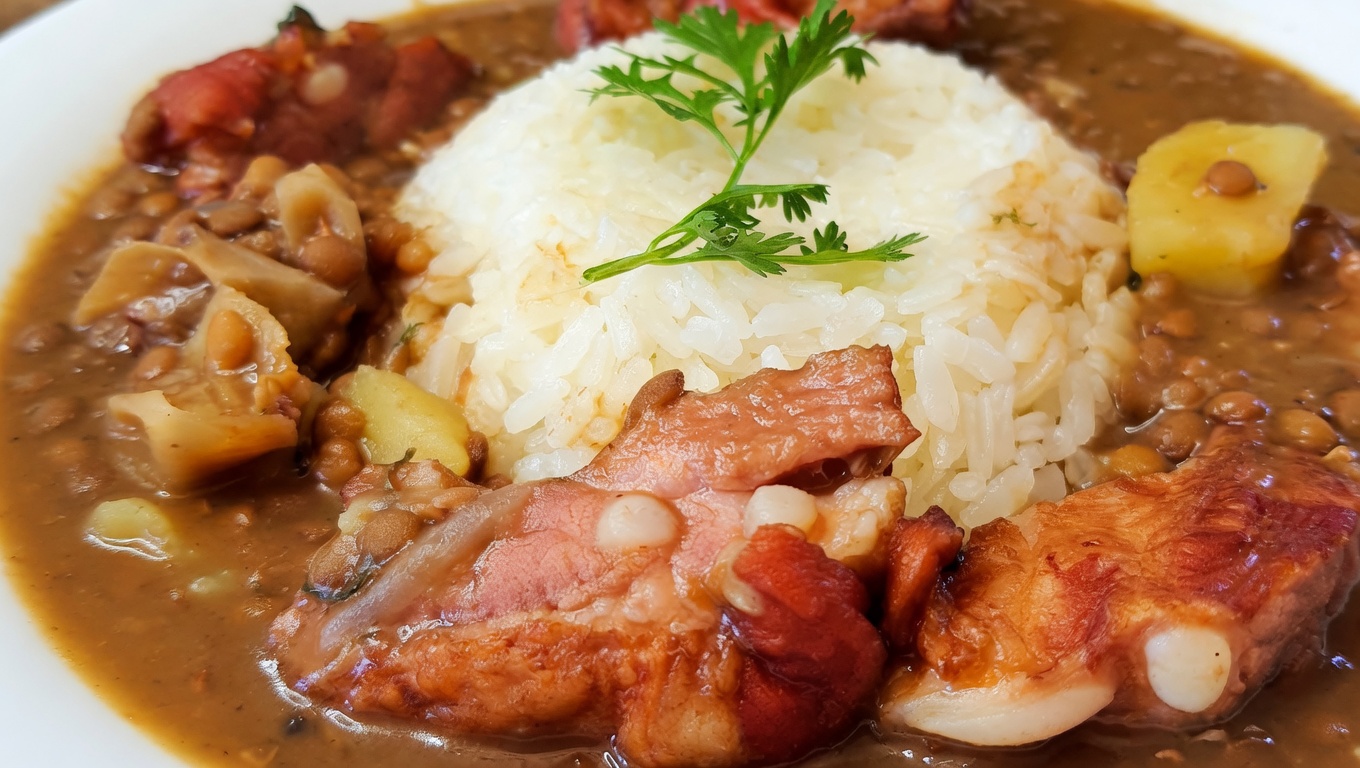
Ingredients: 300g of castellana lentils, 200g of chopped pork ribs, 1 handful of rice and green pepper.
- Brown the ribs in the pot with a little oil.
- Add the lentils (previously soaked) and the chopped green pepper.
- Cover with water and cook for 40 minutes.
- When there are 15 minutes left, add the handful of rice. The starch of the castellana lentils and rice will create a spectacular creamy texture.
3. The Red Lentil (Crimson): The Modern Gem
Although less traditional in classic Spanish home cooking, it has gained popularity thanks to its quick cooking time. It is sold hulled, which means it breaks down as it cooks.
- Characteristics: It cooks in just 10-15 minutes. It has no skin, so it is the most digestible.
- Ideal Use: Soups, purées, and spreads (such as lentil hummus).
Recipe: Curried Red Lentil Soup
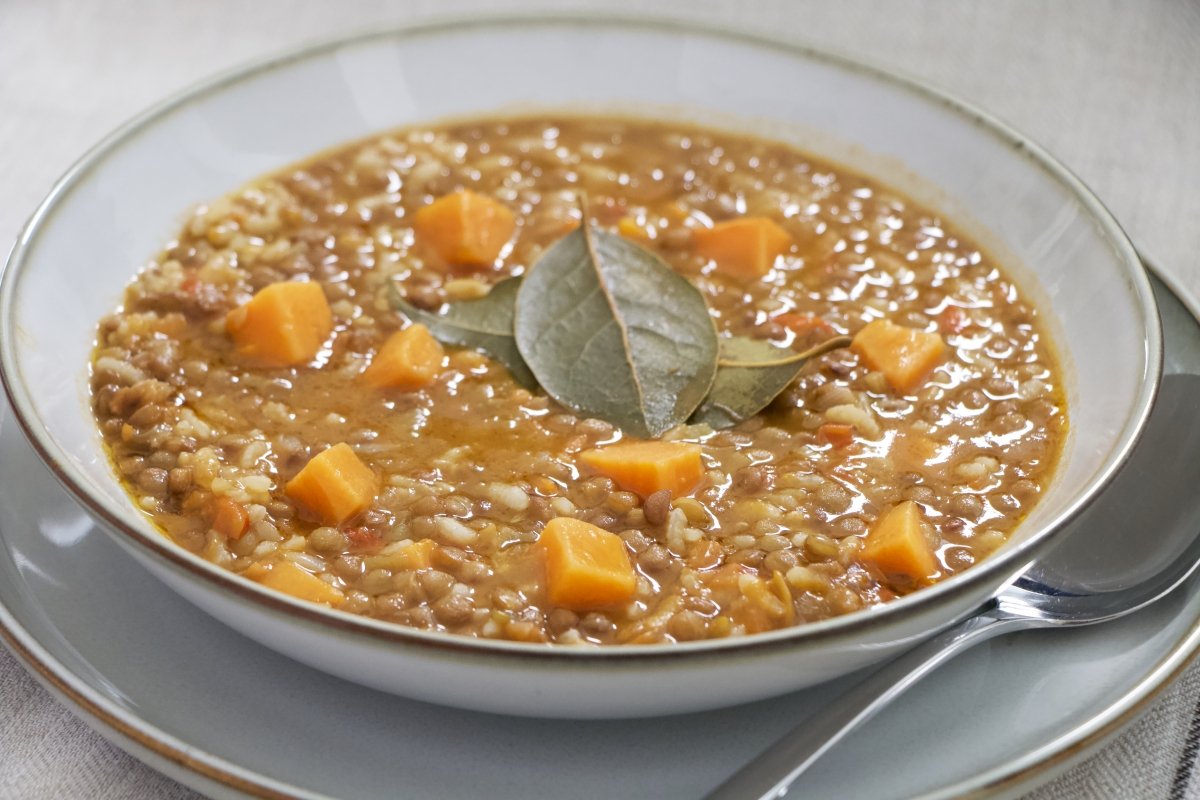
Ingredients: 250g of red lentils, 1 leek, 1 piece of pumpkin, curry powder and coconut milk (optional).
- Sauté the leek and pumpkin in a pot.
- Add the red lentils (washed) and a tablespoon of curry.
- Cover with water or vegetable broth (just about 2–3 cm above the ingredients, as you don’t want it too watery).
- Cook for 15 minutes. Blend until smooth and creamy. Finish with a splash of coconut milk when serving.
4. The Verdina or Puy Lentil : Elegance in a salad
Blue-green in colour and small in size, this is the firmest of all lentils; with a pleasantly firm bite.
- Characteristics: It releases very little starch, so the cooking liquid remains clear.
- Ideal Use: Cold salads or as a garnish for fish dishes.
Recipe: Warm Verdina Lentils and Cod Salad
Ingredients: 200g of verdina lentils, 100g of smoked or desalinated cod, red onion, red pepper and black olives.
- Cook the verdina lentils with just water, salt and a slice of lemon for 30-35 minutes. Drain and allow to cool.
- Finely chop the onion, pepper and olives.
- Combine the lentils with the vegetables and flaked cod.
- Dress with a vinaigrette made from 3 parts olive oil to 1 part sherry vinegar.
Cooking Times Summary
| Variety | Soaking | Traditional Pot Time | Result |
| Pardina | Optional | 45 – 55 min | Balanced |
| Castellana | 2 – 4 hours | 50 – 60 min | Creamy/Large |
| Red | No | 10 – 15 min | Broken down (purée) |
| Verdina | 1 hour | 30 – 40 min | Al dente / Firm |
5. Lentejas a la Riojana: A celebration of Paprika
This version is closely related to patatas a la riojana. Here, the secret lies not in the number of ingredients, but in their quality: a good artisan chorizo and paprika that gives the broth a deep, vibrant red colour.
- Profile: Spicy (optional), rich, and with a thick, well-bodied broth.
- Key Ingredient: Pimiento choricero (or, alternatively, plenty of Pimentón de la Vera), and the absence of darker meats such as blood sausage, which helps preserve its bright red colour.
Recipe: Lentejas a la Riojana
Ingredients: 300g of brown (pardina) lentils, 2 fresh chorizos, 1 whole head of garlic, 1 green pepper, 1 onion, 1 tablespoon of pimiento choricero paste, 1 bay leaf and a small dried chilli (optional).
- The base: Put the lentils in the pot with the whole green pepper, the peeled but whole onion, the head of garlic (cut in cross section) and the bay leaf. Cover with cold water.
- The chorizo: Add the chorizo cut into thick slices so that it holds its shape during cooking.
- The Rioja touch: Add the pimiento choricero paste and the dried chilli.
- Cooking: Simmer gently over a very low heat for about 50 minutes.
- The finish: Once cooked, remove the onion, pepper, and garlic. Blend the onion and pepper with a little of the cooking liquid, then return the mixture to the pot. This gives the dish its characteristic rich, velvety texture typical of La Rioja.
6. Lentils “With Everything” (Grandma’s Feast)
This is the dish known in villages as lentejas con fundamento (lentils with substance). Subtlety is not the goal here; the idea is that your spoon should stand upright in the bowl. It’s the version that makes full use of traditional pork cuts.
- Profile: Hearty, rich, and deeply smoky in flavour.
- Key Ingredient: The compango (chorizo, blood sausage, and pork belly) and the “frightening” technique (asustado); adding cold water midway through cooking to prevent the lentils from breaking.
Recipe: Traditional Lentils with “All the Trimmings”
Ingredients: 400g of brown (pardina) or castellana lentils, 1 chorizo, 1 firm blood sausage, a piece of Iberian pork belly, a piece of cured ham, 2 medium potatoes, carrot, onion, garlic, and olive oil.
- Building the base: In a large pot, combine the lentils with the pork belly, ham, and chorizo. Cover with cold water and bring to a boil.
- The sofrito: While it boils, prepare a slow sofrito with finely chopped onion and garlic. Once soft and translucent, add a teaspoon of sweet paprika, stir quickly to prevent it from turning bitter, and add it to the lentils.
- The potatoes: Add the potatoes, cutting them into chunks and slightly breaking them at the end of each cut (rather than slicing cleanly). This helps release their starch and thicken the broth.
- The blood sausage: Add it during the last 15 minutes of cooking to prevent it from bursting and turning the stew dark (unless you prefer it that way).
- Resting time: This dish improves significantly if left to rest for a couple of hours, or even overnight. The broth settles and the flavours of the different meats fully come together.
Stew “Richness” Guide
| Modality | Degree of satiety | Broth color | Best occassion |
| A la Riojana | High | Bright red | Sunday lunch with the family |
| With everything | Very High | Dark brown | Intense cold or post-Cold days or after physical exertion |
| Viudas | Low | Light golden | Light dinner or a healthy option |
7. Lentils with Vegetables (The Healthy Version)
This is a favourite for weekly meal planning. It’s rich in fibre, iron, and vitamins, with a relatively low calorie content, especially if you keep the olive oil in check.
- Profile: Light, easy to digest, and very aromatic.
- Key Ingredient: A wide variety of vegetables (the more, the better), along with cumin, which not only adds a wonderful earthy flavour but also helps reduce the digestive effects of legumes.
Recipe: Lentils “Huertanas” (Garden-Style)
Ingredients: 300g of brown (pardina) lentils, 2 carrots, 1 small courgette, 1 green pepper, 1 red pepper, 1 leek (white part only), 2 ripe tomatoes, 1 celery stick (optional but recommended), ground cumin, 1 bay leaf and salt.
- The Sofrito Base: Finely chop the leek, peppers, and celery (brunoise). Sauté them in a pot with a generous drizzle of extra virgin olive oil until softened.
- The Tomato: Grate the tomatoes and add them to the sofrito. Cook until the tomato reduces, loses its moisture, and deepens to a rich red colour. This step is essential for flavour.
- The vegetables: Add the carrots and courgette, cut into slightly larger cubes so they retain some texture when eaten.
- Cooking: Add the lentils, bay leaf, and a pinch of cumin. Cover with water or homemade vegetable stock.
- The final touch: Simmer gently for 40–45 minutes. For a thicker broth, remove a piece of courgette with a little cooking liquid, blend it, and return it to the pot.
Summary: Which one to choose depending on the day?
To make this guide truly complete, here’s a simple way to decide:
- A very cold day and physical work? Go for the Lentils with Everything.
- Do you want to impress with a powerful and spicy taste? Lentejas a la Riojana are your best choice.
- Watching your diet or a “detox” Monday? Lentils with Vegetables.
- Are you in a hurry and want something modern? Red Lentil Curry.
- Summer heat? The Verdina Lentil Salad.
Three Golden Rules for Any Lentil Dish:
- Always start with cold water: When you begin cooking, use cold water. If you need to add more during cooking because the lentils are drying out, make sure it’s cold as well. This technique, known as “shocking” the lentils, helps prevent the skins from separating.
- Salt at the end: Adding salt too early can toughen the skins. It’s best to adjust the seasoning during the last 5–10 minutes of cooking.
- Let it rest: Like most legume stews, lentils are even better the next day. The broth thickens and the flavours become more balanced.
To conclude, it’s essential to mention the classic combination of lentils and rice. This is not just a culinary tradition, but a truly smart nutritional choice. In Spain, it’s often referred to as “the perfect dish,” especially for those needing extra energy or looking to combat anaemia.
The Balance of Complete Protein
From a biological point of view, lentils are rich in many amino acids, but they are deficient in one called methionine. In contrast, rice is deficient in lysine, but rich in methionine. When mixed in the same dish, both foods complement each other by creating a protein of high biological value, comparable to that of meat, but much easier to digest and without saturated fats.
The Myth of Iron and the Reality of Anemia
It’s widely believed in Spain that “lentils are rich in iron.” While this is true, it is non-heme iron, which the body absorbs less efficiently than iron from animal sources. To make this dish a truly effective support against anaemia, both nutritionists and Spanish grandmothers recommend two simple steps:
- Pair it with Vitamin C: A splash of vinegar (very typical in Spain) or an orange for dessert significantly improves iron absorption.
- The role of rice: Beyond providing slow-release carbohydrates for sustained energy, rice makes the dish more satisfying and nutritionally balanced without the need for fatty meats, making it ideal for strengthening the body in a healthy way
In short, lentils with rice represent the wisdom of the Mediterranean diet: to achieve maximum nutritional value with the most humble ingredients of the pantry.