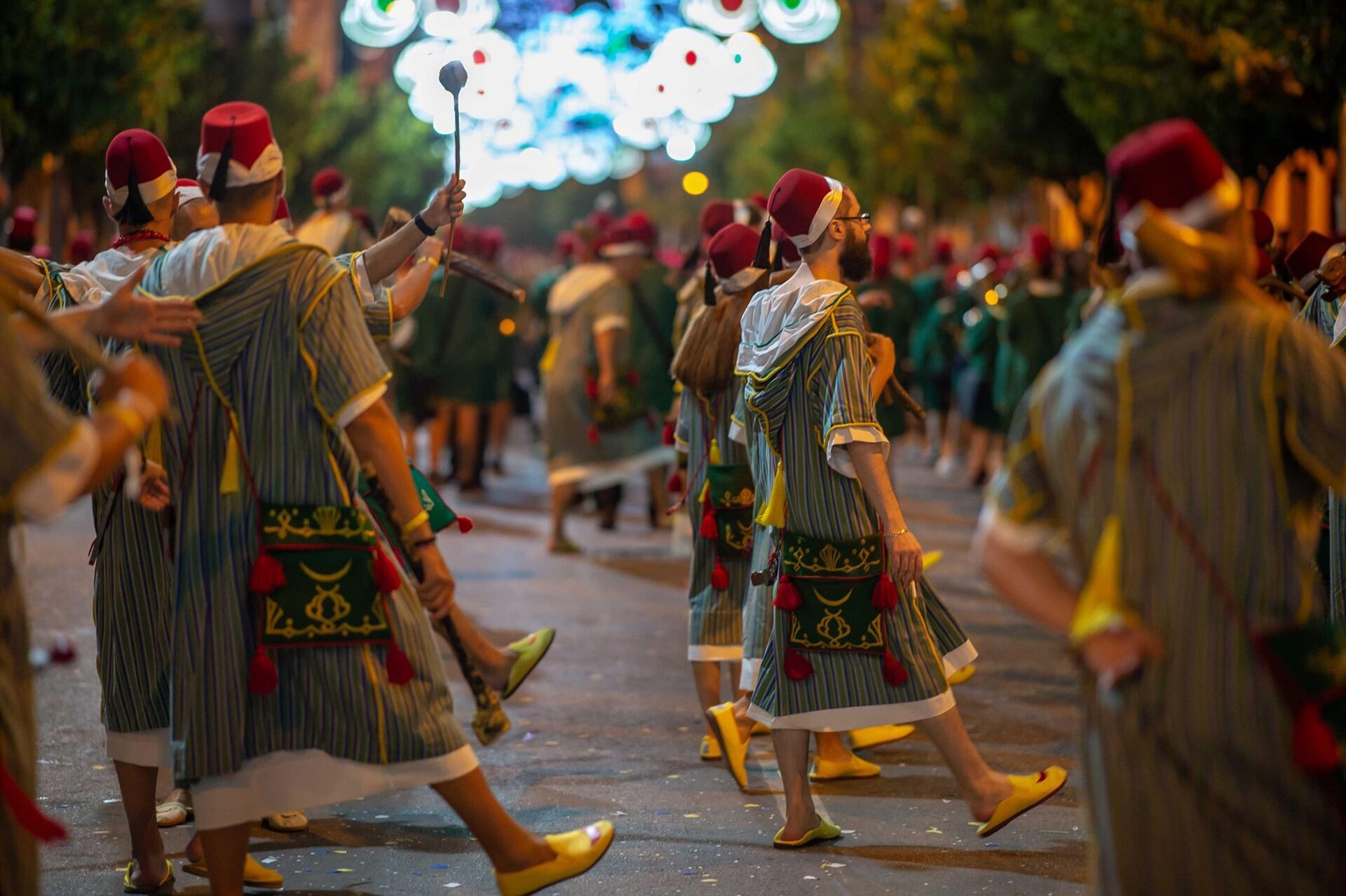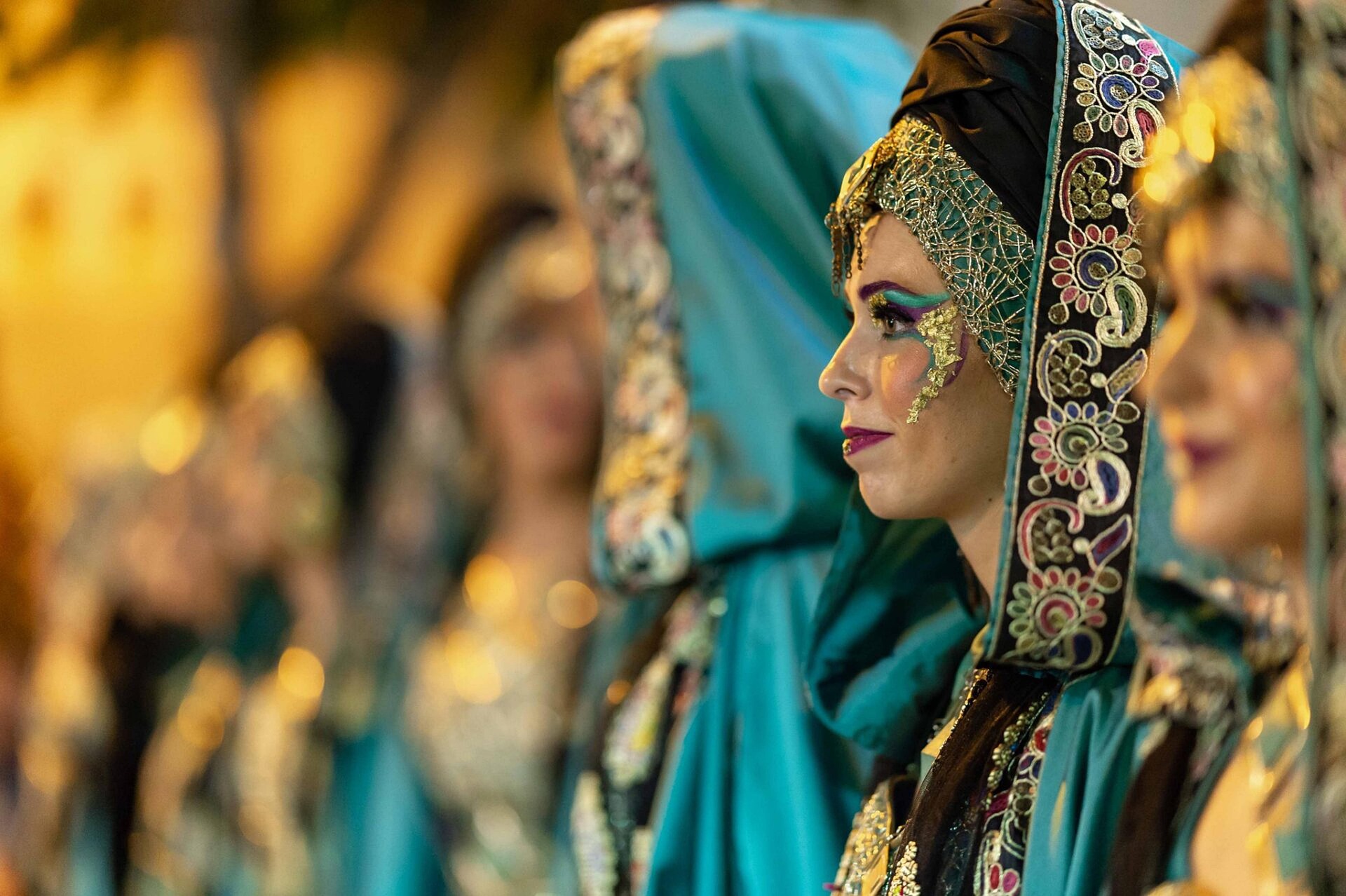

It is an exciting topic that defines the identity of an entire region. Here is an exhaustive exploration of the Moors and Christians festivals, focusing on their essence, their history and their vibrant reality on the Costa Blanca.
The Soul of the Costa Blanca: The Moors and Christians
The Moors and Christians festivities are not just parades; they are the beating heart of the Spanish Mediterranean. Especially in the province of Alicante and the Costa Blanca, these celebrations transform cities into epic settings where history, legend and religious devotion are mixed in an explosion of colour, gunpowder and music.
1. The Origin: History, Legend and Religion
The historical basis of the festival is the Reconquista, the period of several centuries in which the Christian kingdoms fought to regain control of the Iberian Peninsula from Muslim rule. However, what we see today in the streets is a romantic and theatrical reinterpretation of those events.
The Patronage and the Miracle
Almost all the festivities are celebrated in honor of the Patron Saint of the town. The most emblematic case is that of Alcoy, where the intercession of Saint George in 1276 to defend the city from the attack of Al-Azraq’s troops is commemorated. The feast is therefore at its root an act of religious gratitude that has evolved into a massive cultural spectacle.
The Structure of the Festival
Although each municipality has its variants, most follow a scheme of three key days:
- Tickets: The great parades of the Moorish and Christian armies.
- The Embassies: Acts where poetic texts are recited and challenging dialogues are held between the leaders of both sides to demand the surrender of the castle.
- The Struggle and Reconquest: Mock battles with arquebusiers that culminate in the final victory of the Christians.
2. The Social Fabric: The Filaes and Comparsas
The festival would not exist without the Filaes or Comparsas. They are groups that function as social clubs throughout the year.
- Identity and Family: Being a member of a row is often a family inheritance. Children are registered at birth and grow up within the comparsa.
- The Barracks or Kabila: It is the physical headquarters of the group. During the holidays, these places become the nerve center where you eat, drink and strengthen bonds of friendship. It is the place where the “internal party” is lived, away from the eyes of tourists.
3. The Art of the Costume: Between History and Fantasy
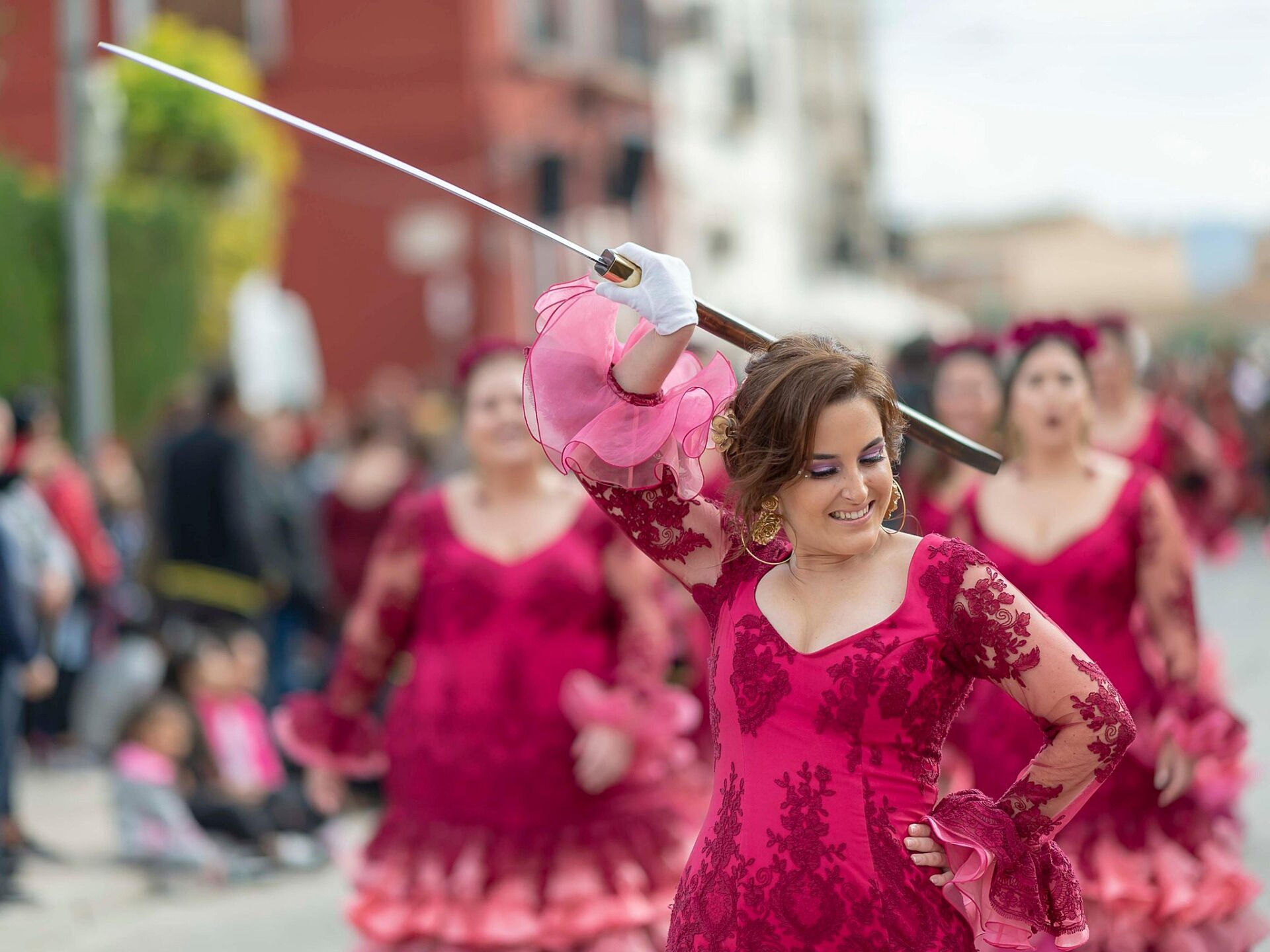
The costumes are, perhaps, the most striking element. On the Costa Blanca, the design of these suits has reached haute couture levels.
Design Evolution
In the past, suits were simple military uniforms. Nowadays, especially on the Moorish side, the “Fantasia” style predominates.
- Materials: Embossed leathers, metals (brass, copper), exotic skins, silks and thousands of hand-sewn beads are used.
- Special Charges: The Captains and Flag Bearers wear new costumes that are authentic works of art and can cost tens of a thousand euros. Its design is usually kept in absolute secrecy until the day of the show.
Who makes the costumes?
There is a very powerful craft industry in towns such as Villena, Elda and Alcoy.
- Artisans and Seamstresses: There are specialized workshops that work exclusively for the party, from sketch designers to metalwork experts.
- Rent: Due to the high cost of a new suit, there is a massive rental market. A suit can travel throughout the province, being used by different people on different dates.
4. The Senses: Gunpowder and Music
It is impossible to understand this festival without smell (sulfur) and hearing (music).
The Gunpowder (The Boast)
The arquebusier is the sound of war. Thousands of kilos of gunpowder are fired in the “Alardes”, where the festeros use their arquebuses (muzzleloaders) to fill the streets with noise and white smoke. It represents the heat of battle and is a visceral part of the experience.
Festive music
Music is the engine that marks the pace of the fashion shows. There are three main genres:
- The Pasodoble: Cheerful and light, worn mainly in informal parades and on the Christian side.
- The Moorish March: Slow-paced, majestic and with oriental influences. It allows the squads to parade with a characteristic rhythmic sway called l’arrenca.
- The Christian March: Epic and powerful, it is reminiscent of medieval film soundtracks, evoking the strength of knights.
5. Gastronomy: The Taste of the Party
The party is a test of physical endurance, and food is the necessary fuel. On the Costa Blanca, certain dishes are sacred:
- Olleta Alcoiana: A hearty stew of beans, stalks, pork and black pudding. It is the star dish to regain strength.
- Rice with Crust: Typical of the area of Elche and Vega Baja; Baked rice topped with a battered egg crust.
- The “Lie”: A classic drink from Alcoy that combines coffee-liqueur with lemon granita. It is refreshing but dangerous due to its high alcohol content.
- Putxero amb Piles: The traditional stew of the area with its characteristic minced meat balls and spices.
6. Living the Party: The Festero’s Perspective
For the visitor, it is a visual spectacle. For the local, it is a feeling.
The moment of the Entrance is the climax. After months of rehearsals and a significant economic investment, the festero goes out to the main street. The pride of representing his side, the warmth of the crowd and the roar of the marching band behind him create an emotional catharsis. It is not uncommon to see men and women cry with emotion while parading.
7. Leading Municipalities on the Costa Blanca
Although almost every town has its festival, some stand out for their magnitude:
| Municipality | Main Feature |
| Alcoy | The cradle of the modern party. It stands out for its historical and musical rigour. |
| Villena | One of the most multitudinous, with thousands of participants in its parades. |
| The Vila Joiosa | Unique for its Landing, a naval and land battle on the beach at dawn. |
| Elda | Famous for the spectacularity of its costumes and its strong link with the footwear industry. |
| Alicante (Barrios) | Neighbourhoods such as San Blas or Altozano keep the flame alive in the capital itself. |
Conclusion
The Moors and Christians of the Costa Blanca are a triumph of popular art and community spirit. They are proof that history does not stay in books, but goes out into the street, dresses in silk and metal, and explodes in the form of gunpowder. It is a celebration of Mediterranean identity: a land that is the result of the mixture of cultures, conflicts and, finally, coexistence.