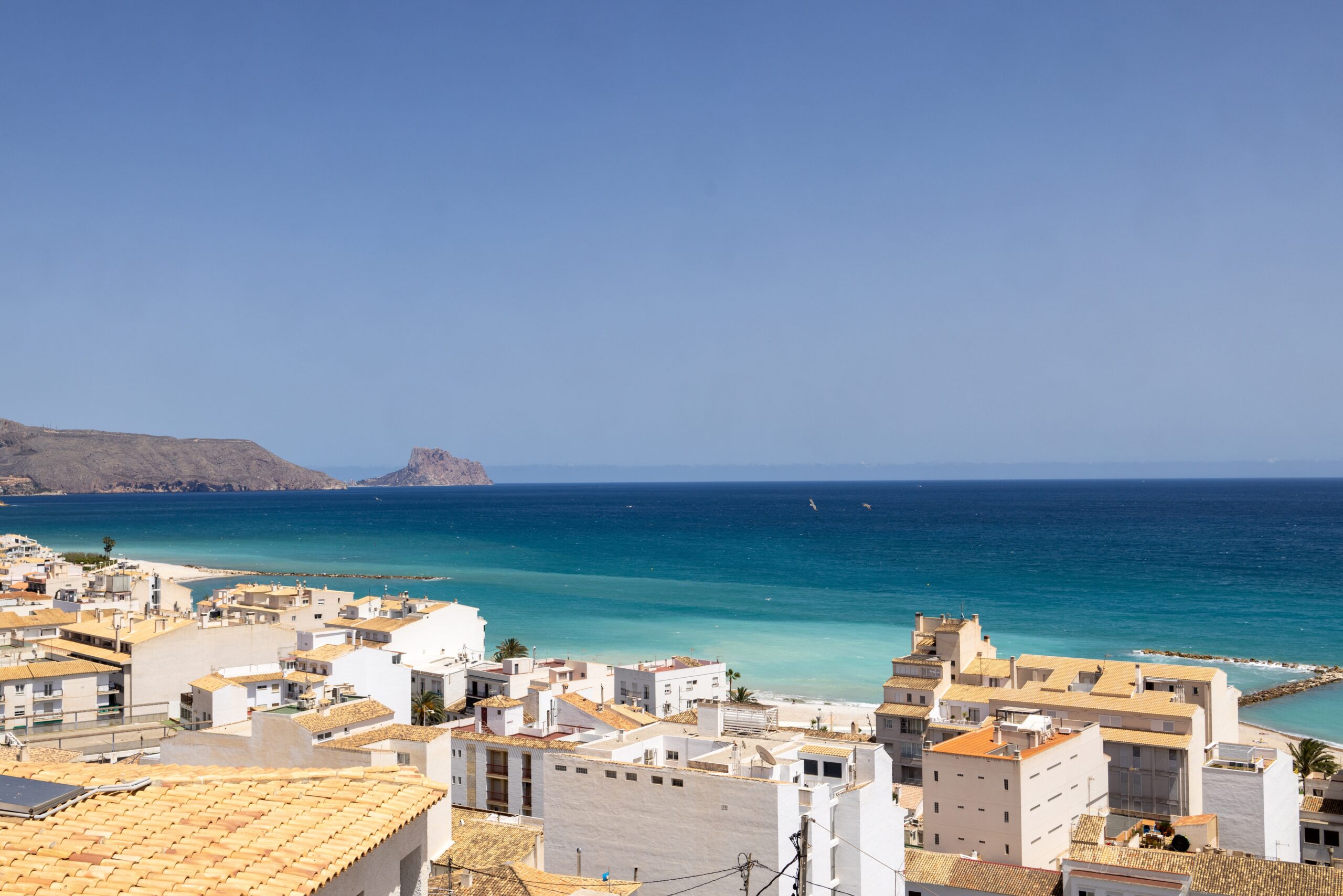
Perched on a hill that elegantly overlooks the sea, Altea occupies a privileged position in the Marina Baixa region, in the province of Alicante. Just ten kilometers from Benidorm’s dizzying profile, this municipality offers a radical contrast: instead of skyscrapers, a labyrinth of whitewashed houses, terracotta roofs, and cobbled alleys gently descending toward a bay of crystal-clear waters. Protected to the north by the imposing Sierra de Bernia and flanked to the south by the cliffs of the Serra Gelada, Altea enjoys a mild microclimate year-round that has captivated everyone from ancient sailors to 20th-century European artists.
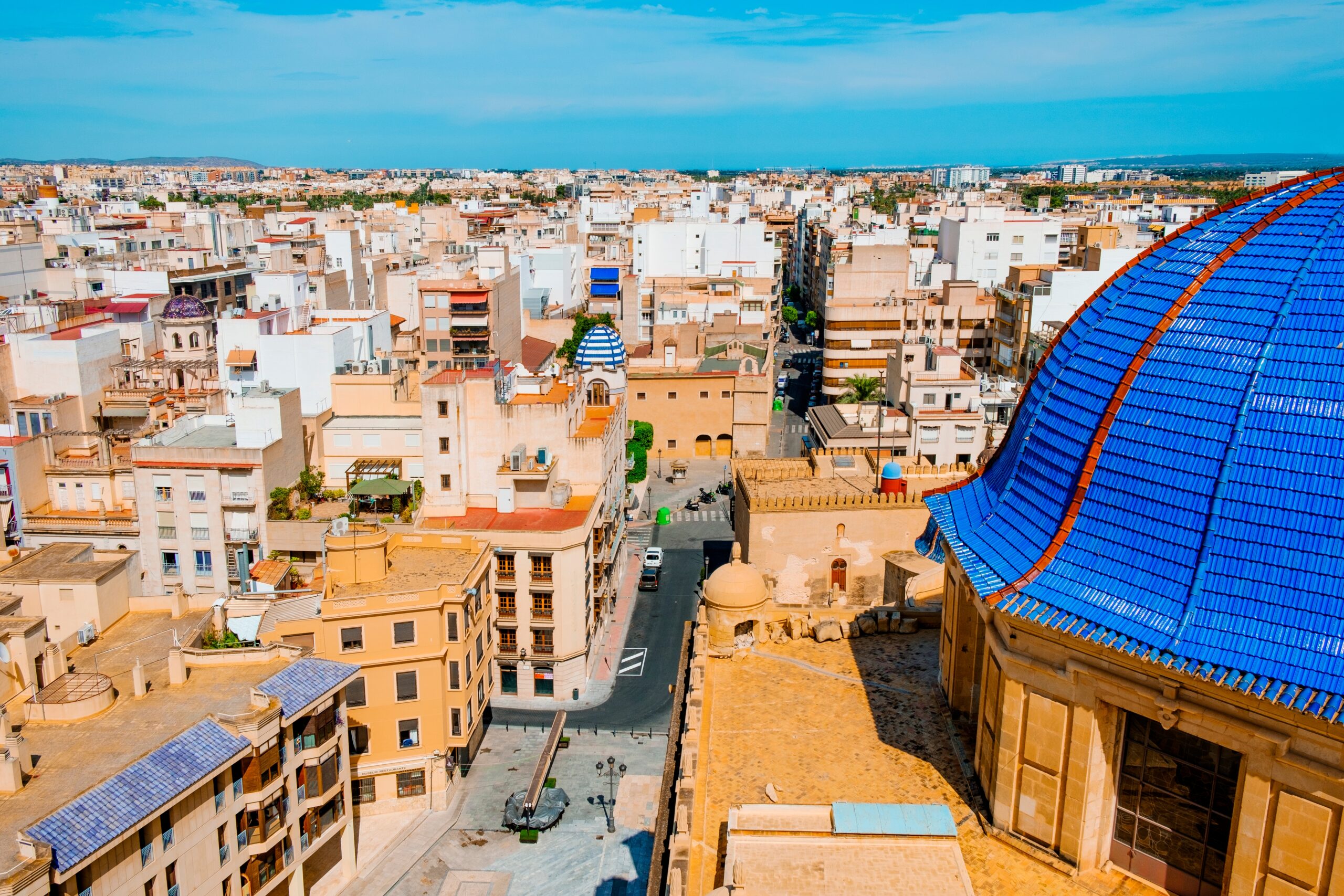
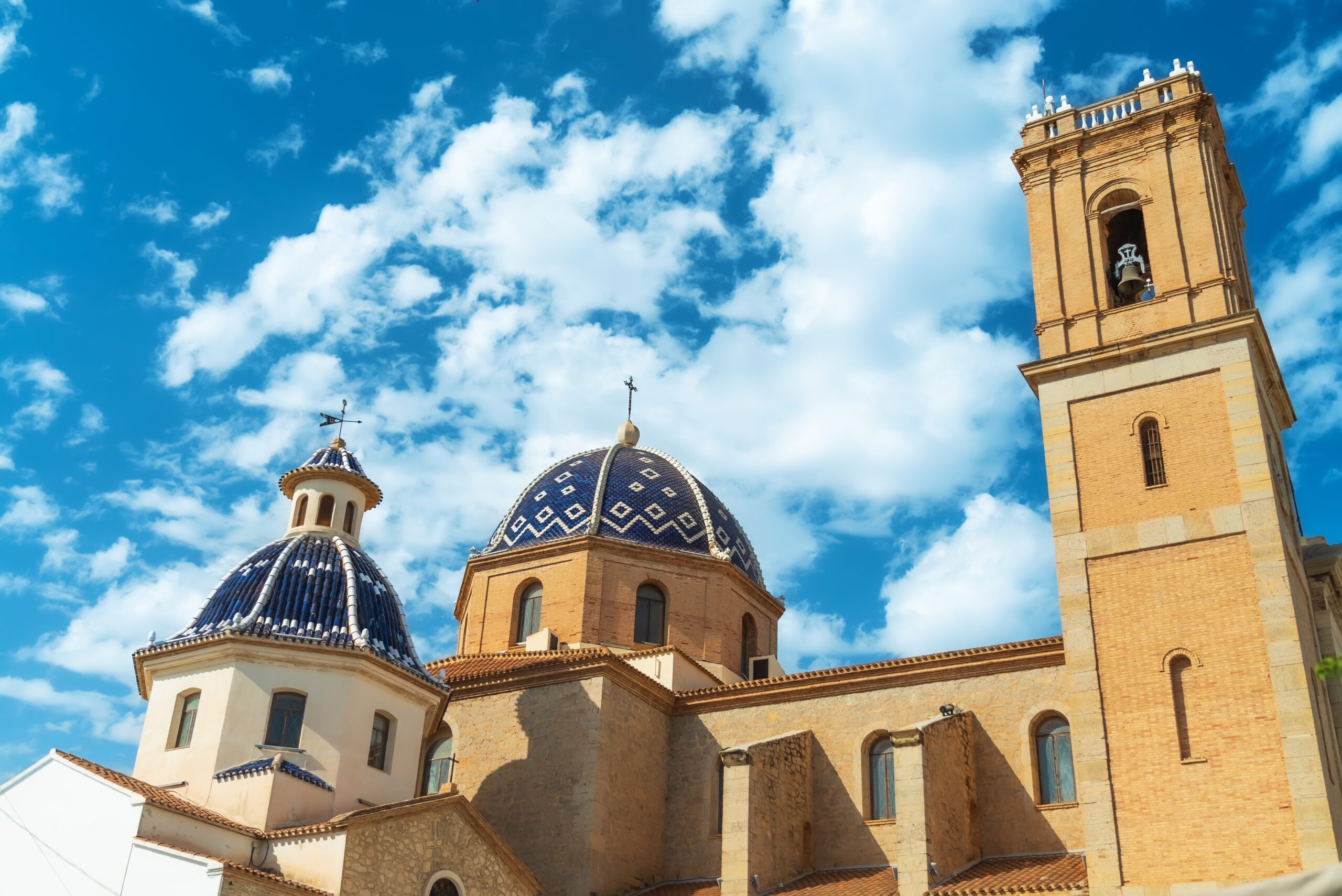
Popularly known as the Dome of the Mediterranean because of the unmistakable blue and white glazed tiles of its parish church, Altea is part of the network of The Most Beautiful Villages in Spain and holds the title of Cultural Capital of the Valencian Community. However, its true appeal lies in the authenticity with which it has managed to preserve its maritime and agricultural identity without giving up a vibrant cultural life and a cuisine deeply rooted in the territory.
History of Altea: from ancient Althaia to a refuge for artists
The history of Altea is a faithful reflection of the civilizations that have navigated and shaped the Mediterranean basin. Its strategic location, next to the mouth of the Algar River and sheltered in a wide bay, made these lands a coveted enclave since ancient times.
Ancient origins and the Andalusian legacy
The earliest traces of human presence in the municipal area date back to prehistoric times, but it was the Iberians who established the first stable settlements on the nearby hills. Later, Greek navigators named the place Althaia, a term usually translated as “I heal” or “health,” probably referring to the healthiness of its climate and the abundance of fresh water. During Roman times, the site functioned as an active point of maritime trade and agricultural production, taking advantage of the fertility of the Algar plain.
With the arrival of the Muslims in the 8th century, the territory came under the control of the taifa of Denia. Under the name Al-Taya, the population organized itself into small scattered farmsteads dedicated to irrigated agriculture. From that period, a sophisticated network of irrigation channels and terraces remains on the slopes of the Sierra de Bernia, which still defines the rural landscape of the municipality today.
The Reconquista, the pirates, and the new walled town
In 1244, the troops of King James I of Aragon incorporated Altea into the Crown of Aragon. During the following centuries, the population—mostly Morisco—lived under the constant threat of Barbary pirate raids that ravaged the Levantine coast. The situation reached a critical point after the expulsion of the Moriscos in 1609, which left the region practically depopulated and vulnerable.
To repopulate and defend the area, in 1617 the Charter of Settlement was granted to new Christian settlers and an urban planning decision was made that would forever mark Altea’s appearance: to abandon the old seaside settlement (now known as Altea la Vella) and build a new fortified villa atop a hill near the coast. Thus was born the current old town, surrounded by walls and strategic gates that allowed surveillance of the maritime horizon and repelling any privateer landings.
The Bohemian awakening of the 20th century
During the 18th and 19th centuries, Altea grew to the rhythm of fishing, vine cultivation, almond trees, and citrus fruits, developing a fishing neighborhood at the foot of the hill. However, from the 1960s onwards, while other neighboring towns focused on mass sun and beach tourism, Altea took a different path. Its clear light, the serenity of its streets, and the low cost of living attracted a generation of painters, sculptors, ceramists, and writers from all over Spain and northern Europe.
This bohemian spirit crystallized in art galleries, craft workshops, and gatherings that transformed the town into a cultural landmark. Decades later, the opening of the Faculty of Fine Arts of the Miguel Hernández University in the municipality definitively consolidated that inseparable bond between Altea and artistic creation.
What to see in Altea: a tour through its white and blue soul
Exploring Altea requires calm and good footwear. The historic heart of the town is designed to be lost without a map, ascending stepped ramps where every bend offers a unique postcard of the Mediterranean.
The Old Town and El Fornet
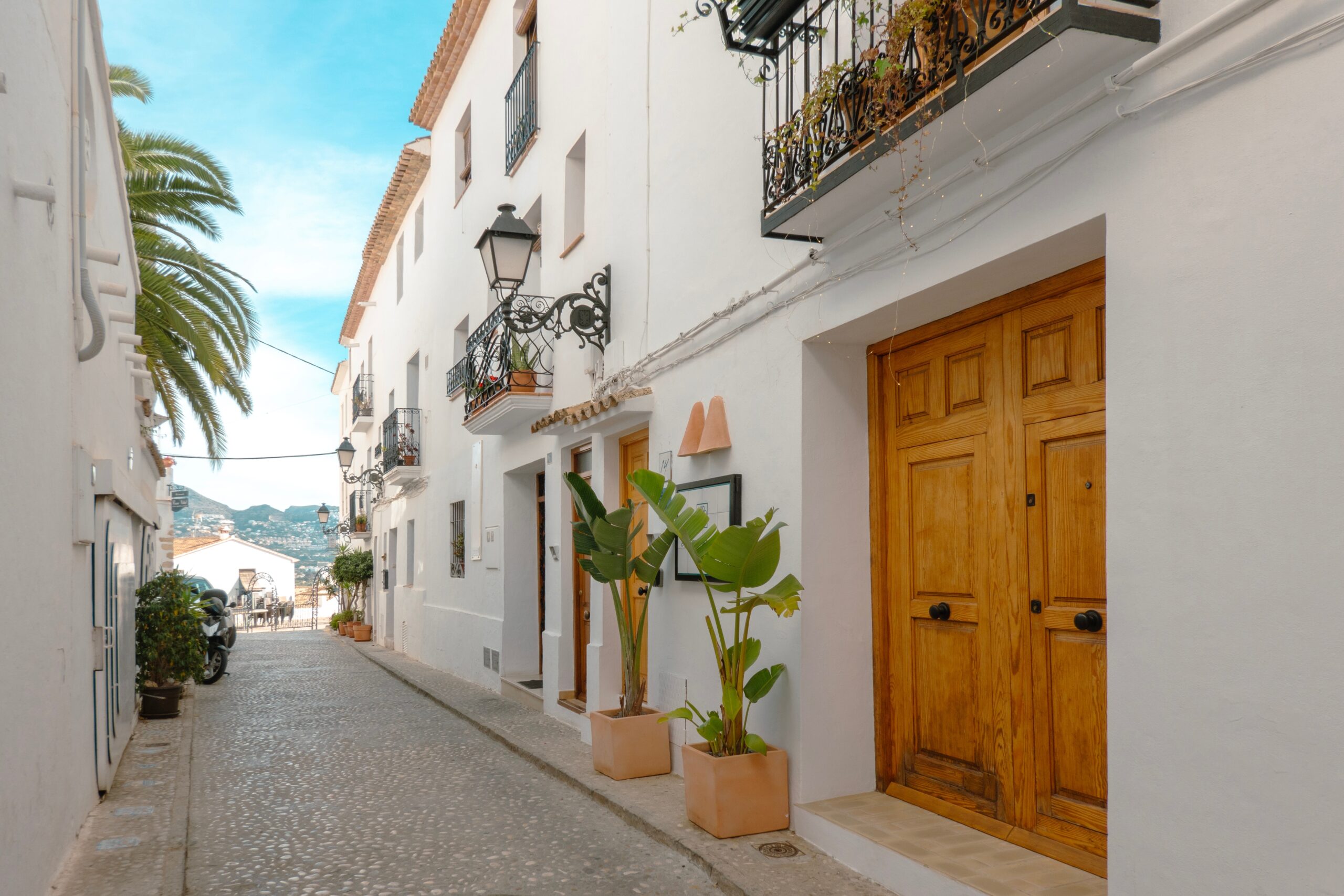
The historic center, locally known as El Fornet, preserves intact the defensive layout from the 17th century. Its narrow, cobbled streets — such as Salamanca Street, Mayor Street, or the steep Costera dels Matxos — are flanked by houses with whitewashed facades, stone baseboards, and wrought iron grilles adorned with pots of geraniums and bougainvillea.
To enter the walled enclosure, it is advisable to pass through its two preserved historic entrances: the Portal Vell (or Gate of Valencia), dating from the 17th century, and the Portal Nou (or Gate of the Sea), opened in the mid-18th century to facilitate expansion to the south. Along the promenade, small Mediterranean fashion boutiques, ceramic workshops, and restaurants with hidden terraces abound.
The Church of Our Lady of Comfort and its viewpoints
At the highest point of the hill opens the Church Square, the true social and aesthetic epicenter of Altea. Presiding over it stands the Parish Church of Our Lady of Consolation, built between the late 19th and early 20th centuries on the remains of an earlier 17th-century temple. Its most famous feature is its two domes covered with ceramic tiles glazed in cobalt blue and white, which shine brightly under the Alicante sun and serve as a visual beacon from kilometers away.
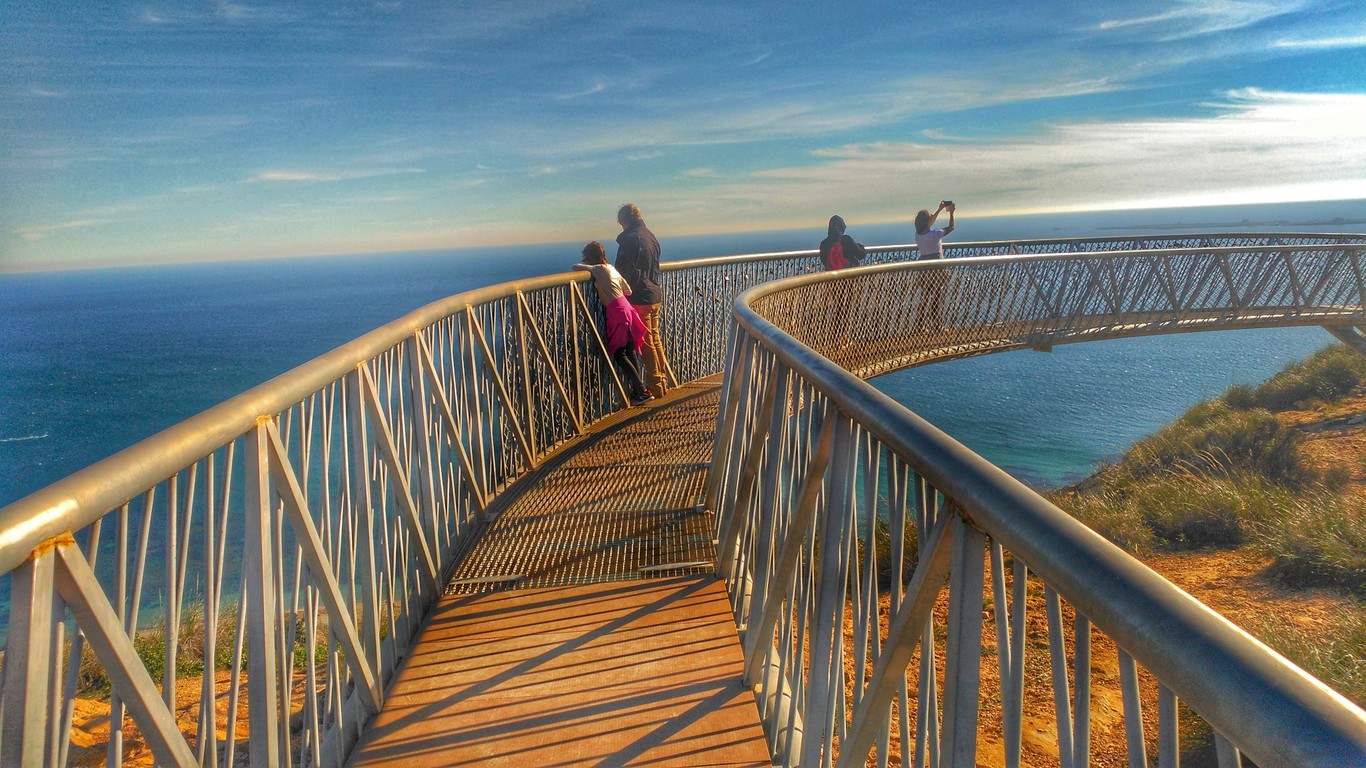
A few steps from the temple is the Mirador de los Cronistas de España, the most spectacular balcony in the town. From its railing, you can enjoy a 180-degree panorama that covers Altea Bay, the profile of Peñón de Ifach in Calpe to the north, Sierra Helada and the skyscrapers of Benidorm to the south, and the rugged peaks of Sierra de Bernia behind visitors’ backs. Other must-see panoramic spots are the Mirador de los Poetas and Mirador Blanco, especially recommended at sunset.
The Bellaguarda Neighborhood
Located on the western slope of the old town, the Bellaguarda neighborhood represents the oldest urban enclave of present-day Altea. Its streets maintain a quieter and more residential air than the tourist center. It preserves the Bellaguarda Tower, an old 16th-century watchtower that was part of the coastal defensive system and today serves as a viewpoint and tangible reminder of the corsair era.
The Russian Orthodox Church of Saint Michael the Archangel
In the exclusive Altea Hills development, on the outskirts of the town center, lies one of the greatest architectural surprises of the Costa Blanca: the Temple of the Archangel Michael, the first Russian Orthodox church built in Spain. Opened in 2007, it is a faithful replica of 17th-century Russian temples. All the pine wood, stone, and decorative elements were brought directly from the Ural region, and their assembly was carried out by Russian craftsmen. Its golden bulb-shaped domes contrast fascinatingly with Mediterranean pines and the blue of the sea.
Altea la Vella
Just three kilometers inland, nestled on the slopes of the Sierra de Bernia, lies Altea la Vella. This small hamlet preserves the calm charm of the Levantine mountain villages. Strolling through its town center, visiting the church of Santa Ana, approaching the historic Garroferet Fountain, or having a coffee in its main square allows you to discover the most rural and peaceful side of the municipality.
Beaches, coves, and nature: the untouched blue of the Costa Blanca
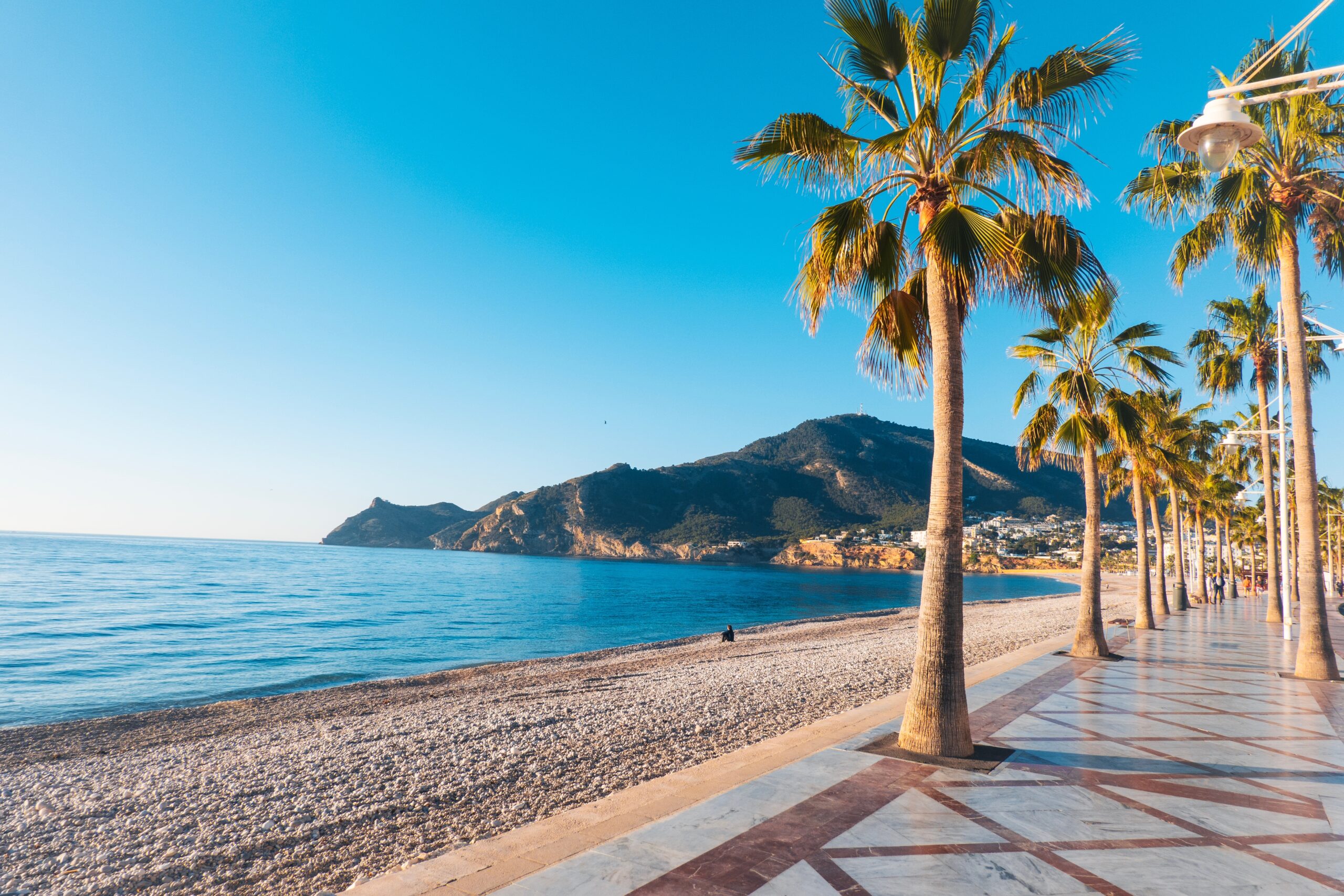
Unlike other neighboring towns famous for their extensive golden sands, Altea’s coastline—which exceeds six kilometers in length—is characterized by being made up almost entirely of pebbles (locally known as bolos) and gravel. This geological feature is precisely its greatest treasure: since there is no suspended sand, the water maintains exceptional crystal-clear clarity, turning the bay into a paradise for diving, snorkeling, kayaking, and paddle surfing.
The best beaches and coves
- La Roda Beach: It is the quintessential urban beach, located next to the old fishermen’s quarter and bordered by a renovated promenade full of ice cream shops, cafés, and restaurants. It has all services and a lively yet family-friendly atmosphere.
- Cap Blanch Beach: Located south of the fishing port, it extends to connect with Albir Beach (L’Alfàs del Pi). It is spacious, comfortable, and highly appreciated for walking by the sea.
- l’Olla Beach: With more than a kilometer in length, it offers unbeatable views of the islet of l’Olla (which many swimmers reach by swimming or kayaking) and the Serra Gelada Natural Park. Its summer beach bars are legendary in the region.
- Cap Negret Beach and Cala del Soio: North of the mouth of the Algar River, Cap Negret stands out for its clean waters and tranquility. At its end is Cala del Soio, a small geological gem with dark volcanic rock outcrops unique in the area.
- Cala de la Barra Grande and Mascarat: Located at the northern end, near the Mascarat cliffs, these are secluded coves of great wild beauty, frequented by diving enthusiasts and those seeking total disconnection.
The Greenwich Meridian and the Bernia Mountains
In the nautical field, Altea is home to three ports, among which Marina Greenwich (Luis Campomanes Marina stands out). It is the only marina in the world that exactly coincides with the Greenwich meridian (000º 00′ 00”), a landmark marked by a monument on its premises and surrounded by restaurants and terraces next to the yachts.
For hiking enthusiasts, the perfect counterpoint to the sea is the Sierra de Bernia. Its most famous circular route leads to the Forat de Bernia, a natural tunnel about twenty meters long carved into the rock that crosses the mountain from side to side. Leaving on the southern slope, the walker suddenly finds a dizzying aerial view of the entire bay of Altea and the Alicante coast.
Traditional cuisine of Altea: flavors of the sea and the orchard
Altean cuisine is the result of centuries of dialogue between two privileged pantry: fresh bay fish that arrives daily at the port fish market and products from the Marina Baixa orchard, where tomato, pepper, almond, citrus, and the famous loquat from Callosa d’en Sarrià reign.
Rice dishes and seafood stews
As throughout the province of Alicante, rice is the main star of the table, but in Altea it takes on its own nuances linked to fishing and mountain tradition:
- Arroz a banda and senyoret rice: Made with an intense rock fish broth (morralla), ñora sauce, and garlic. In arròs a banda, the rice is traditionally served separately from the fish and accompanied by allioli; in the senyoret, all the shellfish and fish are peeled to facilitate tasting.
- Cruet de peix: It is the most emblematic seafood stew in Altea. It originated aboard fishing boats, where sailors cooked humble rock fish in raw (cruet) along with potatoes, tomato, onion, garlic, paprika, and olive oil. The result is a tasty and comforting broth now served by the best traditional restaurants in the port.
- Arroz amb fesols i naps: A soupy spoon rice, ideal for the winter months, prepared with white beans, turnips, and pork, a direct inheritance from the rural cuisine of the interior.
- Rice with onion: A humble and delicious recipe made with caramelized onion, cod or oily fish, and potato.
Starters, cakes, and pastries
Before the main course, it’s common to share cold starters like esgarraet (roasted red pepper salad, salted cod, garlic, and extra virgin olive oil), espencat (grilled vegetables with eggplant, pepper, and onion), or a salted platter (tuna mojama, maruca roe, and dried bonito).
Special mention should be made of the cocas a la llumà, thin and crispy doughs traditionally baked over wood, topped with pepper and tomato, onion with tuna (tuna), cold cuts, or anchovies. In the sweet section, the village’s artisanal ovens keep centuries-old recipes alive, such as pastissets de moniato (small empanadas filled with confit sweet potato), coca dolça, rollets d’anís, and the traditional toña or mona de Pascua.
Festivals, traditions, and cultural life
Altea’s festive calendar combines popular devotion, fireworks, and artisanal crafts, attracting visitors from all over Europe.
The most unique event of the year is, without a doubt, the Castell de l’Olla, held every Saturday closest to the feast of Saint Lawrence, in mid-August. Declared a Festival of Tourist Interest of the Valencian Community, it consists of a fireworks display fired entirely from floating platforms set up in the sea in front of l’Olla beach. Thousands of spectators watch from the shore and dozens of boats as the gunpowder, music, and reflection on the water create a unique visual symphony in the Mediterranean.
At the end of September, the Patron Saint Festivities in honor of the Holy Christ of the Tabernacle arrive, coinciding with the spectacular parades of Moors and Christians. For several days, the streets fill with band music, embroidered costumes, gunpowder, and historical performances that recall the town’s border past.
Culturally, during Holy Week and summer nights (from July to September), the Church Square hosts the Altea Craft Fair. Unlike conventional markets, all stalls undergo a strict selection jury that ensures each piece of ceramic, leather, glass, wood, or jewelry is handmade by its own creator. In addition, the Palau Altea auditorium offers a carefully curated program of theater, dance, opera, and symphonic concerts throughout the year.
Practical tips for planning your visit
- When to go: Spring (April-June) and autumn (September-October) are the ideal times to enjoy mild temperatures, swim in the sea, and stroll through the old town without the crowds of August. Winter, very bright and mild, is perfect for hiking in the Sierra de Bernia and gastronomic tourism.
- How to get there: Altea is perfectly connected by the AP-7 motorway (exit 64) and the national road N-332, about 45 minutes by car from Alicante-Elche airport. It also has its own station for the Alicante Metropolitan TRAM (Line 9), a picturesque coastal train that connects Benidorm with Denia passing through tunnels and cliffs by the sea.
- What to pack in your suitcase: It’s essential to wear comfortable shoes with non-slip soles to walk the cobbled slopes of El Fornet, and some boots (crab shoes) to enter and exit comfortably on its pebble beaches. If you visit the town on a Tuesday morning, take the opportunity to tour its lively weekly market, one of the largest and most complete on the Costa Blanca.
Altea is not a destination to consume in a hurry, but to inhabit slowly: have breakfast by the sea on La Roda beach, lose yourself at midday in the ceramic workshops of the old town, savor a cruet de peix by the port, and wait for evening to fall under the blue silhouette of Our Lady of Consolation. It is, ultimately, the purest and brightest essence of the Mediterranean.
Would you like to enjoy the Costa Blanca whenever you want? Contact SILC ESTATES to acquire your ideal home in Spain with the help of our real estate experts.