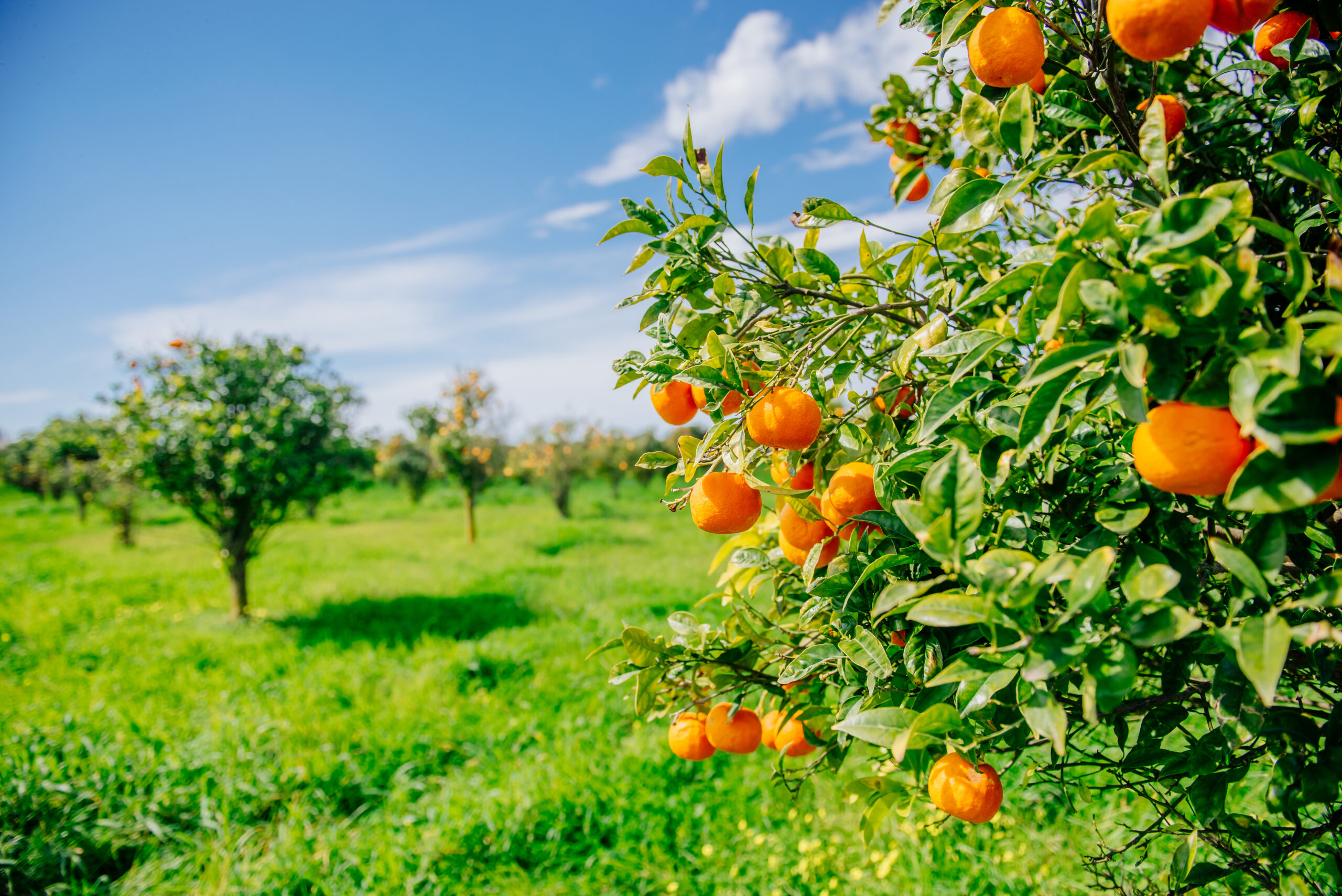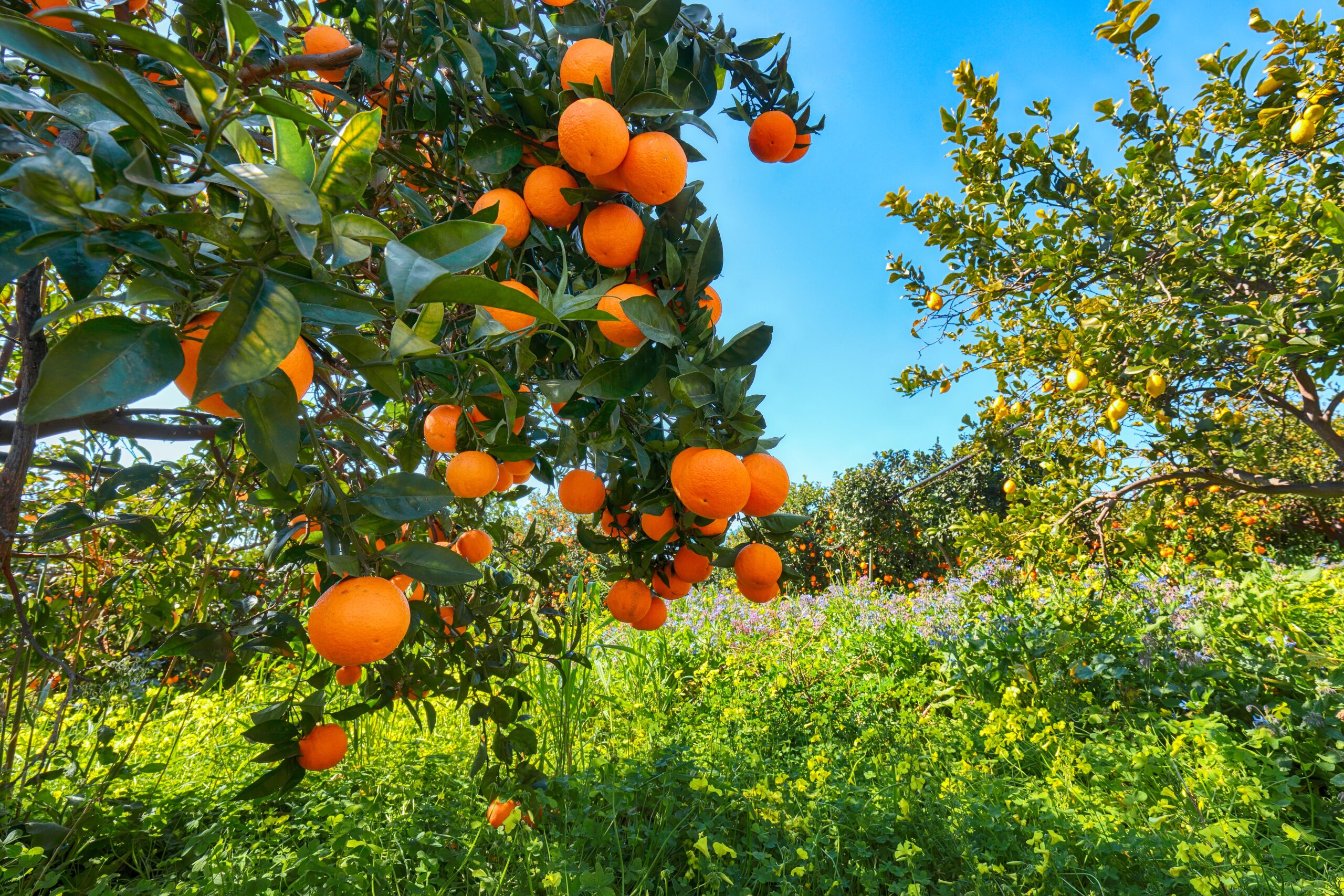
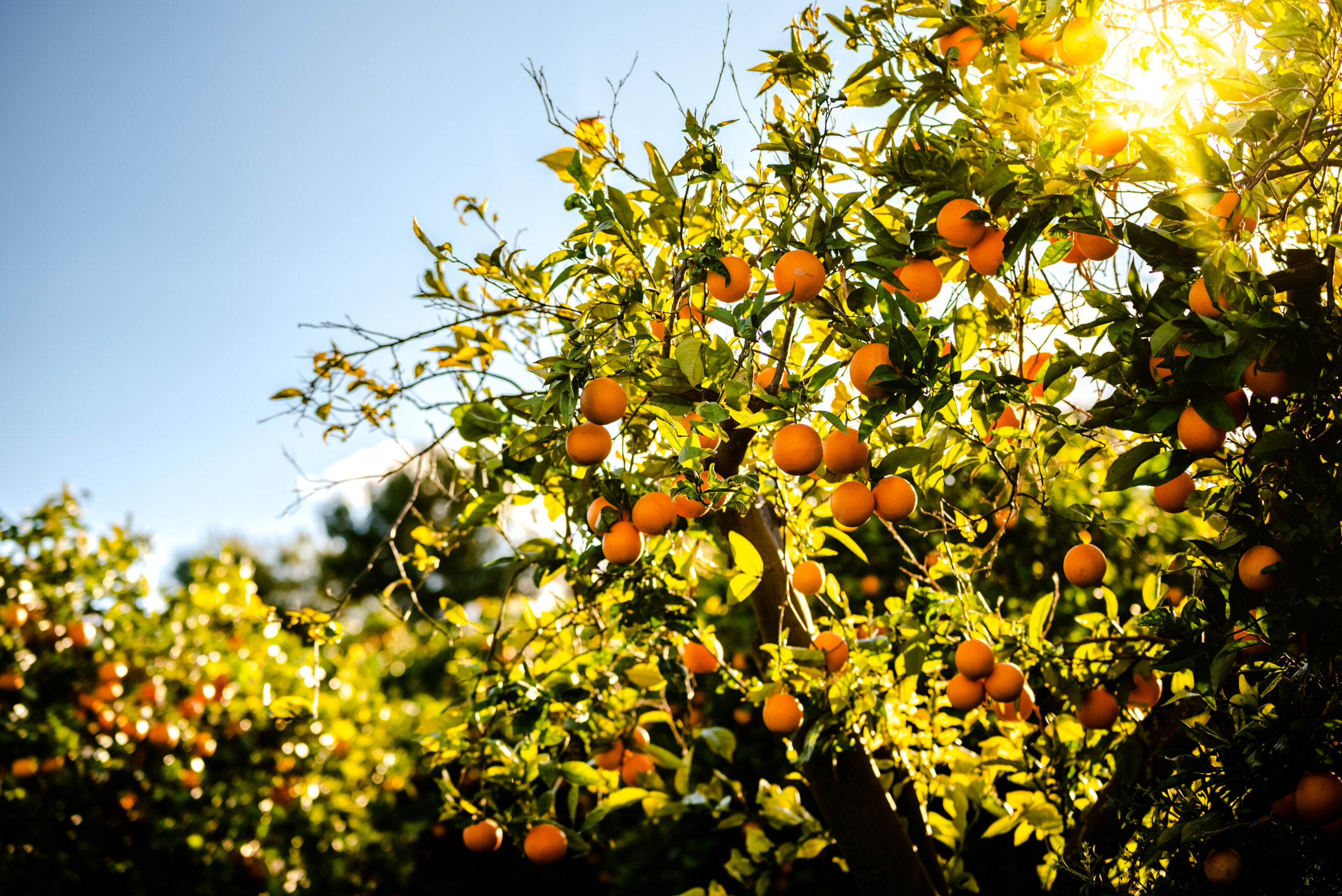
Spain’s geography, caressed by the Mediterranean Sea and blessed with more than three thousand hours of sunshine a year, makes it Europe’s citrus orchard par excellence. When we talk about the Spanish orange, we are not simply talking about a fruit. We are talking about cultural heritage, a historic economic driving force and one of the country’s most internationally recognised gastronomic symbols.
Spain is the leading citrus producer in the European Union and the world’s largest exporter of fresh citrus fruit. The Valencian Community, Andalusia, the Region of Murcia and southern Catalonia form an agricultural corridor where climate, soil and centuries of farming knowledge come together to produce oranges of exceptional quality, unmatched by those grown at other latitudes.
The Fascinating History of the Orange in Spain
To understand how deeply rooted this crop is in the Iberian Peninsula, we need to go back thousands of years and follow the ancient Silk Road.
The orange tree originated in the south-eastern regions of Asia, specifically the Himalayan valleys, southern China and north-eastern India. The word “orange” comes from the Sanskrit narang, which later became the Persian nārang and the Arabic naranj. It was the Arabs who introduced the orange tree to the Iberian Peninsula through Al-Andalus during the 10th century. However, they did not bring the sweet orange that we eat today, but rather the bitter orange (Citrus aurantium).
For centuries, the bitter orange tree was cultivated exclusively for ornamental, medicinal and cosmetic purposes. The caliphs planted it in mosque courtyards, such as the famous Patio de los Naranjos in Córdoba, and in the royal palaces of Seville because of the intoxicating fragrance of its blossom, known as azahar. Its fruit, too acidic to be eaten raw, was used to produce essential oils and, centuries later, would be imported in large quantities by the British to make the famous Seville orange marmalade.
The sweet orange (Citrus sinensis) did not arrive in Europe until the 15th and 16th centuries, brought by Portuguese sailors who opened maritime trade routes with India and China. At first, it was the height of luxury and was cultivated in the gardens of European royalty.
The turning point towards large-scale commercial cultivation came in 1781 in the Valencian town of Carcaixent. There, the parish priest Vicente Monzó, together with a pharmacist and a notary, planted the first commercial orchard of sweet orange trees, adapting dry farmland by drilling wells. The venture was so successful that cultivation rapidly expanded throughout the Júcar basin and the Plana de Castellón. By the end of the 19th century, with the arrival of the railway, Spain was already exporting entire trainloads of oranges to France, the United Kingdom and Germany, consolidating an industry that would forever transform the country’s landscape and economy.
Why the Spanish Orange Is a Product of Superior Quality
When you buy an orange grown in Spain, you are paying for a combination of geographical and agricultural factors that elevate the product far above imports from non-EU countries.
1. Mediterranean Climate Stress
Climate is the architect of flavour. Oranges need a subtropical climate, but what gives Spanish oranges their perfect balance between acidity, or citric acid, and sweetness, measured in degrees Brix, is the contrast in temperature. During autumn and winter in eastern Spain and Andalusia, the days are warm and sunny, but the nights are cold. This temperature contrast slows the tree’s vegetative growth and concentrates sugars inside the fruit. In addition, the cold night-time temperatures are responsible for breaking down the chlorophyll in the peel, causing the fruit to change from green to the intense, bright orange colour that is so characteristic. In tropical countries without cold winters, oranges remain green on the outside even when they are ripe inside, and often have to be artificially “degreened” using ethylene gas.
2. Ripening on the Tree
The orange is a non-climacteric fruit. This means that, unlike bananas or avocados, it does not continue to ripen once it has been picked from the tree. When a Spanish orange is harvested, it is at its optimum point for consumption and can reach the domestic market in just 24 to 48 hours. In contrast, oranges imported from South Africa, Argentina or Egypt are harvested prematurely so that they can withstand weeks in refrigerated storage aboard cargo ships. This cold journey halts the development of sugars and essential oils, resulting in bland fruit with dried-out skin.
3. Food Safety and Sustainability
The European legal framework subjects Spanish farmers to some of the strictest phytosanitary and environmental regulations in the world. The use of pesticides is heavily regulated, ensuring fruit free from toxic residues. In addition, local cultivation minimises the carbon footprint associated with transoceanic transport.
Varieties in Spain: A Calendar of Flavours
Dozens of varieties are grown in Spain, mainly divided into three large families. Knowing them is essential if you want to know which orange to choose at each point in the season.
The Spanish orange season runs from October to July thanks to the succession of seven main varieties, each with its own unique flavour profile:
- Navelina (October – January): The first to arrive and the variety that marks the beginning of the season. It stands out for its well-balanced sweet flavour with a gentle touch of acidity. Its flesh is firm and seedless, making it the perfect eating orange for autumn and early winter.
- Salustiana (December – March): One of the undisputed queens of juicing oranges. Its flavour is exceptionally sweet and it has almost no acidity. Its thin skin conceals a much higher-than-average quantity of juice, with the added advantage that its juice does not become bitter shortly after being squeezed.
- Washington Navel (January – March): A premium eating orange. It is large, with a firm, crisp texture. Its flavour is aromatic and intensely sweet, and the segments separate very easily and melt in the mouth.
- Sanguinelli (January – March): The red jewel of Spanish citrus fruit. Instantly recognisable by its reddish pigmentation, its flavour is complex and vibrant, combining the classic sweetness of orange with lively acidity and distinctive notes reminiscent of raspberry, cherry and forest fruits.
- Navelate (January – April): Considered by the most discerning palates to be the orange with the finest flavour in the world. It has an exceptionally high sugar content and an extraordinarily fine and delicate texture. It is a gourmet variety, silky on the palate and extremely juicy.
- Lane Late (February – May): Ideal for extending the season for top-quality eating oranges well into spring. It offers a very sweet, mild flavour thanks to its extremely low acidity, with firm flesh that gives it excellent keeping qualities.
- Valencia Late (April – July): The variety that closes the season and supplies the warmer months. Unlike the rich sweetness of Navel oranges, Valencia Late has a slightly higher level of refreshing acidity and an exceptionally high juice content, making it the ultimate variety for summer juices.
The Navel Group: The Queens of Eating Oranges
These oranges are characterised by the presence of a “navel” on the underside, which is actually a second, undeveloped fruit growing inside the main one. They have thick, easy-to-peel skin, are seedless and have firm, crisp flesh. They are the perfect oranges for eating in segments.
- Navelina: The earliest variety, heralding the arrival of colder weather from October to January. It has a slightly oval shape and a very well-balanced sweetness.
- Washington Navel: Large and of excellent quality, available in the heart of winter from January to March.
- Navelate: Considered by experts to be the most exquisite orange in the world. Its skin is thinner, paler and more delicate, while inside it is bursting with exceptionally sweet juice. It is difficult to cultivate, making it a gourmet variety, available from January to April.
- Lane Late: Allows us to continue enjoying high-quality eating oranges well into spring, from February to May.
The White Orange Group: The Queens of Juice
These oranges have no navel, and their skin is much thinner, smoother and more difficult to peel by hand. Their flesh does not have the same firm structure as Navel oranges, but in return they are exceptionally juicy, yielding up to 50% of their weight in liquid.
- Salustiana: Originated from a natural mutation in the town of Énova, Valencia, in 1950. It is exceptionally sweet and produces abundant juice that does not turn bitter shortly after squeezing. It is available from December to March.
- Valencia Late: Despite its name, it is the most widely planted orange variety worldwide. It ripens late, from April to July, has a slightly more acidic flavour and provides us with fresh juice as summer arrives.
The Blood Orange Group: The Red Treasure
- Sanguinelli: The quintessential Spanish blood orange. Its distinctive characteristic is that it requires periods of intense cold during winter in order to synthesise anthocyanins, the antioxidant pigments that give its flesh, and sometimes its skin, a purplish-red colour. It has a fascinating, slightly acidic flavour with notes reminiscent of raspberries and red berries, and is available from January to March.
The Best Time to Buy Spanish Oranges
There is a widespread myth that oranges can and should be eaten all year round. The orange is a cold-season fruit. The Spanish orange season begins, at the earliest, towards the end of October and finishes in July.
The peak period, when the greatest number of varieties coincide at their optimum stage of ripeness, runs from December to April.
What happens if you want to buy fresh oranges in August or September? Quite simply, they are not Spanish. During the summer months in the Northern Hemisphere, orange trees in Spain are in the middle of the fruit development stage in preparation for the next season. The oranges filling supermarket shelves at that time come from the Southern Hemisphere, including South Africa, Argentina, Chile and Peru, where it is winter.
Buying citrus fruit out of season means consuming fruit that has travelled more than 10,000 kilometres by ship, has been treated with post-harvest fungicides and waxes to survive the journey, and has an enormous carbon footprint. To enjoy a top-quality product and support Spanish agriculture, the golden rule is to eat oranges only during winter and spring in Spain.
How to Identify Spanish Oranges in the Supermarket
One of the biggest problems facing consumers and Spanish farmers today is misleading or unclear labelling by large retailers. Many consumers buy bags of oranges believing that they come from the orchards of eastern Spain or Andalusia, when in reality they come from the other side of the world or from North Africa.
Here is a step-by-step guide to avoiding these practices and making sure you know what you are buying:
1. The “Packed in Spain” vs “Origin” Trap
The front of the packaging often appeals to consumers’ sense of local identity. It is common to see large Spanish flags, logos featuring traditional Valencian barracas, or phrases printed in huge letters such as “Packed in Valencia” or “Distributed by [Spanish Company]”. This does not mean that the orange was grown in Spain. A Valencian company can import thousands of tonnes of oranges from Egypt and pack them into nets at its warehouse in Valencia.
The only word with legal significance is “ORIGIN”. By law, the label on the back or the sign accompanying loose fruit must state the country in which the fruit was grown. Always check the small print for the words: Origin: Spain.
2. Confusing the Variety with the Origin
This is one of the most common sources of confusion. The label prominently displays the words “VALENCIA ORANGE” in capital letters. A consumer in a hurry could easily assume that these oranges come from the Valencian Community. However, “Valencia Late” is simply the name of an orange variety, and it is widely grown throughout the world. Look at the small print on the same label and you will see the reality: ORIGIN: SOUTH AFRICA.
3. Look at the Appearance of the Skin: Excessive Shine
Imported oranges, particularly those from South Africa or Mercosur countries, are required to undergo prolonged cold treatments to prevent quarantine pests, such as the False Codling Moth, from entering Europe. To prevent the fruit from becoming dehydrated or rotting during these weeks of transportation and cold storage, it is coated with thick layers of waxes and chemical fungicides, such as imazalil or thiabendazole. If you see oranges in the supermarket with an unnatural, almost plastic-like shine that leave a waxy feeling on your hands when you touch them, there is good reason to suspect that they have been imported or have spent months in cold storage. Oranges harvested in Spain by local producers generally have a much more natural appearance, with a matt finish and, when purchased from small producers, may still have fresh green leaves attached to the stem.
4. Price and Size
Imports from non-EU countries, such as Egypt or Morocco, compete at prices below Spanish production costs because of much more lenient labour and phytosanitary legislation, something Spanish farmers denounce as unfair competition. If you see an exceptionally low-priced offer in the middle of January or February, check the country of origin. Imported oranges are often used as a “loss leader” to reduce the perceived cost of the shopping basket. Paying a few cents more for Spanish produce helps guarantee a fair income for those working in Spanish agriculture and provides a product that is infinitely superior in its organoleptic qualities.
5. Buy Directly from the Farmer
Over the last decade, an online market has flourished in Spain, with hundreds of farming families selling their harvest directly over the internet. This offers an absolute guarantee of quality. The fruit does not pass through intermediaries or undergo post-harvest chemical treatments. Today it is still on the tree, soaking up the Mediterranean sunshine; tomorrow the farmer picks it when your order arrives; and within 24 hours it reaches your home with the fragrance of the countryside still intact.
Appreciating the Spanish orange is not simply an act of gastronomic patriotism. It is an exercise in responsible consumption. It means supporting local agriculture, choosing food that has ripened according to the rhythms of nature and helping to preserve an irrigated agricultural ecosystem that has shaped our culture for centuries.
Would you like to live in Spain and enjoy the best oranges on the planet? Would you like to wake up every day and enjoy a glass of quality orange juice with your breakfast? Consider buying a home in Spain and do so with the very best property experts at SILC ESTATES.