When the sun beats down on the Iberian Peninsula and the thermometers defy logic, Spain not only takes refuge in the shade; He takes refuge in the bowl of a cold soup. This sacred triad – Gazpacho, Salmorejo and Ajoblanco – represents much more than gastronomy: it is an ancestral refrigeration system, an ode to local produce and a pillar of the Mediterranean Diet.
Gazpacho: The Red Potion of Andalusia
Gazpacho is probably Spain’s most international culinary ambassador. Although today we associate it with tomatoes, its origin is much more humble and ancient.
History and Origin
The term “gazpacho” seems to derive from a pre-Roman word meaning “fragment” or “piece,” referring to bread that was crumbled in water. Originally, Andalusian peasants prepared a mixture of dry bread, water, olive oil and vinegar to hydrate themselves during the hard days of harvesting.
Historical Fact: Tomatoes and peppers did not reach gazpacho until after the discovery of America. Before the sixteenth century, the “primordial gazpacho” was white or yellowish.
The Traditional Recipe
A canonical gazpacho is based on balance. It is not a juice, nor is it a sauce; It’s a perfect emulsion.
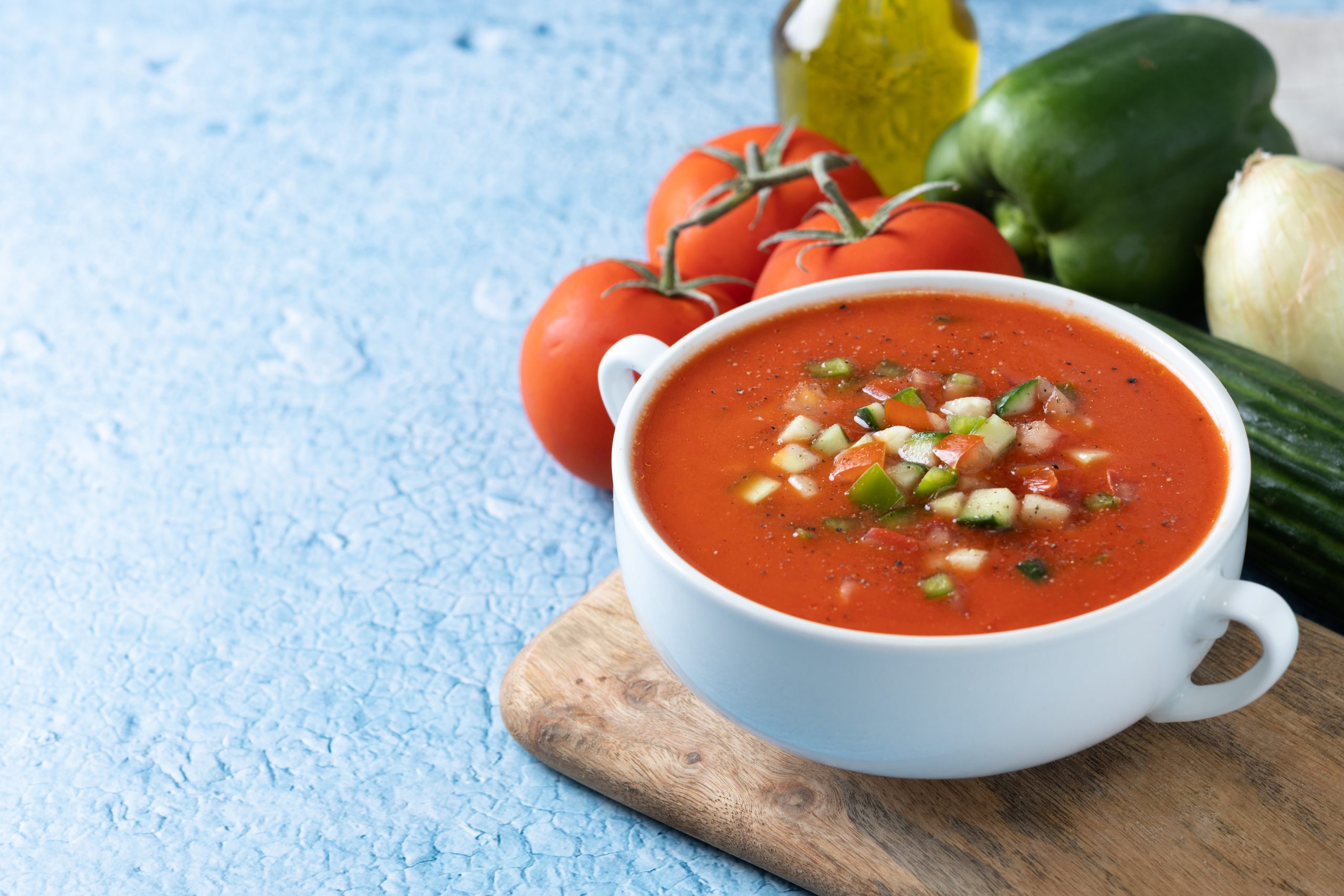
- Key Ingredients: Pear tomato (very ripe), green pepper (Italian type), cucumber, a clove of garlic, day-old bread, extra virgin olive oil (EVOO), sherry vinegar and salt.
- The key to success: The emulsion. Crushing the vegetables with the oil creates a velvety texture.
Ways to Take It
- In glass: The “gazpacho de beber” is the lighter version, ideal as a snack.
- On a plate with chunks: Accompanied by “garnición” (cubes of cucumber, onion, pepper and bread crouts).
The Salmorejo Cordobés: The Cream That Is Eaten with a Spoon
If gazpacho is a drink, salmorejo is a dense emulsion. Originally from Cordoba, this dish stands out for its extreme simplicity and its power of flavor.
History and Origin
Salmorejo is the direct heir of the Roman mazamorras. As it is a thicker preparation, it served as the main meal for field workers, providing the necessary energy thanks to bread and oil.
Ingredients and Preparation
Unlike gazpacho, salmorejo does not contain water or other vegetables other than tomatoes and garlic.
- Tomato: It should be meaty.
- Bread: Preferably from “telera” cordobesa (dense crumb).
- EVOO: It is the ingredient that gives it unctuousness.
The Ritual of Accompaniment
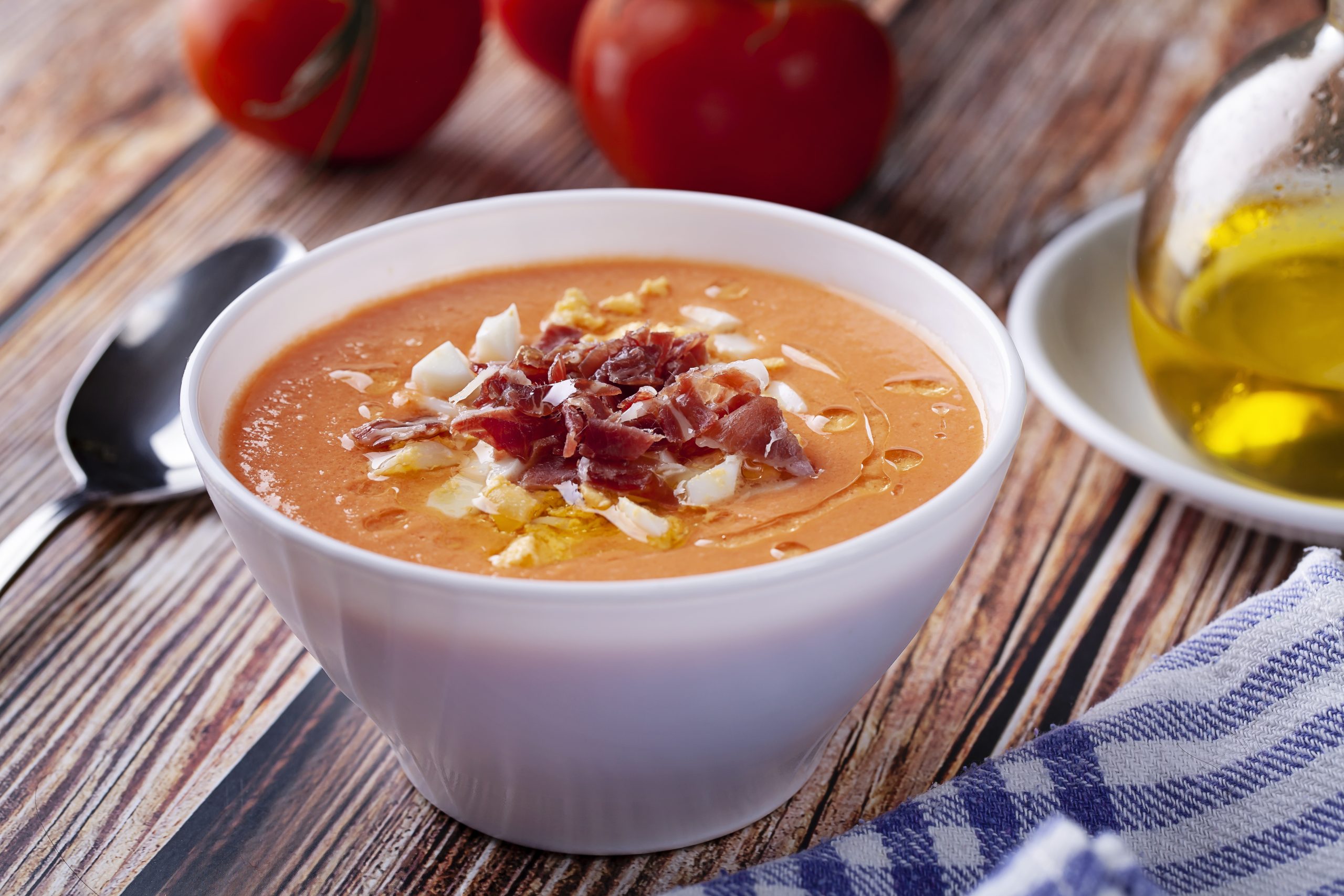
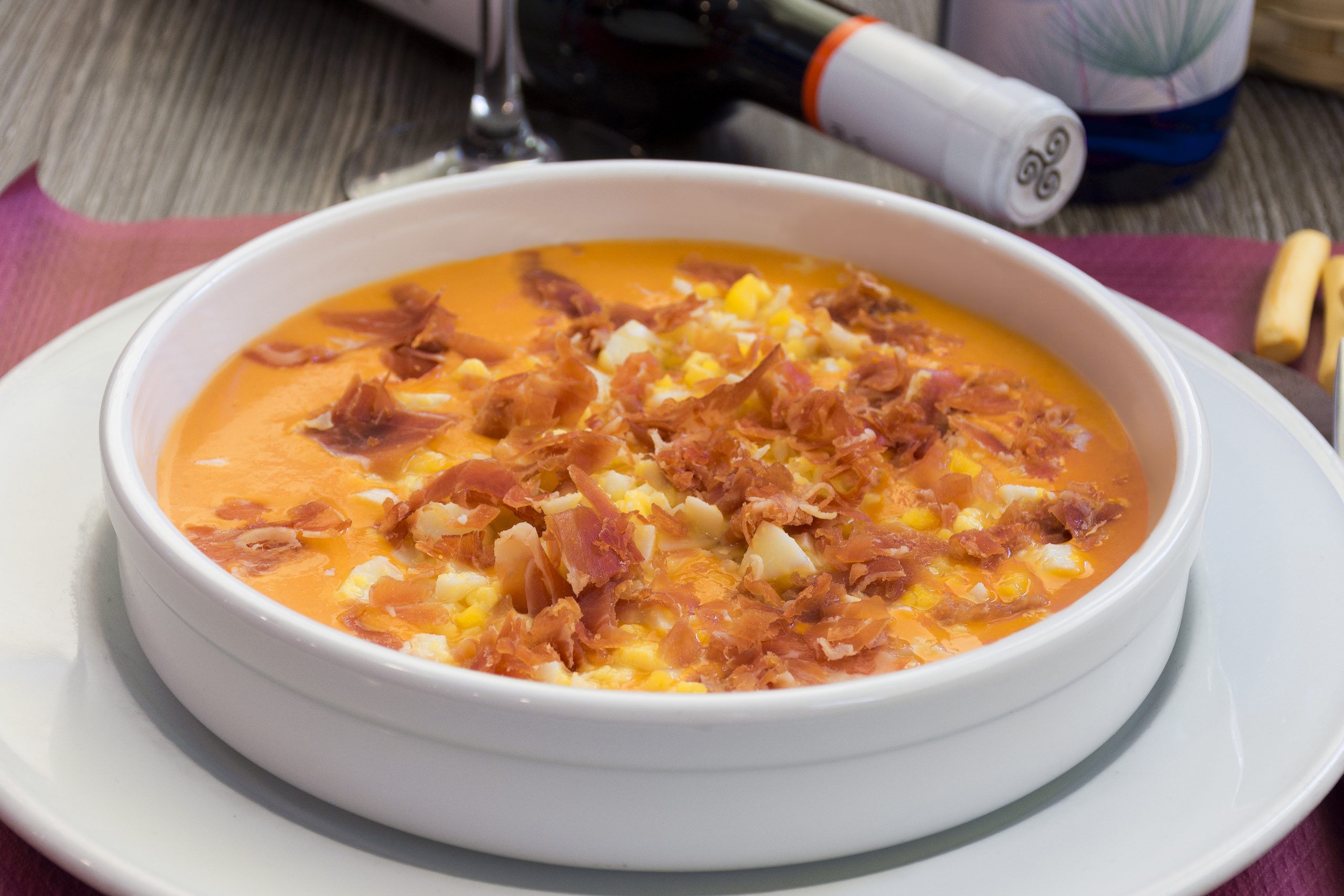
A salmorejo is not complete without its crown: chopped hard-boiled egg and shavings of Iberian ham. The fat of the ham and the creaminess of the egg contrast with the acidity of the tomato, creating a perfect bite.
The Ajoblanco: The Father of All Cold Soups
Long before tomatoes touched European soil, the Axarquía region of Malaga was already enjoying Ajoblanco. It is considered the oldest cold soup on record in Spanish gastronomy.
An Andalusian Legacy
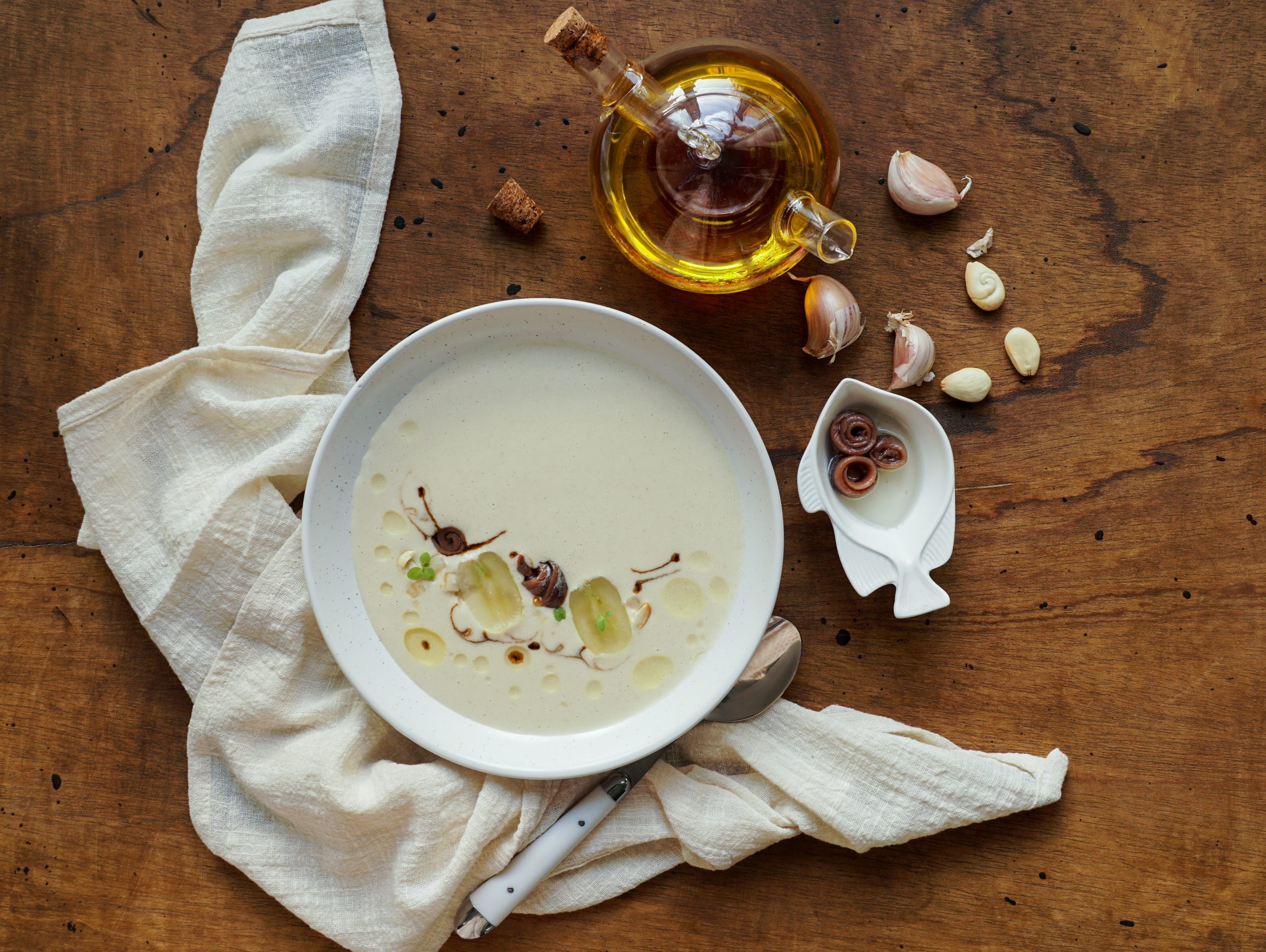
Its ingredients betray its Arab heritage: almonds and garlic. It is a recipe that talks about the history of Al-Andalus, where nuts were the basis of sauces and creams.
Recipe Ingredients
- Raw almonds: They must be of good quality and well ground.
- Breadcrumbs: To give body.
- Garlic: Just the right touch to flavour without bitterness.
- Cold water, EVOO and vinegar.
The Fruit Contrast
The most fascinating thing about ajoblanco is its pairing. It is usually served with white grapes (such as muscatel) or melon slices. That clash between the salty-garlicky flavor and the sweetness of the fruit is, quite simply, sublime.
Innovation: “New Age” Cold Soups
Avant-garde cuisine has taken these traditional bases to create surprising variants. If the tomato is the protagonist, why not other fruits?
Fruit Gazpachos
- Strawberry Gazpacho: Substitute ripe strawberries for some of the tomato. The result is vibrant color and delicious fruity acidity.
- Watermelon or Cherry Gazpacho: They provide a sweet touch and extreme lightness, ideal for the hottest days.
Creative Variants
- Beetroot Salmorejo: The earthy flavor of beetroot pairs incredibly well with vinegar, and the fuchsia pink color is visually striking.
- Coconut Ajoblanco: A tropicalized version that uses coconut milk to replace some of the water, giving it an even creamier texture.
Comparison Table: Which one to choose?
| Feature | Gazpacho | Salmorejo | Ajoblanco |
| Texture | Liquid / Light | Creamy / Thick | Milky / Fluid |
| Base Ingredient | Tomato, Cucumber, Pepper | Tomato and Bread | Almond and Bread |
| Accompaniment | Chopped vegetables | Ham and Egg | Grapes or Melon |
| Ideal Time | Snack or drink | Main course | Refined starter |
Tips to enjoy it to the fullest in summer
- Temperature is Sacred: These soups should be served “from the fridge”. A warm gazpacho loses all its magic. Tip: Chill the bowls in the freezer 10 minutes before serving.
- The Oil always at the end: So that the color does not fade and the flavor is purer, add a splash of raw EVOO just before taking to the table.
- Bread: If you are looking for a lighter (or gluten-free) option, you can substitute peeled zucchini or apple for the bread in the case of gazpacho; Provides texture without adding carbohydrates.
Spanish cold soups are the perfect example of how necessity and scarcity sharpened the ingenuity of our ancestors. What began as a basic sustenance for peasants has become a jewel of haute cuisine that admits a thousand interpretations. Whether it’s the freshness of gazpacho, the forcefulness of salmorejo or the elegance of ajoblanco, there is an option for every palate.
Spain is the perfect country to come on holiday or even to live thanks to the excellent quality of life, the security, the climate and of course the gastronomy it offers us. If you are looking for the house of your dreams, contact SILC ESTATES now and they will help you throughout the process.